Beachtek

Making videos for YouTube, Facebook Live, and other online video platforms? Of course you are; creating content is what you do! But “content” encompasses many things, with scenarios ranging from reviews and instructional videos in the studio, to travel vlogs, on-location shoots, or run-and-gun interviews at trade shows—all requiring different microphone setups.
You know that your audio quality can make or break your video piece, but what system should you use to get the best sound possible, no matter the location or situation? Should you go

Say you’re covering news or conducting interviews in the field for your V-blog, YouTube channel, Facebook Live, or a documentary. The locations vary widely—indoor/outdoor, press conferences and on-the-fly interviews, and perhaps even political conventions—and all represent widely varying sound-recording environments. As a news gatherer, you know that your audio quality can make or break your video piece. What system should you use to get the best sound possible, no matter the location or situation? Should you go wired, or wireless?
Any audio

Nothing ruins a video faster than a bad audio track. Thankfully, Beachtek offers specialized audio adapters designed for the connection of professional audio recording equipment and microphones to HDSLR and camcorder cameras. Without the need for a separate recorder, the adapters provide exceptional audio quality directly to your camera, in perfect sync with the video. Beachtek employs high-quality components throughout, resulting in low-noise, high-gain, and high-fidelity sound. Each adapter offers unique features designed to aid

In the following video, Rob Rives gets hands-on with Beachtek’s DXA-Pocket audio adapter, and compares it to three other Beachtek products to see how the features match up. He examines the DXA-Pocket's available I/O and how Blackmagic Pocket Cinema Camera and DSLR shooters might use the adapter to help get better
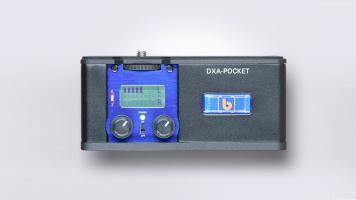
I recently had the opportunity to test the Beachtek DXA-POCKET audio adapter and the Beachtek BRM-1 Baseplate, and I found a lot to like. The DXA-POCKET gives you manual level control with visual level indicators over two mono or one stereo 1/8" inputs. Although I was surprised that it