Meade
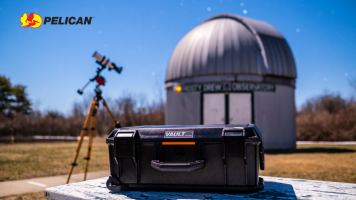
I am not a “hard case guy,” but I know many who use them, and I know they are essential for a lot of photographers, videographers, and creatives who are constantly on the go and need extra protection for their gear. And, if you have even given hard cases a moment of thought, the Pelican brand of protective “stuff” is guaranteed to have made it onto your radar because the term “Pelican

The recent Transit of Mercury was a pretty big deal for a lot of reasons. I won’t go into too much detail about the actual event (we covered that pretty well already, on the B&H in Space page) but I’m talking about our coverage of the event. B&H partnered with Meade Instruments and the Amateur Astronomers Association of New York to do a morning of community

When the inner planets, Mercury and Venus, pass between Earth and the Sun, it is known as a “planetary transit.” While not as visually spectacular as a solar eclipse, the transit of our inner solar system’s neighbors is a remarkable sight to viewers on Earth. Unfortunately, these events are not visible to the naked eye, so let’s discuss what gear is recommended for photographing and viewing the transits.
Astronomical images NASA/JPL
Before you invest in solar viewing optics, please know that these transit events are rare.

On the morning of Monday, November 11, 2019, the planet Mercury will transit the Sun for the first time since 2016. The transit of a planet across the face of the Sun is a relatively rare occurrence since, as seen from Earth, only transits of Mercury and Venus are possible—those being the only two planets within the inner solar system and closer to the sun than our own. There are only about 13 transits of Mercury each century, and while it’s only been three years since the last transit, the next one isn’t for another 20!
Why is there such an
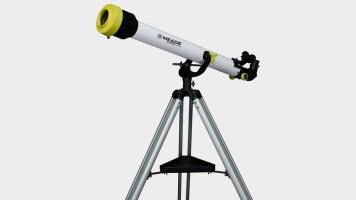
As preparations for the upcoming North American Solar Eclipse gain momentum, Meade Instruments now offers a broad line of white-light solar and eclipse-viewing optics called the EclipseView series. Consisting of a variety of devices, this new batch of products is designed to give users a wide range of options for observing our closest star. The entire EclipseView line features ISO-certified film filters that block 99.999% of the intense light from the sun,

A great deal of mystery and misconception surround the topic of observing the sun and solar eclipses, and while you should absolutely not look directly at the sun without proper protection, we here at B&H have got you covered on how to enjoy viewing the sun and, later this year, the solar eclipse. Read on to see what’s available for you, if you’re interested in investing in a dedicated solar telescope.
White Light or Narrow Band?
Right out of the gate, you need to decide: White light or Narrow-band (Targeted) viewing? For specifics about
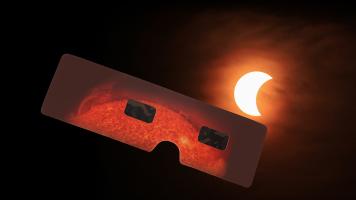
If there were ever an event that the entire family should enjoy together, it is the rare majesty of a solar eclipse. Solar eclipses, be they partial, annular, or total, are not entirely rare events, but, before 2017 it had been almost 100 years since the last total eclipse transited North America from coast to coast, and it had been almost 40 years since the last time a total eclipse could be viewed from the United States. In fact, most of Earth's citizens have never witnessed a total solar eclipse.
Let's talk about how to view a solar eclipse
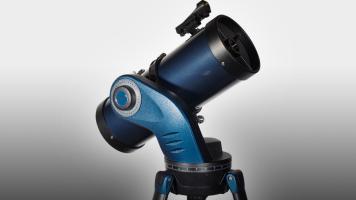
Meade Instruments’ StarNavigator line of telescopes has, for years, been a boon to amateur astronomers, providing GoTo functionality at a modest price. These computer-controlled optics eliminate complex and time-consuming setup, allowing the user to find an object quickly and easily and start observing right away.
Meade has updated the StarNavigator line for 2017, with six telescopes in its Next Generation series—two achromatic refractors, two Newtonian

In the comments for one of my other binocular articles, a reader pointed out that I had neglected to suggest binoculars for children. In response, we’re publishing this piece that is devoted strictly to kids, and will deal with the different types of optics we offer here at B&H: binoculars, spotting scopes, and microscopes. Buying for children presents a complicated set of contradictory ideas. You don’t want to spend too much on them because they tend to
Whether you’re heading out on the open waters (like we did here), or hiking through the Adirondacks (like we did here), or going off the grid for a week-long camping trip, it’s hard to give up our technologies completely. Maybe you must snap and selfie with a brown