Novoflex

0 Views ·Posted
Color management can be tough to wrap your head around. Matt Hill goes over the basics of color management and color correction. He shows you how to set up a color checker in Lightroom Classic, how to adjust color, and how to focus stack macro photography.
0:00 - Introduction
3:57 - Capturing Macro Images
6:06 - What Do Color Problems Look Like?
9:35 - Take Control of Your Inputs: Color Checker, Stability, and Color Calibration
17:41 - Color Management and Color Correction Are Not the Same
20:06 - Setting Up Color Checker Profiles in
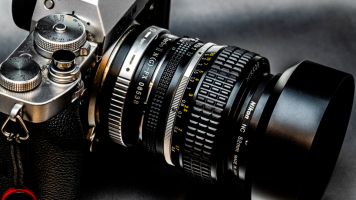
If you use an interchangeable-lens mirrorless digital camera, you know that one of the pleasures of mirrorless shooting is the ability to use lens-mount adapters to photograph with any number of vintage lenses (manual focus or autofocus), as well as some modern-day lenses from your favorite optical manufacturers. When using a crop sensor camera, you might have stumbled across adapters with the monikers
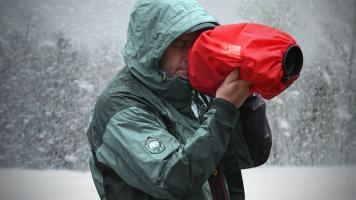
It’s raining, it’s pouring, your lead actor is snoring… in the toasty-dry holding area, while you and the rest of the camera crew wait out the storm in the not-so-great outdoors. Or perhaps your director has decided that their scene would just be so much more emotionally engaging if shot in a downpour and the dreaded rain machine is making its ominous appearance. Here we outline several solutions for keeping your video or film equipment dry in spring showers or heavier precipitation.
Cameraman in the rain
April Showers
When dealing with

When speaking with wildlife and bird photographers, the subject of camouflage always sparks conversation. Some are surprisingly dismissive, others are all-in and, of course, there are those of us in the middle, who understand the benefits, but are not quite ready to order a complete ghillie suit. In fact, camouflage gear is not a panacea, and all photographers should agree that your location, movements, techniques, scent, and even breathing have more impact on getting that great animal photograph than what you are wearing or under what you are

Before heading out on assignment, I make a mental checklist of the gear I will be needing, and camera supports are always on that list. Depending on where and what I plan to photograph, I might take a mid- or full-size tripod and be done with it. If I anticipate taking low-angle photographs, I will also pack along a tabletop-size tripod and, for ground-level shooting, one of my Platypods. Truth is, if I have the space, I take all three options, because if I leave any of these options behind, I know I will need it when I get where I’m going

If you ask the average photographer what the difference between a macro lens and a “regular” lens is, they will tell you macro lenses enable you to get closer to your subject than regular, or conventional, lenses. While this is true, the ability to focus close is only part of the story. The other part of the story has to do with an optical characteristic called “curvature of field,” of which there are two types—flat-field and curved-field.
All Photographs © Allan Weitz 2020
Most consumer lenses are curved-field lenses, and as you might have

Few camera lenses helped to define a brand name more than Nikon’s NIKKOR 105mm f/2.5. Produced from 1959 to 2005, this portrait lens underwent five updates during the course of its production run, including a complete makeover, in 1977. Considered by many photographers to be one of the sweetest portrait lenses ever made, it shouldn’t be a surprise to learn it was the very lens used by Steve McCurry when he photographed the legendary “Afghan Girl” cover for National Geographic magazine.
Photographs © Allan Weitz 2020
Based on Nikon’s 10.

Life under lockdown is challenging on many levels. The need to express oneself through art, crafts, writing, or other creative outlets—though not nearly as critical as a means of survival compared to food and shelter—is part of our genetic makeup. Our creative efforts help to define who we are, how we think, and how we see the world around us. In times such as these, having the ability to express oneself through one’s craft can act as a coping mechanism for getting through yet another day.
Photography has been a personal coping mechanism, as

Most tripods on the market are simple three-legged supports for your camera and lens, and that is usually all that photographers need a tripod to do. But, there are some tripods on the market that, while serving to support photographic gear, have some funky and, oftentimes, unique features that set themselves apart from the classic traditional tripod.
Before we look at

Macro photographs enable you to capture in-your-face close-ups of flowers, bugs, peeling paint, and—depending on your personal aesthetics—anything encrusted in rust. The following are 10 gift ideas designed to help you with tight close-ups of objects, rusty or otherwise.
1. Macro Lenses
Macro lenses are specifically designed to capture sharp close-up photographs. Available in

There is no end in sight for the bokeh craze these days, and Meyer-Optik Görlitz has engineered lenses with that in mind. The new P58 (type Primoplan) 58mm f/1.9 lens is designed to produce a swirly-er form of bokeh and the triplet optical design of the Trioplan 100mm f/2.8 is made for classic “

Have you ever wondered: “how did they get that shot, where was the camera attached?” Or how did the cameraperson squeeze, strap, or balance themselves into that position? B&H offers a wide range of options for mounting your video camera for vehicle-based shots, raising your camera above the fray, and otherwise mounting your camera in innovative ways.
A staple of many police procedurals is the shot of the characters riding in the squad car, whether it be the cynical detective and the raring-to-go rookie, or a reveal of the jittery perp in

If you have been around photography for a while, you might remember the center focus filter that left the center of your frame sharp, but blurred and softened everything around it. The center of the filter was clear (or even simply air as it was cut out), and the edge was frosted glass. Some photographers achieved the same effect by smearing petroleum jelly on the edges of their lenses. Today, through the creativity and design of the
Camera accessories: not only can they be entirely practical for the types of photography you enjoy, they can also give your camera a unique look and feel, while boosting performance. Fujifilm’s nice lineup of accessories, and an array of third-party accessories, allow Fujifilm photographers to get the most out of their camera systems, and are great gift ideas for the Fujifilm shooters in your life.
Grips
If you grew up in the days of film cameras, before cameras

The Sun, our source of light and warmth, is a notoriously poor photographic target, due to its extreme brightness and constant emissions of damaging ultraviolet and infrared radiation. However, with the right equipment, the sun can be a challenging and rewarding photographic subject.
The sun, like the moon, is above the horizon and in our skies half of the time. However, unlike the moon, when the sun is above the horizon, it is always visible (unless it is cloudy). The moon progresses through different phases as it orbits our planet, from new