Photography
- Recently Added
- Popularity
- Name
About 647 filtered results
by Luke Rollins · Posted
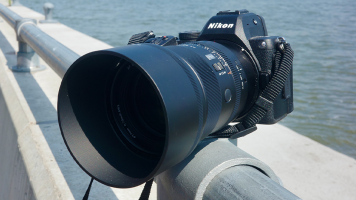
Viltrox's AF Pro series began in 2025 with the Viltrox AF 85mm f/1.4 Pro FE, signaling the emerging third-party lens maker's entry into the professional prime lens.
Currently, the series has 85mm f/1.4 and 50mm f/1.4 full-frame, autofocus options for both Sony E-mount and Nikon Z-mount full-frame cameras. The series is especially notable for being one of a shallow roster of third party 85mm lenses with fast maximum

by Mathew Malwitz · Posted
Building upon a long history of rangefinders, OM SYSTEM has introduced their latest iteration of the classic camera with the OM SYSTEM PEN. This portable, user-friendly camera combines the simple design of its predecessors with the accuracy and intelligence of newer mirrorless technology.
We had the opportunity to take the new PEN into the field to see how it performs, and how it stacks up in an ever

Posted
Experience the new STACKPRO 1! This workshop is designed for photographers and imaging professionals who work with classical view camera techniques or want to explore modern alternatives through focus stacking.
0:00 - Intro
2:14 - Idea & design behind STACKPRO 1
3:06 - What is the STACKPRO 1
7:38 - Technique vs. focus stacking
12:23 - Examples
16:58 - Advantages of focus stacking
19:44 - Differences in handling
20:44 - Typical use cases
25:00 - STACKPRO 1 kits
26:50 - Live demo
40:16 - Closing
Sponsored by

Posted
Sony cameras offer a wide range of features. Sony Artisan of Imagery Tony Gale guides you through the essential settings to help you maximize your gear's potential.
0:00 - Intro
2:30 - Different Sony menus & dials
9:34 - Photo & video file type set up
20:50 - Set up settings
36:14 - Custom white balance
41:46 - Bracketing
50:20 - Focus tracking & Auto focus
57:26 - Creative look
59:09 - Setting effect
1:01:15 - Focus hold
1:02:48 - Customizing
1:16:07 - Auto ISO & Back focus
1:20:30 - S&Q
1:23:50 - Depth of felid
1:25:20 -

by Luke Rollins · Posted
Chiaro, a brand best known for their UV filters, recently expanded their inventory with the launch of a line of circular polarizer (CPL) filters available exclusively at B&H. Available in 18 different thread sizes from 37 to 112mm, the new filters come in two build configurations, Core (aluminum) and

Posted
Join Sam in the Bisti Badlands to learn how to utilize the OM SYSTEM OM-3 ASTRO when taking Milky Way and starry photos.
0:00 - Intro
0:30 - Key OM-3 Astro Specs
1:35 - Location Scouting
3:45 - Astrophotography Specs
6:26 - Night Live View & Starry Sky AF
9:07 - High-Res Shooting Mode
10:32 - Nightscapers Photo Conference
11:07 - Infrared Cut Filter
12:17 - Custom Button Modes
13:13 - Sam's Thoughts
Sponsored by

Posted
Sidney tests out the LUMIX L10, a compact camera that fits the best of Panasonic's photo and video features in a lightweight package.
0:00 - Key Information
1:25 - Sensor & Dynamic Range
1:55 - Lens
2:28 - Real-Time LUT & Film-Like Photo Styles
3:06 - More Specs
3:30 - Sidney's Experience & Thoughts
4:28 - Video Features
5:20 - Biggest Takeaway
Sponsored by

Posted
Take your Lightroom catalog from chaos to clarity. Photographer and educator Cliff Pickett goes through his Lightroom Academy course all about keeping your photo library organized. Learn how to use folders, keywords, and collections the right way to make it easier to find the one photo you're looking for out of hundreds.
0:00 - Intro
3:15 - Agenda
5:18 - Lightroom bootcamp
6:10 - Chaos to clarity - The master plan
12:34 - Put your import on autopilot
18:52 - Intelligent design - folders, keywords, & collections
29:51 - Automated imports

Posted
Profoto has off-camera and on-camera flashes that work for you and your photography needs. Juan demos three Profoto lights, sharing each of their pros and cons. You'll learn which to potentially buy, whether you're a beginner at flash photography or looking to upgrade your kit.
0:00 - In This Video
0:37 - Why Choose Profoto?
1:28 - Before We Start
1:58 - Profoto A10
3:12 - Profoto A2
4:13 - Profoto B10
5:04 - How Do You Choose?
Sponsored by

by Mathew Malwitz · Posted
I love the Sony A7 IV. That might be a strange way to begin a review of the A7 V, but an important fact to mention. When I first put my hands on a Sony camera years ago, I loved the customization they offered, and of course, I loved the glass.
Above photograph © Mathew Malwitz
How a camera fits in one's hand is very important, so when Sony unveiled a beefier camera, I was sold. It was the perfect blend of form and functionality that many (me, myself, and I) had long desired. It pushed the boundaries of what many once considered to be an all

by Luke Rollins · Posted
I drive an old pickup truck. I love it. It works, but it’s also twenty-years old, and its creaky joints can be heard from the sidewalks as it rattles around the roads between North Queens and South Brooklyn.
My lighting equipment isn’t much different. It’s old. I love it. It works, but it has the same tenuous “held-together-by-tape-gum-and-string” quality as my truck.
Every now and then, I’ll get behind the wheel of someone else’s car, and it’s a new car, and it’s a luxury car, and it’s like I’m stepping into an alien spacecraft with its

by Mathew Malwitz · Posted
For years, young photo enthusiasts have been striving to add a nostalgic look to their photos. From smartphone camera filters to old hand-me-down point-and-shoot cameras, we’ve been chasing a look that just can’t be replicated. That is, unless you design a camera specifically to accomplish that goal. And that’s exactly what Kodak did with the Charmera keychain camera

Posted
The Leica Noctilux-M 35mm f/1.2 ASPH. lens is the fastest lens for their M lineup. Join Juan to see how this lens lets your photos speak instead of shout.
0:00 - Why 35mm?
0:19 - Today's Test
0:52 - Minimum Focusing Distance
1:13 - Comparison with Summicron-M 35mm f/2 ASPH.
1:30 - Image Quality
2:15 - Juan's Thoughts
Sponsored by

by Mathew Malwitz · Posted
We can say from experience that there’s nothing worse than your fingers freezing while on a winter photo shoot. From a scientific standpoint, exposure to the cold results in constriction of blood flow to the extremities, resulting in rapid temperature loss that approaches ambient temperatures. In layman’s terms, your hands get cold fast. Once you feel that chill, it’s nearly impossible to think about anything else.
Enter gloves. From mittens to liners, we all probably have more pairs of gloves than we know what to do with, but not all pairs

by Mathew Malwitz · Posted
SmallRig has long been a staple of the run-and-gun video shooter's bag. Camera cages, base plates, and 15mm rod systems have been the brand’s bread and butter for years. Over time, more and more photo accessories began to fill out their lineup. Soon came tripods, and logically monopods. One of the latest additions to their arsenal is the SmallRig Carbon Fiber Monopod Lite.
All Photographs Mathew