Photography
- Recently Added
- Popularity
- Name
About 440 filtered results

by Mathew Malwitz · Posted
The travel tripod conundrum is a cruel reality of physics and practicality. The larger and heavier a tripod is, the steadier it will hold a camera. The larger and heavier a tripod is, the less likely you will ever want to carry it around or take it on a trip. Why are we left with a photographic reality like that which makes the tastiest food bad for you?
Tripods come in all shapes, weights, heights, and styles. If you are new to the world

by Mathew Malwitz · Posted
The camera bag starts as an afterthought—something you get after you buy a camera and/or lenses, and for many, just about any camera bag will do the trick for them. But, when you get deeper into photography and expand your kit, the camera bag becomes an essential part of your everyday carry. There are many parallels between shopping for a camera bag and shopping for something like a pair of shoes
by Mathew Malwitz · Posted
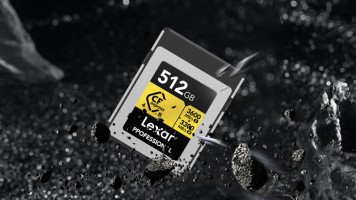
Recording work and data in the form of thousands of pictures or hours of video is made possible by compact memory cards. These devices are the standard for photo and movie storage, saving and protecting your files until you can transfer them safely to a more permanent home on your computer or external hard drive. They are available in an array of different types, with a broad range of capacities and data-transfer

by Mathew Malwitz · Posted
Are accessories essential to completing a look? As a camera store, we're not exactly fashion experts. That said, we can confidently say that certain photo accessories are essential to getting the most out of your compact cameras. In this guide, we're looking at the must-have accessories that every compact camera owner should own—from absolute necessities to the more stylish options. Let's get started.
Memory Cards
When unboxing a point-and-shoot camera, expect to find a camera, battery, wrist strap, and a charger. What's usually not included
by Luke Rollins · Posted
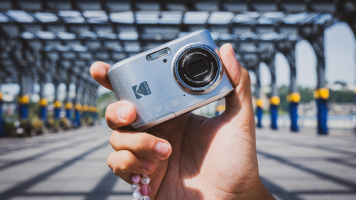
What is it about the 2000s look that is so compelling right now? One could chalk it up to the eternal recurrence of 20-year nostalgia cycles, of which the retro digicam revival would be yet another instance. But this kind of historicism elides the character of what is missed, and why its retrieval is attempted in the first place.
Smartphone bad; we know this. Rejecting the smartphone, however, does not immediately lead one to retro digicams. One could just as easily move toward the nostalgia of film as toward the competent excellence of today

by Luke Rollins · Posted
It’s 2026, and we no longer have to pretend that film is dead; film is very much alive, with a robust number of film stocks available to try out, ranging from the classics to new and creative films from up-and-coming, smaller brands.
Here’s an overview of the current black and white films available right now.
Kodak
It’s hard not to start with mother Kodak in an article like this, and with all the history—the ups and

by Todd Vorenkamp · Posted
If you are stranded on a desert island and can only have one camera lens with you, which lens would you choose? That may depend on your specific area of expertise, but for the average photographer, the 50mm focal length is an essential tool to have in your kit. The 50mm prime lens, or “Nifty Fifty,” features a field of view close to that of the human eye, and delivers exceptional image quality, subject isolation, and background rendering, all in a compact package.
The Origin of the “Nifty Fifty”
In the bygone era of film SLR photography, many

by Mathew Malwitz · Posted
When it comes to choosing the best camera for sports and action photography, there are three factors to focus on. Speed, autofocus performance, and reliability are all essential to tracking, freezing, and nailing the shot time and time again. Speed and performance have become increasingly affordable with mid-tier cameras and even some entry-level ones can keep up with sporting events. In this guide, we’ve narrowed things down to the very best cameras in each class, from the pro-level flagships to everyday cameras that are right at home on your

by Mathew Malwitz · Posted
If renowned landscape photographer Ansel Adams were alive today, he would surely be astounded at the variety of cameras available. When compared to his hulking 8x10 view camera, today’s cameras look like child’s play. He would also be flabbergasted at the image quality these little devices produce.
This year, we have a bottomless well of cameras

by Mathew Malwitz · Posted
If you've ever gone camera shopping, you've likely run into the term "mirrorless" more than a couple of times. After all, mirrorless cameras account for up to 90% of new interchangeable-lens cameras (according to Canon executives anyhow). But what does "mirrorless" actually mean? In this guide, we're going to explore what a mirrorless camera is, what makes it different from other cameras (hint: it's in the name), and how it can benefit

by Steven Esposito · Posted
One of the best pieces of advice I like giving photographers is that they should print their photos. For many, this will mean going to a lab or print shop, in which case you should learn about profiling and calibration. The rest of you are likely more interested in getting your hands dirty and printing on your own at home. This guarantees you have full control over the entire production process, from capture to output. To do this, you will need a

by Mathew Malwitz · Posted
When we head out into the great outdoors, there’s nothing more we need than our camera and lens. So long as you have a charged battery and an empty memory card, there’s little more you could ever need—that is, until that battery dies, it starts to rain, or a bird poops on your lens. How do we prepare for these inevitable conundrums? We bring the pertinent accessories, that’s how.
Smaller

by Luke Rollins · Posted
Everyone and their mothers are in on the digicam trend, a fact reflected in the used-market prices found across most platforms. Facebook Marketplace, Craigslist, eBay, B&H Used--everywhere you look, the best-known models are selling for prices that often meet or exceed their debut MSRP.
Take that old favorite of mine, the Canon S95. Extraordinarily capable, exceedingly pocketable, I got it for a song ($130) back in 2023. Three years later, the going rate has more than tripled, with the average price sitting above $400 and pushing $500

by Mathew Malwitz · Posted
Traveling with our camera gear can be a daunting experience, especially as we start expanding our arsenal of lenses. Picking the right lens for the job is a challenge in itself, and now we're finding the space to pack it among our clothes and other essentials. Wouldn't it be nice if we had one lens to do it all?
Luckily, such lenses do exist, and these travel-ready all-in-one zooms come in a variety of mounts, some brand specific, and others available for many different cameras. In today's guide, we're covering the best travel zooms for full

by Mathew Malwitz · Posted
It's only natural that after using a pair of binoculars, some birders will find that they yearn for more, and the only way to practically get more reach is to use a spotting scope. These are essentially terrestrial telescopes, using one optical path to magnify an even greater distance than our typical handheld optics can manage.
As covered in our guide to choosing a spotting scope, finding the right scope can be as