Search results for: photography tips solution battery powered studio lighting
About 12 filtered results
by Mathew Malwitz · Posted
Who doesn’t want to capture fun and creative portraits of our four-legged friends? We know we love it. In fact, pet photography may just be the most popular form of photography there is. Think of all the smartphone snaps of yawns, big stretches, and funny moments we all take of our cats, dogs, chinchillas, and beyond.
Quick snaps aside, you know what really ups the quality of our pet portraits? Lighting. Just as with any form of portrait, lighting unlocks possibilities that can be impossible without it. But what lighting system should we use?

by Luke Rollins · Posted
Subject and style may vary, but consistency is a quality shared by all successful photo studios. When working indoors, that begins with lighting. Strobes remain the bread and butter of many still photography studios. Unlike natural light, which can be finicky and unpredictable; on-camera flashes, which are not typically designed for studio use; or continuous lights, which can become costly as output increases; strobes are built to withstand the rigors of studio life while providing flexible and powerful light. But with so many options on the

by Mathew Malwitz · Posted
Good lighting is essential to creating a strong, visually pleasing image. This is as true for naturally lit outdoor shots as it is for studio portraits. For individual or even couples portraits, many photographers make use of on-camera flash or compact, battery-powered strobes to supplement natural light and fill shadows, but how do we situate these in the scene? What light shaping tools should we use? Groups alone can be tricky for a plethora of reasons. Whether it be getting everyone to smile, getting kids to look at the camera, or the

by Mathew Malwitz · Posted
Lighting is the key to all photography. While elaborate, multi-light setups may appear to be the standard, the creative photographer can produce a seemingly endless range of images using just one light source. This guide is designed to help those beginners out there build the perfect one-light kit for portrait photography.
Why One Light?
I completely understand why multi-light “studio in a box” kits are tempting to beginner and budget-conscience photographers. Why spend hundreds of dollars on one light when you can get three lights complete

by Mathew Malwitz · Posted
Finding the right lighting solution on a budget can be overwhelming, even for the most seasoned shooters. To make things a little easier, we’ve put together a list of some our favorite lights and lighting accessories for under $100.
Speedlights
The Godox TT350 Flash is a small TTL speedlight available for most major brands. TTL stands for “through-the-lens” metering, which is as close to auto as flash photography can

by Zack Young · Posted
Once you’re familiar with the basic concepts behind high-volume photography, the next logical step is to figure out what gear you need to purchase. That’s when the panic might hit. Suddenly you’re flooded with decisions about cameras, lenses, strobes, backdrops, barcode scanners, and more, each category including tons of different options at every

by Danielle Marsella · Posted
Wedding season is upon us, bringing clear skies and warm weather—the perfect backdrop for capturing stunning couple portraits and candid moments at ceremonies and receptions. For photographers tasked with capturing a once-in-a-lifetime event, high-quality lighting gear is a must. Learn more about versatile light and modifier options to elevate your couple’s special day.
Capture with an On-Camera Flash
A compact and often powerful tool, on-camera flashes offer wedding photographers versatility while documenting weddings spanning across multiple

by Stepan Andranikian · Posted
Following its electrifying debut in 2020, the Sony FX6 quickly established itself as a true powerhouse in the world of compact cinema cameras—thanks, in part, to its exceptional image quality, low-light dominance, and feature-packed design. Today, Sony's Cinema Line is more robust and well-rounded than ever, with the FX6 sitting firmly between the tried-and-true FX9 and the more recent FX3.

by Shawn C. Steiner · Posted
At its most basic, tethered shooting involves connecting your camera to your computer as you shoot. You’ve likely seen it in some behind-the-scenes video for a professional studio shoot, or you just have a friend who swears it’s the best thing since sliced bread. Tethering is a shooting technique that can benefit many a photographer’s workflow significantly, though upon first hearing of it, the idea of tethering can be something that first requires a bit of education. Hopefully, this introduction will help get you started.
Why should you
by Dawn Wayand · Posted
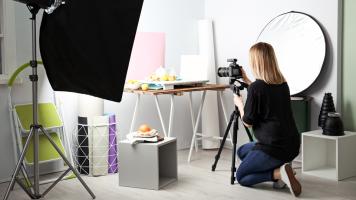
While photographers have many options for their home studio lighting setup, continuous lights are a logical solution for beginners. As its name implies, a continuous light is always on, unlike the fleeting flash of speedlights and studio strobes. For photo and video, most continuous lighting comes in the form of tungsten, fluorescent, and LED sources, as well as HMI, though we aren’t going to focus on the latter here.
LED ring light in useLeo Alejandro
Benefits of Continuous Lighting
I always recommend that beginner studio photographers
by Cory Rice · Posted
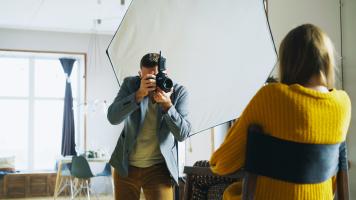
In locations like New York where rental space comes at a premium, it is not uncommon to find photographers working out of makeshift studios in their apartments. With a little creativity, even the smallest apartments can be used to create quality photographs. Nevertheless, building a usable studio while maintaining a livable space can be a tricky endeavor. Nobody wants to live in an apartment that looks like the set of a reality television show. Reaching a productive compromise starts with knowing what options are available to you.

by Allan Weitz · Posted
As a working photographer, the center of the universe is your camera bag and its contents. Your cameras and lenses are the tools of your trade. As you may have noted, both are mentioned in plural because just as you wouldn’t jump out of an airplane without a backup parachute, you shouldn’t attempt to photograph an emotionally spiked, non-repeatable event armed with only one camera. The same applies to lenses, too. The many aspects that comprise shooting weddings—portraits, the ceremony, dimly lit environs, tight, crowded quarters and bright