Search results for: photography tips solution black white landscape photography
About 14 filtered results
Posted
In this class, Canon Product Educator Jeff Leimbach reviews more advanced techniques for Landscape Photography, including Composition, Filters, Long Exposure, Night Landscapes, Editing, and more.
0:00 - Intro
3:38 - Overview
5:06 - Weather
10:10 - Composition
22:27 - Filters
30:17 - Long exposure
39:38 - Light painting
43:35 - Reflection
45:27 - Editing
50:08 - Presentation
52:41 - Black & White
56:15 - Quick tips
1:01:18 - Final thoughts
1:02:39 - Q&A
Sponsored by
Posted
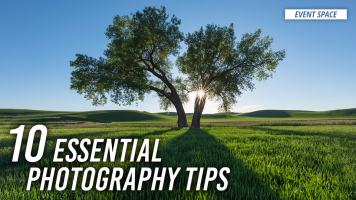
If you're a beginner photographer who would to increase your skill levels, Sony Ambassador Mahesh Thapa offers 10 essential tips that will improve your photography game! In this video, you’ll learn to compose photos, get tack-sharp images, and other helpful techniques. While Thapa’s tips can be applied to any genre of photography, nature and landscape photographers will get the most out of this webinar.
0:00 - Introduction
0:47 - Disclosures
3:00 - In this Seminar
3:52 - Composition Tips
18:36 - Tips for Camera Settings
25:03 - Accessories
35

by Robert Sansivero · Posted
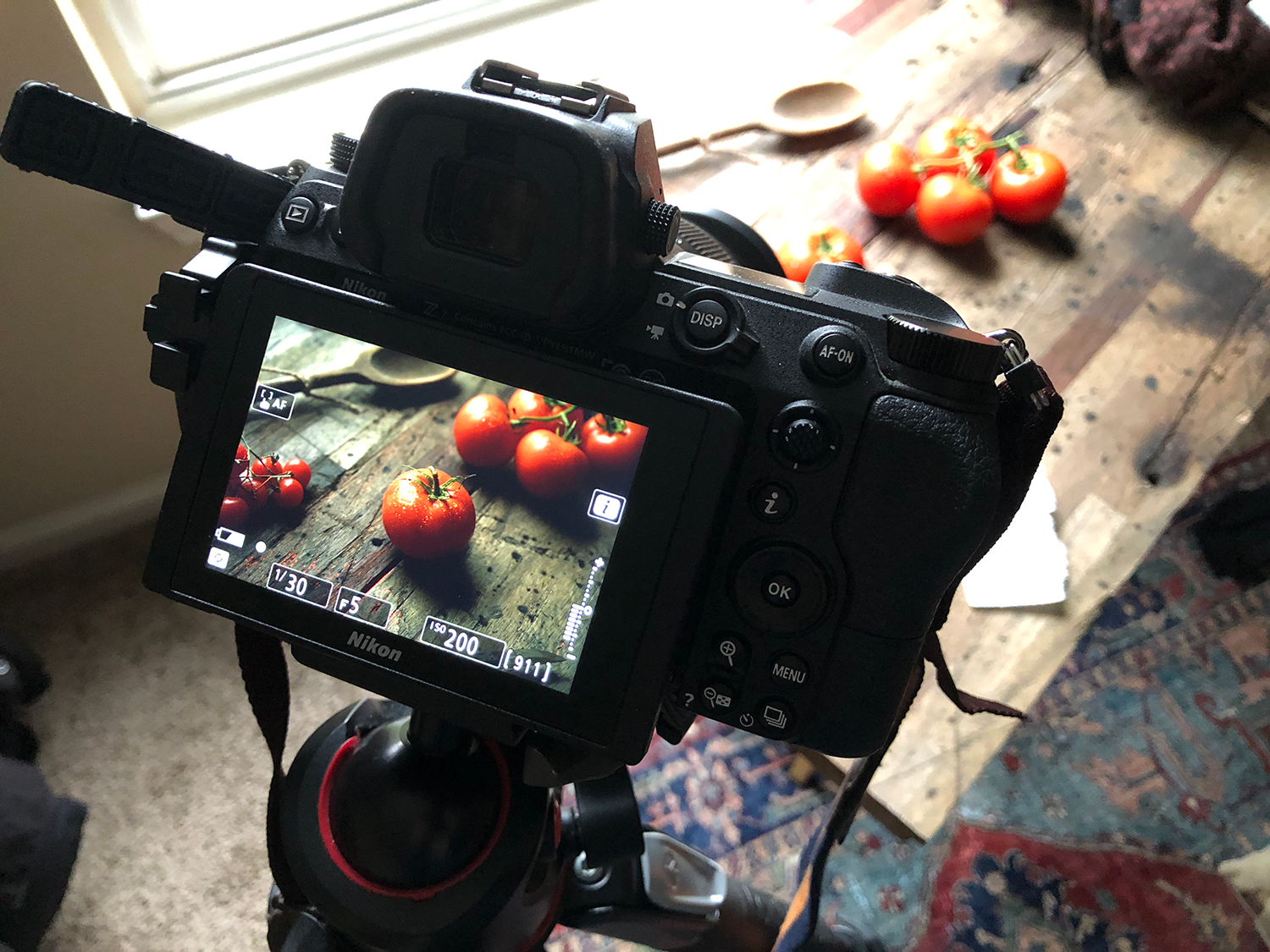
Now that we have a handle on using natural light for food photography, it’s time to move on to continuous light sources. When natural light isn’t available, or you want more specific control and placement of your light, you’ll have to use your own sources.
Natural light setup from Part

by Todd Vorenkamp · Posted
A lens’s hyperfocal distance—a mathematical combination of lens focal length, aperture or f-stop, and focus distance—is a tool that photographers can use to maximize their depth of field for capturing nearby foregrounds and distant backgrounds in acceptable sharpness.
While you can always dial up your lens’s sharpest aperture (sweet spot), many landscape photographers want as

by Todd Vorenkamp · Posted
Welcome to Part 2 of our deep dive into the world of Intentional Camera Movement (ICM) photography. In this second part of the three-part series of articles, we look at the kinds of gear that ICM artists recommend, as well as the technical side of the art including camera settings and techniques.
Above image © Ceri Herd
Camera
Gear is not a limiting factor in exploring ICM photography—you can even use a smartphone, provided you have a way of controlling the shutter speed. For repeatable, deliberate results, you will want to have a camera that

by Todd Vorenkamp · Posted
Setting up your camera properly for night or low-light photography is a fundamental key to successful images. There are no hard and fast rules for settings for night photography because many of the settings you choose depend on the scene before you and how you want it to look in the final image. However, this guide will give you a foundation for setting up your camera to capture the wonders of the night.
Photographs ©Todd Vorenkamp
Exposure Mode

by Shawn C. Steiner · Posted
Even when you’re photographing distant landscapes with wide-angle lenses, you may notice that the image doesn’t look as sharp as you thought it would. Or perhaps some objects are tack sharp, but as you look farther into the foreground or background, it loses some of that detail. One solution is to use a technique known as focus stacking to ensure your images are as sharp as possible throughout the entire image.
What Is Focus Stacking?
A popular technique for macro and product photography, focus stacking is a technique in which multiple images

by Bjorn Petersen · Posted
Have you ever tried to take a photograph of a snowy scene and later realized that your shot was underexposed, maybe with an overwhelming orange or blue hue, or just lacking a certain "something?" Frustratingly, and surprisingly, snow can be one of the trickiest environments in which to make a correct exposure. But, with a few tricks and techniques in mind, hopefully you'll be able to make easy work of these trying conditions.
It All Begins with the Light Meter
The culprit behind these wrong exposures is likely your light meter; but this light

by Bjorn Petersen · Posted
As wintertime approaches and temperatures begin to drop, certain precautions and preparations should be taken in to improve your photographing experience during this most beautiful time of the year. Wintertime provides a unique opportunity to photograph your surroundings, either nearby or whilst traveling, in a manner unlike any other time of the year.
The quality of light and activities taking place during this season are undeniably special, as are the weather-related conditions that bring an extra challenge to your everyday shooting. Unlike

by Jill Waterman · Posted
People gravitate to photography for a wide range of reasons—for some it’s primarily a vehicle for artistic expression, while others are drawn to photography as a science and are engrossed by its technical aspects. One increasingly popular photographic discipline that requires a careful mix of both artistic inspiration and scientific precision is night and low-light photography. While this was once a tenuous undertaking with little guarantee of predictable results, the powerful sensors, advanced low-light capabilities, and immediate feedback of

by Jill Waterman · Posted
The bright lights and lively bustle of the city at night is especially captivating to photographers, who have long sought to capture this rich spectrum of color, contrast, and motion in images. Yet there is more to consider in the world after dark than just a snapshot approach and automatic camera settings. With this in mind, consider these seven tips to help you get the most out of urban environments in low light.
Establishing time and place

by Todd Vorenkamp · Posted
Photography from the window seat of an airliner is becoming a controversial topic. Before we talk about how to get awesome photos, let’s have a chat… First of all, no one seems to look out the windows of airliners today, and many passengers give the evil eye to those who do not close their window shades. Fact: Future airliners may be made without windows at all. This saves manufacturing costs, and builders have realized that no one seems look outside anymore because they are staring at glowing screens or sleeping. Another fact: The Washington

by Allan Weitz · Posted
Sometimes, the phrases, acronyms and strings of numbers or number-letter combinations used to identify photographic hardware or techniques can be daunting to the uninitiated neophyte photographer.
We've prepared a list of the basic terms. Have we left any out that you think should be added? Please let us know!
0-9 | A | B | C | D | E | F | G | H | I |

by Allan Weitz · Posted
What is a lens?
Superficially, a lens is little more than a cylinder containing optical elements that shift about as you focus by turning a ring around the cylinder. But even in its most basic form, a camera lens is far more complex than it might appear.
A lens is more than the sum of its parts. When you attach a lens to a camera, your choice of lens is very much like a painter's choice of brush. For finer details, the painter will choose a narrow, pointier brush. For cloud-free skies, a broader brush would be a wiser choice. Wide-angle lenses