Search results for: photography tips solution lighting basics how shoot professional looking portraits
About 4 filtered results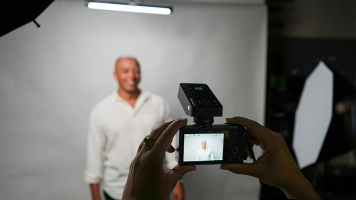
by Luke Rollins · Posted
At first glance, studio photography and the compact camera may seem strange bedfellows. The type of work associated with the studio—still life, product photography, portraiture, macro photography—usually wants cameras with larger sensors and interchangeable lenses, especially in professional applications. Compact, point-and-shoot cameras, for their part, have their natural home in everyday, travel, nightlife, and street applications, where their discretion and size become virtues.
It might seem almost cruel to introduce the compact to the

by Luke Rollins · Posted
Whether you’re the designated photographer at a friend’s night out or a professional working an event, a compact, point-and-shoot camera can be a strategic choice for creating a distinctive look for your images. Depending on where you’re starting, the move to a compact camera can be either a step up from the smartphone or an embrace of a more limited feature set. In either case, the best event and party photography with a compact camera says one thing: you had to be there.
The number one advantage to using a compact camera is social. The

by Zack Young · Posted
Any photographer worth their salt should be familiar with portrait photography, but they’re likely less familiar with high-volume photography, an offshoot of traditional portraiture that focuses on providing large quantities of professional-level headshots. The most common clients for this type of work include schools, sports teams, large corporations, government-run entities, and basically any other organization that needs a sizeable amount of quality headshots in a short amount of time. Because of the economies of scale, high-volume

by Allan Weitz · Posted
What is a lens?
Superficially, a lens is little more than a cylinder containing optical elements that shift about as you focus by turning a ring around the cylinder. But even in its most basic form, a camera lens is far more complex than it might appear.
A lens is more than the sum of its parts. When you attach a lens to a camera, your choice of lens is very much like a painter's choice of brush. For finer details, the painter will choose a narrow, pointier brush. For cloud-free skies, a broader brush would be a wiser choice. Wide-angle lenses