Search results for: photography tips solution matter perspective
About 17 filtered results
by Mathew Malwitz · Posted
Taking photos has never been easier, whether you're using a smartphone, point-and-shoot, or mirrorless camera. It's a fact that no matter where we go, we almost always have some form of camera on hand, and while the opportunity for image making has changed, what hasn't changed is what makes a photo good.
The simple answer is photography composition, or the arrangement of elements in your frame. This concept can be confusing as all art subjective. That said, think of movies and music and how certain combinations of sounds and storytelling

by Luke Rollins · Posted
IN THIS ARTICLE
1. (Don’t Fear) the Gear2. Good Dental Photography Is Good Photography3. Macro Discipline, Portrait Mindset4. Embrace the Flash5. Clinical, but with an Eye for Marketing
For dentists, the evidentiary benefits of a photographic practice go beyond meeting industry standards. They can be the foundation for professional development and the growth of your business. That said,
by Luke Rollins · Posted
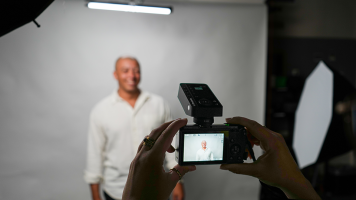
At first glance, studio photography and the compact camera may seem strange bedfellows. The type of work associated with the studio—still life, product photography, portraiture, macro photography—usually wants cameras with larger sensors and interchangeable lenses, especially in professional applications. Compact, point-and-shoot cameras, for their part, have their natural home in everyday, travel, nightlife, and street applications, where their discretion and size become virtues.
It might seem almost cruel to introduce the compact to the

by Luke Rollins · Posted
Achieving a standard of production value is an essential component of establishing a brand and growing a following. For part-time, burgeoning, and mid-level creators, it can feel like bridging that gap is less a matter of learned skill and more about the equipment you can afford.
In most cases, the problem isn’t budget at all. Acquiring the specific know-how can give your content professional sheen with little to no financial outlay.
Lighting design is arguably the most immediately visible production component—and the one most capable of

by Steven Esposito · Posted
The FIFA World Cup 2026 is currently underway with billions of fans tuning in to see their favorite teams on the pitch. For this year, FIFA named Lenovo as their Official Technology Partner, providing fans with deeper insights into player statistics and match analytics, bringing people even closer to the action no matter where they are. With such an ambitious task at hand, we must ask the question: How does any of this work?

by Mathew Malwitz · Posted
Through the cacophony of forest sounds, your ears home in on a buzzy, almost garbled ascending song. Perhaps you recognize it immediately, or maybe you need to confer with one of the trusty internet databases or apps. You train your eyes on the canopy, scanning for movement of any kind, when you see it: the cerulean warbler, a small rowdy songbird with wings slightly splayed from the body. Quickly, you lower your binoculars and train your camera on the little blue passerine before snapping a few frames.
The resulting photos clearly show the

by Mathew Malwitz · Posted
Who doesn’t love a close-up shot of a flower or bumble bee? Some of the most beautiful aspects of nature are quite small and require special tools to capture them in a meaningful way. Whether it be of a cute little insect visiting our garden, or miniature figurines you paint and sell, we need a camera that can focus close and deliver good, quality results.
Before you panic, hear us out. We don’t need to get carried away with complicated lenses and accessories, and can just enjoy yourself with a simple compact,

by Todd Vorenkamp · Posted
One of the magical aspects of modern photography is the ability to review an image instantly within our EVF (electronic viewfinder) or right on the back of the camera.
Frequently, one possible mistake that digital photographers make is when reviewing an image on their camera—they evaluate exposure based on the reproduced image. Why might this be a mistake? Well, both your camera’s LCD and EVF likely have adjustable brightness. Also, you might be viewing your images in bright sunlight or in the pitch black of night. Just as viewing a computer

by Mathew Malwitz · Posted
Composition in photography refers to the way in which we arrange visual elements in an image. It's how we position the subject in the frame and how all elements combine to create a visually appealing photograph.
All photographs © Mathew Malwitz
Expensive cameras and long lenses can only get us so far. It's not the gear that makes the photo, but the photographer. A creative and observant eye is the key to making visually pleasing photographs. These skills can be learned, and with practice, you'll be well on your way to creating strong

by Steven Gladstone · Posted
Whether you’re a student or a seasoned veteran, selecting the right camera can make your head spin with questions. Does sensor size matter? What’s the difference between 4:2:0 and 4:2:2? Do I really need a camera that can record 8K? What about raw? We’ll explain the key components that help a camera produce cinematic images, and in doing so, hopefully help you make that all-important decision.
Evaluate Your Needs and Your Budget
Before considering certain cameras, you must know your needs and your budget. And be realistic. If you are a student

Posted
Learn how to improve your landscape photography with Sony Alpha Ambassador Autumn Schrock. Autumn shares valuable tips and tricks that will improve your landscape photography skills.
0:00 - Intro
2:05 - Gear does matter
7:13 - Go as often as you can
8:40 - Change your perspective
12:00 - Landscape vs. Portrait orientation
19:18 - Telephoto lenses
23:16 - It's not all about the photos
25:51 - Utilize scale
28:10 - Be happy with where you've been
30:48 - Less is more
33:39 - We're always learning
36:24 - Final thoughts
39:20 - Q&A

Posted
Photographers often react instinctively against artificial intelligence, typically focusing on controversial generative AI. Meanwhile, a different branch of AI technology—machine learning systems—has been making remarkable progress helping photographers manage overwhelming image workflows under tight deadlines.
Above Image © Sam Hurd
In today's show, we explore this trending topic in a discussion with Justin Benson and Sam Hurd, both accomplished wedding photographers and tech entrepreneurs.
Justin begins by clarifying the distinction between

by Todd Vorenkamp · Posted
Welcome to Part 3 of our journey into the world of Intentional Camera Movement (ICM) photography. In this final chapter of the 3-part series of articles, we voyage back into the mental aspects of creating ICM art, as well as take in some tips for some of the more common ICM subjects and finish with inspirational words from some of the masters of the craft.
Above image © Morag Paterson
Approach
Because ICM eschews many of the lessons we have tried so hard to learn in photography over the years, the approach and process are very

by Todd Vorenkamp · Posted
Welcome to the world of Intentional Camera Movement (ICM) photography—a fascinating and beautiful world where the camera and the photographer’s movements combine to become a mechanical paintbrush—transforming photographic capture into something completely unique and otherwise invisible to the naked eye. In a photographic world generally obsessed with image sharpness, there are photographic artists amongst us who give little thought to everything we’ve ever been taught about photography to create spectacular images by intentionally moving their

by Paige Denkin · Posted
For the past six months, Paige and Corey have traveled across the country. Here are some of their key tips, takeaways, and travel lessons.
What is boon-docking?
Boon-docking typically refers to off-grid camping, most commonly done in a vehicle or trailer. When boon-docking, you have few common luxuries, live respectfully off the land and pack out anything you brought with you. You have no electric hookups, no plumbing, and usually no Wi-Fi or cellular service. Boon-docking locations vary, some being easier to access than others, so