Search results for: all photography
About 2796 filtered results
Posted
Learn how to get the most out of your camera so you always take incredible wildlife and bird photos. Join Matt in the Everglades as he discusses how to set up your camera settings so you never miss the shot.
0:00 - Intro
0:45 - Autofocus Settings
3:41 - Spot Metering
4:19 - Shutter Speed
6:03 - Frames Per Second
6:52 - Pro Capture
7:58 - Focal Length, Primes vs. Zooms
9:59 - Putting It All Together/In-Field Example
12:08 - Final Thoughts
Sponsored by

by Jill Waterman · Posted
There is perhaps no truer sign of summer than Independence Day in the United States. The Fourth of July is when the summer season kicks into full gear, with barbeques, pool parties, family gatherings, and road trips galore—not to mention the fireworks!
One lead-up to this holiday that I will never forget found me hurtling down the New Jersey Turnpike at sunset in a Greyhound bus. As the twilight deepened, bright bursts of fireworks began shooting up past the tree line, close by and at a distance, reflecting in the darkened glass of the

by Jill Waterman · Posted
As a follow-up to Part 1 of our fireworks story, it’s worth noting that photographing a fireworks show is no easy feat. Readers seeking a how-to guide to this subject need look no further than this Explora article, by Todd Vorenkamp.
Yet, as that article notes, and the photos featured here make evident, the challenge of capturing bursting pyrotechnics in images offers great opportunities for experimentation and fun. This is perhaps

by Todd Vorenkamp · Posted
Do you want to preserve the memory of that awesome neighborhood fireworks show? Let's discuss the best ways to try to make a memorable photograph commemorating the event.
Before we get started, let me say that there are many ways to accomplish fireworks photography and no technique is usually worse or better than others. The only thing that really matters as you head home after the show is:
You enjoyed the photographic process.
You are left with a photograph or photographs that you personally enjoy.
You enjoyed the fireworks show!

Posted
Sony Artisan of Imagery Jean Fruth is known for capturing the stories behind the athletes in her images. Jean starts a new series with the B&H Event Space discussing sports and storytelling. The first part is all about the process of completing long-term projects.
0:00 - Intro
2:29 - Storytelling with long-term projects
5:50 - The start of Jean's projects
9:45 - How do you know it's the right project
17:01 - Sticking with the theme of the project
23:10 - Approaching new projects
26:26 - As a woman sports photographer, connecting with the
Posted
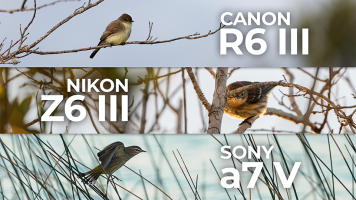
Looking for a full-frame camera for all your bird photography needs, but aren't looking to go overboard on spending? Matt shares 3 midrange camera options (the Canon R6 III, Nikon Z6 III, and Sony a7 V) for the photographer that is ready to take that next step. Buying a camera at this price point means investing in a system, so Matt will also discuss lens options based on your budget!
0:00 - Intro
0:55 - Sensors, Read Out Speeds, Frame Rates
3:12 - Pre-Capture
4:27 - Lenses/How to Choose a Lens
7:34 - Animal Autofocus (Camera & Lenses)
8:
by Mathew Malwitz · Posted
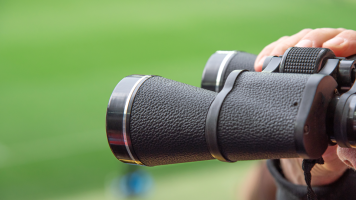
When choosing binoculars or scopes, a term that should be heavily considered is exit pupil. What is exit pupil, and what does it do? We're often focused on magnification and light gathering capabilities in optics, and these are essential for understanding how optics works, but overall viewing experience shouldn't be discounted.
If you look at any optic at arm's length, you'll see the small pinpoint sized window of light in the center of the eyepiece. Try this with various magnifications, and you'll likely notice a difference in the size of
by Meg Mann · Posted
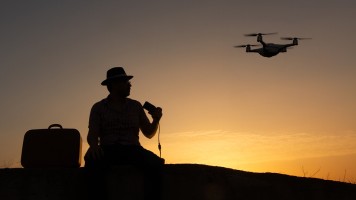
There are plenty of dads who seem incapable of taking a break, even if you were to drop them off at the beach. We’ve put together a list of gift ideas that will hopefully give them a much-needed reason to take a breath and indulge in that long-awaited trip or vacation.
To Capture
1. FUJIFILM instax WIDE 400 Instant Film Camera
Appeal to nostalgia with FujiFilm’s fresh take on instant film with the
by Luke Rollins · Posted
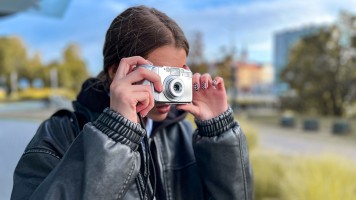
The market for point-and-shoot cameras is in an interesting place at the moment, with some of the most affordable options available new instead of used. As vintage Y2K-era imagery circulates social media, demand for these old digicams surges, all but erasing the value proposition that caused these old cameras to go viral in the first place. If you're in search of a fun, casual, and budget-friendly digital point-and-shot camera that still brings those retro vibes, B&H carries a range of available new options catering to different needs.
It'
by Mathew Malwitz · Posted
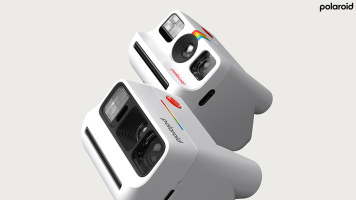
The world’s smallest analog instant camera is back, and this time, with an updated design, an even wider array of colors to choose from, and most importantly, improved picture quality. Introducing the new Polaroid Go Generation 3 Instant Camera.
Polaroid Go Generation 3
What’s new? At first glance, this camera shares the same small form factor as the Gen 2, but with a more
by Mathew Malwitz · Posted
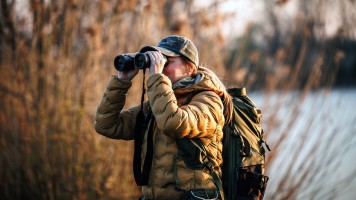
Birds, they’re all around us. If you haven’t paid much attention to them, you’re not alone. But, once you do, you’ll have a hard time stopping. If you haven’t yet dabbled in bird watching, known colloquially as birding, we have just one question. Why not? Birding is the perfect way of partially disconnecting from the digital world we find ourselves in and connecting with nature through observation, and one of the most relaxing pastimes imaginable.
If you’re fascinated by our feathery friends but don’t know where to start, we’ve got you covered

by John Harris · Posted
It would be foolish to claim that there is only one way to take a portrait, but there are some accepted norms and basic camera settings that you should understand if portraiture is to become your area of photographic interest. Remember though, as you walk down your creative path, that a portrait is more than a headshot, more than a beautiful photo of your subject; it is an opportunity to get to know someone, to have a visual conversation with a person, and to use your photographic skills to pass that understanding of the person on to the

Posted
Music photography has always been a listener favorite, and through the years we’ve gathered countless stories from legendary photographers about what it takes to document all aspects of the music scene.
Above Photograph © Jim Marshall, from the new book The Beatles By Jim Marshall: Live At Candlestick Park, in bookstores June 2, 2026
As we temporarily pause in recording new episodes while we build out a studio for video podcasts, we decided to take a trip down memory lane

Posted
There's a FUJIFILM camera out there for everyone. With all these options, it can be hard to find the right one for you. Do you want a compact camera you can quickly grab? Do you need a video-centric or hybrid camera? Or, are you photographing weddings and need the highest quality? Juan demystifies FUJIFILM's lineup, so you can find the right one for your work.
0:00 Intro
0:53 Fixed Lens
4:13 X-Series
7:21 X-Series Professional Hybrid
8:47 GFX Series
10:58 Final Thoughts
Sponsored by
Posted
Take your Lightroom catalog from chaos to clarity. Photographer and educator Cliff Pickett goes through his Lightroom Academy course all about keeping your photo library organized. Learn how to use folders, keywords, and collections the right way to make it easier to find the one photo you're looking for out of hundreds.
0:00 - Intro
3:15 - Agenda
5:18 - Lightroom bootcamp
6:10 - Chaos to clarity - The master plan
12:34 - Put your import on autopilot
18:52 - Intelligent design - folders, keywords, & collections
29:51 - Automated imports