Search results for: content why we create
About 89 filtered results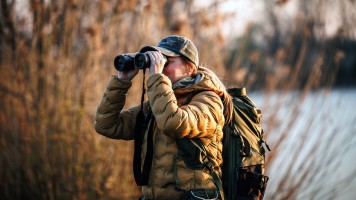
by Mathew Malwitz · Posted
Birds, they’re all around us. If you haven’t paid much attention to them, you’re not alone. But, once you do, you’ll have a hard time stopping. If you haven’t yet dabbled in bird watching, known colloquially as birding, we have just one question. Why not? Birding is the perfect way of partially disconnecting from the digital world we find ourselves in and connecting with nature through observation, and one of the most relaxing pastimes imaginable.
If you’re fascinated by our feathery friends but don’t know where to start, we’ve got you covered

by Mathew Malwitz · Posted
Birding is, by definition, the recreational hobby of observing and identifying wild birds in their natural habitat. Finding birds is the easy part. Just go outside and stop, look, and listen, and you’ll notice our feathery friends like you’ve never seen before. But how do we identify them? We need to consider a few physical attributes of the birds, from their overall shape to the length of their tail and more.
Birds come in all sorts of elaborate shapes, sizes, and color patterns that make them stand out, or in some cases, remain hidden from

by Luke Rollins · Posted
If your mom isn’t just the family photographer, but the family’s director of photography, production designer, and art director as well, chances are she’ll appreciate a photo-related gift for Mother’s Day. But if she’s the type of mom who loves to research and investigate every purchase she makes, you might want to think outside the box to find a gift that surprises or excites her or is just something she doesn’t already have. Here are some suggestions for Mother’s Day photo gifts for the mom who has it all:
Fun Little Digital Point &

by Mathew Malwitz · Posted
Getting a new camera is always an exciting affair. Whether it’s your first interchangeable lens camera or a long-awaited upgrade, there’s almost always new features to explore. Mirrorless cameras are especially exciting as they bring new and intuitive features that boost creativity while making photography easier than ever! Whether you’re new to cameras, shopping for one, or looking to dust off an old hobby, let’s get into setting up our new mirrorless camera.
What Is a Mirrorless Camera?
It’s not often something is named after a feature it

by Freddy Gerngross · Posted
Of all the terms we use to define microphones, "parabolic" isn't one that often comes up in conversation. But what is a parabolic microphone? How do they work and what are they used for? If you're curious to learn the answers to these questions—or if you just want to know why broadcast crew members are always holding those big plastic domes on the sidelines of professional sporting events—then you've come to the right place.
What are Parabolic Microphones?
Unlike other descriptors (dynamic, ribbon, etc.), the word "parabolic" does not refer to

by Freddy Gerngross · Posted
Mixing audio is not an exact science—there are many ways to achieve similar results, and what works for one project may not for another. In my ten-plus years of mixing, I’ve had the privilege and opportunity to learn both common and lesser-known techniques from some of the best engineers in the world, as well as the time and practice to discover my own tricks and techniques through experimentation and a few happy accidents. We don’t gatekeep at B&H—here are ten helpful techniques you can use to bring the best out of your mix.
1. Use

by Freddy Gerngross · Posted
Recording is much more of an art than a science, and every recording engineer has their preferences and techniques to achieve the sound they’re aiming for. With the current accessibility of recording technology, people have created incredible, high-fidelity productions despite limited budgets and unlikely recording environments—all they needed was some knowledge, a good idea, and the passion to experiment and explore different methods. In this guide, we will explore different established recording techniques that will give you solid knowledge

by Freddy Gerngross · Posted
Choosing a Digital Audio Workstation, or DAW, is a major decision. For beginners, it will define their learning curve, workflow, and operating knowledge—for professionals, compatibility, functionality, and familiarity is key. In this guide, we will give some detailed overviews of the most popular DAWs in the audio industry, what their strengths and weaknesses are, and some of their unique features.
If you’re in a rush, here’s a quick rundown of the best DAWs for a variety of common purposes:
If you’re a songwriter/producer: Ableton, Logic

by Freddy Gerngross · Posted
The Yamaha NS-10 is the divisive and decidedly drab nearfield studio monitor whose story serves as testament to the world-altering power that can be deracinated from the troughs of mundanity. NS-10s aren’t sexy, nor are they rare or expensive—they don’t even sound good. So, what made these humble noisemakers such a mainstay in the audio community for nearly fifty years?
Honest and transparency are two of the most desirable traits in a relationship—

by Zack Young · Posted
Congratulations on upgrading your recording space. In this guide, we’re going to cover the unboxing of your new SmallRig Vlog kit, essential lighting and microphone functions, and setting up your mini studio for the best results.
Unboxing Your Kit
The Monitor and Remote: SmallRig Vlog Kit
SmallRig Vlog Kit with Wireless Smartphone Video Monitor Advanced Kit
The SmallRig Vlog Kit is an easy way to use the high quality

by Zack Young · Posted
Congratulations on upgrading your recording space. In this guide, we’re going to cover the unboxing of your new Sony ZV-E10 II camera kit, essential camera functions, and setting up your mini studio for the best results.
Unboxing Your Kit
Camera: Sony ZV-E10 II
The Sony ZV-E10 II Mirrorless Camera is a compact video centric camera designed for streaming with ease of use in mind. It features a responsive, flip-out touchscreen and 4K recording in a user-friendly package.

by Zack Young · Posted
Congratulations on upgrading your recording space. In this guide, we’re going to cover the unboxing of your new SmallRig Vlog kit, essential lighting and microphone functions, and setting up your mini studio for the best results.
Unboxing Your Kit
Monitor and Remote: SmallRig Vlog Kit
The SmallRig Vlog Kit is an easy way to use the high-quality back-facing camera on your smartphone while still being able to see your image and adjust the framing. It includes a small monitor that can magnetically attach to your phone and pair over Wi-Fi.

by Steven Gladstone · Posted
Whether you’re a student or a seasoned veteran, selecting the right camera can make your head spin with questions. Does sensor size matter? What’s the difference between 4:2:0 and 4:2:2? Do I really need a camera that can record 8K? What about raw? We’ll explain the key components that help a camera produce cinematic images, and in doing so, hopefully help you make that all-important decision.
Evaluate Your Needs and Your Budget
Before considering certain cameras, you must know your needs and your budget. And be realistic. If you are a student

by Mathew Malwitz · Posted
After the smartphone revolution, it appeared that the days of the compact camera were done. How wrong we were. It’s true that a few years back, point-and-shoot options were few and far between. There were just a handful of options on the market, and some industry titans even left the market entirely. Despite the long-rumored demise of the compact camera, it seems that photo enthusiasts still desire a dedicated device without the distractions that come with a smartphone.
What is a compact or “point-and-shoot” camera? Just because a camera is “
by Freddy Gerngross · Posted
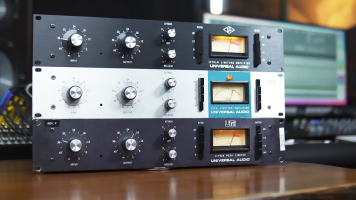
Among the many tools audio engineers use to sculpt and shape raw audio into a final work, most would say that compressors are in the top two most ubiquitous and useful. In concept, compressors are simple tools: they make the loud parts of sound quieter and the quiet parts louder, reducing dynamic range so that everything can be heard more clearly. They were first developed out of necessity, designed to solve critical technical problems in the early days of AM radio broadcasts—loud signals would distort, and quiet signals would be lost behind