Pro Audio
- Recently Added
- Popularity
- Name
About 196 filtered results
by Freddy Gerngross · Posted
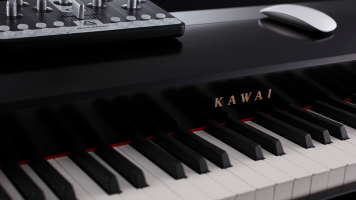
Whether you're a hobbyist making beats for fun or a seasoned professional producing music for your adoring fans, you'll want to have a MIDI keyboard to control your software synthesizers, drum machines, and maybe your whole DAW. In this shopping guide, we'll go over some of the best and most popular MIDI keyboard controllers we have in stock at B&H, their important features, and what kind of musicians they're best suited for.
If you need to know more about MIDI controllers and their affinity with DAWs, synths, and other hardware, check out
by Freddy Gerngross · Posted
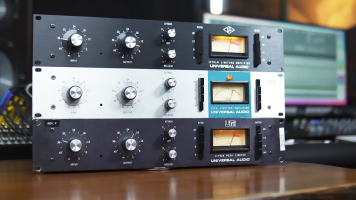
Among the many tools audio engineers use to sculpt and shape raw audio into a final work, most would say that compressors are in the top two most ubiquitous and useful. In concept, compressors are simple tools: they make the loud parts of sound quieter and the quiet parts louder, reducing dynamic range so that everything can be heard more clearly. They were first developed out of necessity, designed to solve critical technical problems in the early days of AM radio broadcasts—loud signals would distort, and quiet signals would be lost behind
Posted
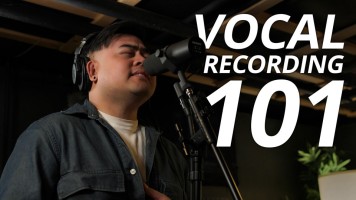
Kevin breaks down various setups you can use when recording vocals at home, from entry-level to high-end. The first step: understanding basic room acoustics. You'll also learn how microphones work, how to gain stage properly, and much more. Thank you to @mattrelevo for joining us!
0:00 - What We're Covering
0:44 - Treating The Room
1:36 - Audio Interface
2:54 - Dynamic vs Condenser Mic
4:01 - Basic, Bare-Bones Setup
12:30 - Home Studio Setup
17:10 - High-End, Professional Setup

by Freddy Gerngross · Posted
Tube microphones (also known as “valve mics” to those who refer to the subway as “the tube”) are something of a venerated patrician class of microphone technology known for their euphonic sound characteristics and historical pedigree, along with exorbitant prices that induce nightmares for recording studio accountants—discontinued models like the Telefunken ELA M 250E command upward of $30,000, making a brand-new Sony C-800G
by Freddy Gerngross · Posted
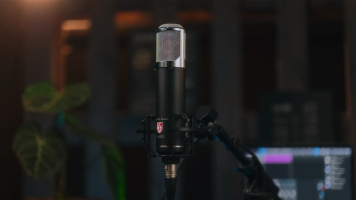
With their history and pedigree, tube microphones have built a reputation for being the delicate, rare, and expensive stuff only the wealthy or most prestigious of recording studios can afford to have in their arsenal. While that was true in the past (and still is for some tube mics), many audio equipment manufacturers are cloning vintage microphone architecture or producing their own designs that are affordable enough to be

by Gabby Bloch · Posted
If you’re thinking about building a home recording studio or upgrading your existing setup with better gear, there are a plethora of options at B&H that can take your production to the next level (maybe at the cost of fueling your gear-acquisition syndrome). Here are some of our favorite pieces of music technology we have on offer, covering everything you’d need to start working on your own music and recording projects, or bring your productions to the next level.
MIDI Controllers
Novation Launchkey MK4 Series—A Workhorse Controller
The

by Freddy Gerngross · Posted
Wireless microphones are an incredibly popular and convenient solution to many of the problems that come with traditional wired setups: they require far less cabling, and that means fewer issues with shorted wiring, lowered chances of cable-related tripping, and a higher number on the “Days Since Last Incident” sign. While they can be a bit more difficult to onboard, once the system is up and running, audio engineers and A/V technicians appreciate the fast setup time and decreased storage space that wireless mics afford. So, with all the

by Freddy Gerngross · Posted
Now that we’ve discussed the basic gear you need to put on a live show, lets look at the specific kind of gear and knowledge you’d need to set up a professional event at a large venue, stadium, or arena. Whether you want to gain more knowledge in pro live sound or you’re just curious, you’re in the right place!
If you’re a beginner or want more context for this article, go ahead and check out the

by Freddy Gerngross · Posted
The PA system is the linchpin of any venue or event space, whether it’s the hottest new night club, this weekend’s big house party, or the screening of the next indie film sensation. It’s integral to the experience of social activity—and because music and sound deserve to be clear, coherent, and exhilarating, the PA system needs to serve up the goods by being powerful, reliable, and properly scaled for the event.
In our

by Freddy Gerngross · Posted
When it comes to putting on a live show, knowing the specific gear to get and how to use it can be a daunting prospect. There are tons of different microphones, speaker systems, monitoring setups, and mixer environments, all of which are suited for different types of performance settings. And that's not even including power distribution, cabling, and other miscellaneous equipment you'll need to put on a proper event. But fear not reader. In this guide, we'll go over all the gear you'll want to consider and why, whether you're putting on

by Freddy Gerngross · Posted
Realistic artificial reverbs and other time-based processors are commonplace in today’s music technology, so it’s easy to overlook how much of a technical marvel it was when reverberation could be divorced from the physical location of a performance, and how quickly it transformed recorded music. From Bill Putnam’s reamping technique using physical echo chambers, to the Brobdingnagian 600-pound EMT plate reverb machine, to the complex digital convolution and algorithmic reverbs we have today, artificial reverbs have been sculpting the sonic

Posted
Are you recording your music at home? Not sure how to approach recording an electric guitar? Andrew shares a few mic setups, showing you how microphone choice and placement affect your sound.
0:00 How Electric Guitars Work
1:00 Simple & Budget Setup
2:33 How Does Mic Position Affect The Sound?
3:40 How Dynamic Moving Coil Mics Work
4:41 Over-Driven Electric Guitar Sound
6:35 What Other Dynamic Mics Can You Use?
8:02 Using Ribbon Microphones
10:39 Two-Mic Setups
14:04 Condenser Mic Options
14:58 Adding a Room Mic
16:48 Outro

by Freddy Gerngross · Posted
In the business of producing music, podcasts, or live performances, one of the most overlooked tools is the humble mic stand. The stand may not steal the show, but it does have the important role of acting as a conduit between the performer and the audience. So, whether you're a hobbyist or a professional, a well-built and versatile mic stand is a key accoutrement to any audio/visual setup. In this guide, we'll cover some great options we have from Auray* as well as other manufacturers so you can walk away knowing exactly what you need to look

Posted
Shopping for your first synthesizer, but are unsure what terms like oscillator, filter, or envelope actually mean? In this video, Gabe breaks down the core components found in most substractive synths and explains how they work together. By the end, you’ll have a clear understanding of the signal path and know what features matter most when choosing your first instrument.
0:00 - Intro
0:42 - Oscillators
1:52 - Filters
2:33 - LFO (Low Frequency Oscillator)
3:28 - Envelope Generators
4:04 - VCA (Voltage Controlled Amplifier)
5:27 - Effects
5:59

by Freddy Gerngross · Posted
Of all the terms we use to define microphones, "parabolic" isn't one that often comes up in conversation. But what is a parabolic microphone? How do they work and what are they used for? If you're curious to learn the answers to these questions—or if you just want to know why broadcast crew members are always holding those big plastic domes on the sidelines of professional sporting events—then you've come to the right place.
What are Parabolic Microphones?
Unlike other descriptors (dynamic, ribbon, etc.), the word "parabolic" does not refer to