Sekonic

There is a lot of talk about lighting and photography, and specifically how learning to use light can make you a better photographer. This is true, of course, but is also a notion that’s more often applied to working with artificial lighting, such as for portraits or products, where you can work in a studio with a strobe or LED to fine-tune how your shot looks. When it comes to landscapes, on the other hand, most likely you won’t have the ability to or just won’t want to use artificial lighting for your scenic shots. This is part of the

While much has been written about the significance of color management to optimal print output, the topic of adequate lighting conditions for the viewing and evaluation of photographic prints is an important detail that's usually given short shrift.
Tom P. Ashe is an undisputed expert in translating transitory images viewed on a screen to a stunning presence in print. In addition to literally writing the book on this subject with his 2014 title Color Management and Quality Output: Working with Color from Camera to Display to Print, Ashe is an

Nowadays, making a proper exposure with your digital camera is simple and straightforward: set your camera to A, S, or P and let the camera do the work. It’ll work most of the time and, in those instances where it doesn’t, you might pull out an external meter for a bit more precision. In all of these cases, you always have the rear LCD to double-check your shots if you’re unsure and, for the fanatical, you can even use a live-exposure histogram while shooting. When you’re using film, however, the luxury of being able to check your exposure by

Subject and style may vary, but consistency is a quality shared by all successful photo studios. When working indoors, that begins with lighting. Strobes remain the bread and butter of many still photography studios. Unlike natural light, which can be finicky and unpredictable; on-camera flashes, which are not typically designed for studio use; or continuous lights, which can become costly as output increases; strobes are

Landscape photographers are a contradictory bunch. Always on the quest for gear that is simultaneously lightweight and substantial, landscape photographers, as well as travel and nature photographers, are always in search of equipment that can get them a new look, serve a distinct purpose, or be flexible enough to handle a variety of conditions. If there’s a landscape photographer in your life to whom you’re looking to give the perfect photography gift, or if you’re looking to reward yourself with a new piece of kit, here are some gift

It has been said that all our knowledge begins with the senses. This is certainly the case for Martine Fougeron, who gave up a burgeoning fragrance-industry career as "the nose to the noses" to return to her roots—photography and family. What began as a personal challenge to reconnect with her creative life by photographing the inner world of her two sons and their teen tribe has blossomed into a long-term documentation of the in-between moments of daily life, from adolescence into adulthood.
Born in France, and brought up between Paris and
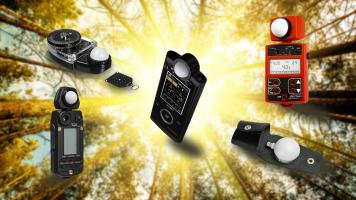
Almost every camera sold at B&H contains a light meter designed to calculate extremely accurate exposure readings, typically with a choice of Spot, Average, and Segmented metering modes. Good as they are, handheld light meters still have the upper hand when it comes to analyzing light.
For starters, the meter in your camera only reads reflected ambient light. If you’d prefer to take an incident reading, i.e., measure the light falling onto you subject rather than reflecting off your subject, you can’t do it without having to add
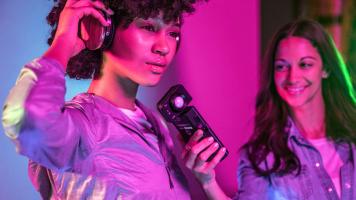
Take control of your lights with the just-announced C-800 SpectroMaster, from Sekonic. This superb color meter has nearly every color-measuring option you could imagine, including becoming the first to support SSI (Spectral Similarity Index). This setting allows you to set any measured light as the standard with which to compare other lights. Also built-in are CRI, TLCI, TLMF, and TM-30-15. This makes the C-800 the most comprehensive
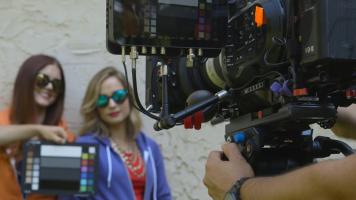
Let’s face it, gift-giving season is upon us, and you’ve got someone you care about to whom you would like to give a useful and meaningful gift. But, you don’t know what to get them. Sure, you could go with the old stand-by, the B&H Gift Card, but this year you really want to make an impression, and can’t wait for them to shower you with compliments of how great your gift was. So, grab a warm beverage and read on, as I offer up
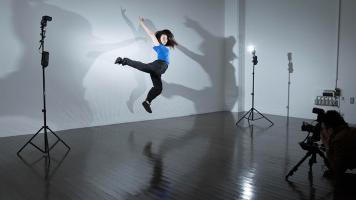
Many photographers like to work with available light or “daylight.” Daylight, at the right time of day and under the right conditions, can make for beautiful lighting. However, it can be controlled only to a point. Photographers often want complete control over shaping the light. This leads to shooting in a studio environment with a studio lighting kit.
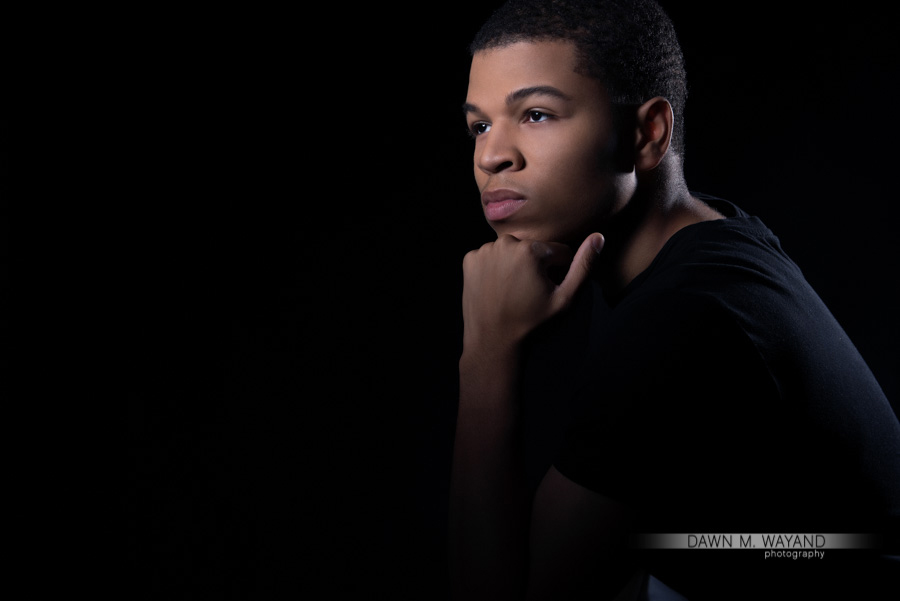
Using a 2-monolight setup.
Model: Baron Jackson

Considering how accurate your camera’s light meter is, selling a light meter to a photographer sounds as weaselly as selling ice cubes to an Inuit or Yupik person. In terms of accuracy, the new Sekonic Speedmaster L-858D-U Light Meter can calculate ambient and flash exposures to within 1/10 of a stop, which would be pretty impressive if Sekonic’s entry-level L-308S-U wasn’t equally accurate at 1/3 the price. So, what more
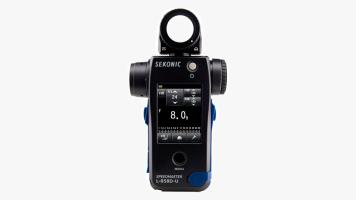
Pleasing photographers and filmmakers alike, Sekonic has released its newest flagship light meter: the Speedmaster L-858D-U. Succeeding the L-758-series of dedicated photo and cine meters, the new L-858D-U meter offers a comprehensive set of photo and filmmaking measuring capabilities, ranging from the ability to read flash and ambient light using incident or reflective methods, and present exposure data in various ways to
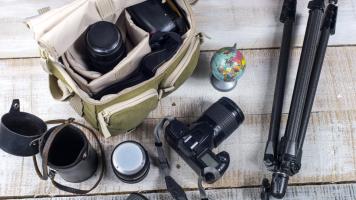
Sometimes you can’t beat a classic, even in the fast-paced, ever-changing world we live in today. Despite rapid and continuous evolution in the digital camera world, or constant improvements to optical design, new high-tech fabrics in bags, lightweight carbon fiber tripods, and so on, there are some photographic items out there that defy the need to evolve. They were simply perfected years ago, and are still available today to perform the same tasks they did back when they were cutting edge.
Leica MP

In today’s fast-paced, constantly evolving world, it's tough to keep up with the latest photographic trends and gear options available. Many find it too overwhelming to do so and, instead, simply choose to relax in the comforts of tested, proven designs for photographic equipment. While they are not the latest and greatest by any means, here are ten tools or processes that hardly require any introduction due to their reputations as classics, or by how they defy consistently transforming technology.
Wista 810DX Cherry Wood Field Camera
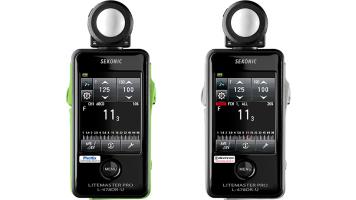
Expanding the compatibility of the popular L-478DR light meters introduced in 2012, Sekonic has just announced a pair of new meters dedicated to Phottix and Elinchrom wireless lighting systems. Featuring the same feature set as their predecessors, the LiteMaster Pro L-478DR-U-PX Series and the