Video
- Recently Added
- Popularity
- Name
About 821 filtered results
by Zack Young · Posted
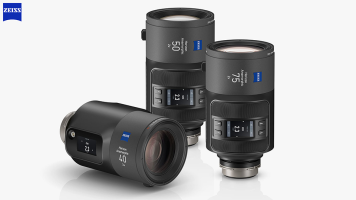
Zeiss announced two new sets of premium cine lenses. The Horizon full-frame 2x anamorphic lenses feature pronounced oval bokeh, fast T-stops, and a fully integrated motor system with no external gearing. They have interchangeable look-tuning back elements and are compatible with serial and LBUS connections. The Panoptes 65 large-format
by John Foldi · Posted
by Zack Young · Posted
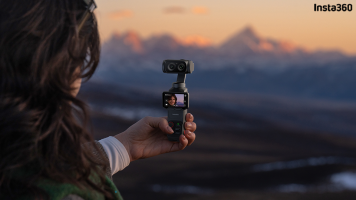
Insta360 has officially unveiled the Luna Ultra 8K gimbal camera, with dual Leica Summicron lenses, a triple AI chip, and a detachable 2” OLED touchscreen. The primary lens packs a 1” CMOS image sensor, while the telephoto lens has a 1/1.3" CMOS sensor. The Luna Ultra is also compatible with Insta360’s new Mic Pro wireless system

by Mary Latvis · Posted
Continuing to expand its line of popular high-performance video cameras, Kinefinity has introduced the new Vista Full-Frame 6K Digital Cinema Camera. Positioned as a more affordable option for creators, this compact camera features full-frame 6K capture at rates up to 50 FPS and up to UHD 4K at 100 fps in Super 35. Available with user-interchangeable Kinemount,

by Zack Young · Posted
Core SWX has officially unveiled their new PowerVault System, centered around a powerful and customizable Base station with five modular bays and compatibility spanning twelve battery types. This charging hub is housed in an IP65-rated hard case for maximum portability, and features multiple USB-C outputs to charge additional accessories, making it an ideal choice for professionals that need a ton of power.
by Steven Esposito · Posted
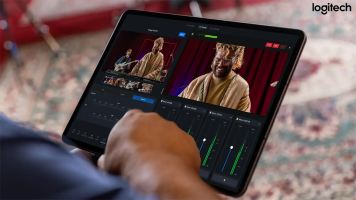
Live streaming and content creation is a booming industry that attracts a ton of people from all over the globe. Whether you are streaming your favorite games, cooking with a tuned-in audience, or simply chatting with others, Logitech offers a way to ensure the process is easy, seamless, and quick thanks to the latest updates to the Mevo Studio app.
Logitech Mevo Start Live Streaming Camera
In terms of functionality, ease of
by Mary Latvis · Posted
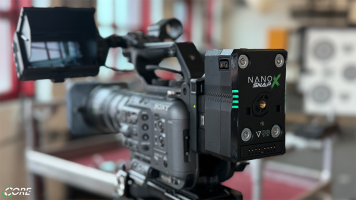
Experienced cinematographers and videographers know that shoot days can run the gamut from capturing absolutely every second of a “reality show” star’s day to the more measured pace of a dialogue-based feature that may even, time permitting, include rehearsals. The new NANO X SNAP 99Wh Li-Ion Battery from Core SWX has a modular, scalable design that covers your power needs for this wide variety of production scenarios.

by Zack Young · Posted
Thypoch has unveiled the new Simera-C 16mm T1.9 full-frame cine lens, available in E- and M-mounts, along with a Simera-C six-lens kit and custom foam inserts. The 16mm is now the widest focal length in the series, with a 106° field of view. At T1.9, it’s a tad slower than the T1.5 maximum aperture seen in the rest of the line, but still quite impressive for so wide a focal length. The 6-lens kit, also available in E- and M-mounts, contains the 16mm, 21mm, 28mm, 35mm, 50mm, and

by Jordan Gallant · Posted

by Zack Young · Posted
Canon has unveiled the EOS R6 V, a new full-frame RF-mount camera capable of 7K open gate recording, active cooling, 5-axis in-body stabilization, and Dual Pixel CMOS Autofocus II. This compact video-forward body is ideal for content creation, streaming, podcasting, and a host of other modern production scenarios. Releasing alongside the EOS R6 V is a new

by Jennifer Hahn · Posted
Keep your lighting nimble in any shooting environment with the new Omnibar LED linear light fixtures just announced by ARRI. These narrow LED lights come in 2’ and 4’ lengths and in black and classic ARRI blue/silver housings, and they are packed with features, including daisy-chaining, IP65 weatherproof, wireless remote control options, magnetic optics, and a built-in battery. The lights come in multiple packages to fit your workflow.

by Zack Young · Posted
ARRI is raising the bar for lens control with the new cforce MAX lens motor. Expect speeds of up to 400 teeth per second, plus low latency, LBUS compatibility, a touchscreen interface, and four-level adjustable torque. The cforce MAX is twice as fast and 15% lighter than cforce Plus motors, yet just as powerful. Compared to cforce Mini motors, expect twice the speed and strength with only a 15% increase in size. With its impressive balance of weight and

by Zack Young · Posted
Hollyland is stepping things up with the new Pyro Ultra system, wireless transmitters and receivers capable of sending low latency 4K60p video using proprietary TWiFi technology. Connect one transmitter to an unlimited number of receivers, with automatic frequency hopping and an impressive line-of-sight transmission range of 4900’.

by Jordan Gallant · Posted
Atomos is scaling up its monitoring solutions with the release of the Sumo PRO-19 4K HDR Monitor-Recorder-Switcher. The new iteration of the 19” monitor features a notable display resolution upgrade to UHD 4K HDR while maintaining a combination of live switching and routing capabilities. Like most Atomos monitors, the Sumo PRO-19 features both SDI and HDMI connectivity, comprehensive color support, and a wide array of

by Zack Young · Posted
Canon has unveiled three unique products for the professional broadcast space, including a CINE-SERVO 40-1200mm T5.0-10.8 lens with a built-in 1.5x extender, the compact and powerful RC-1P300 PTZ controller, and the long range ultra-high-sensitivity MS-510 multipurpose camera.
The CINE-SERVO 40-1200mm T5.0-10.8 will be