Search results for: photography tips solution tips solutions travel photography
About 61 filtered results
by Mathew Malwitz · Posted
Through the cacophony of forest sounds, your ears home in on a buzzy, almost garbled ascending song. Perhaps you recognize it immediately, or maybe you need to confer with one of the trusty internet databases or apps. You train your eyes on the canopy, scanning for movement of any kind, when you see it: the cerulean warbler, a small rowdy songbird with wings slightly splayed from the body. Quickly, you lower your binoculars and train your camera on the little blue passerine before snapping a few frames.
The resulting photos clearly show the

by Mathew Malwitz · Posted
Who doesn’t love a close-up shot of a flower or bumble bee? Some of the most beautiful aspects of nature are quite small and require special tools to capture them in a meaningful way. Whether it be of a cute little insect visiting our garden, or miniature figurines you paint and sell, we need a camera that can focus close and deliver good, quality results.
Before you panic, hear us out. We don’t need to get carried away with complicated lenses and accessories, and can just enjoy yourself with a simple compact,
Posted
Sony Artisans of Imagery's Andy Katz explores light and how it turns a good photograph into a great photograph. Learn how to see, shape, and control light to enhance mood, depth, and storytelling.
0:00 - Intro
2:05 - Early career
11:10 - Look for interesting light & angles
21:03 - Putting the puzzle together
23:11 - Color to Black & White
25:04 - One camera, one lens
27:00 - Color creates contrast
29:36 - Photographing people & traveling
34:32 - Black & White vs. Color
37:02 - Depth of field
39:22 - Hands & eyes in
by Mathew Malwitz · Posted
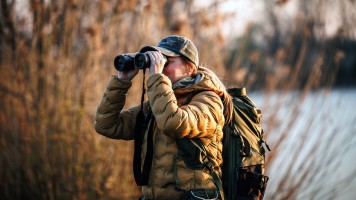
Birds, they’re all around us. If you haven’t paid much attention to them, you’re not alone. But, once you do, you’ll have a hard time stopping. If you haven’t yet dabbled in bird watching, known colloquially as birding, we have just one question. Why not? Birding is the perfect way of partially disconnecting from the digital world we find ourselves in and connecting with nature through observation, and one of the most relaxing pastimes imaginable.
If you’re fascinated by our feathery friends but don’t know where to start, we’ve got you covered

Posted
Photographer Ira Block walks through his best travel imagery. Along with sharing the best practices for respectfully approaching strangers, and how to build a lasting connection with people you meet on your travels.
0:00 - Intro
2:20 - Connecting with people of different cultures
6:26 - People in their environment
17:27 - Portraits
26:26 - Showing the culture
33:26 - Capturing moments
38:55 - Light
41:29 - Ethics
52:10 - Visually exciting images
59:27 - Finding different angles and perspectives
1:02:57 - Q&A break
1:10:45 - Ireland trip
1

by Mathew Malwitz · Posted
Do you plan your images? Really think about that question. Do you have an idea of an image before you head out for a shoot, or do you let the moment inspire you as the pieces fall into place? There's no wrong answer here. Planning or "pre-visualization" is a key piece of the photography puzzle that some put a lot of thought and effort into while others effortlessly come up with ideas on the fly.
No matter how you go about taking a picture, there is some level of planning that goes into a shot. With that said, there's a big difference between

by Mathew Malwitz · Posted
Aperture is one of the most significant settings in photography and also one of the first we should learn. It’s also one of the three settings collectively referred to as the exposure triangle that help to determine an image’s exposure.
Much like the iris of the human eye, a lens’s aperture opens and closes to control the amount of light reaching a light-sensitive imaging area. For this reason, the setting is

by Steven Gladstone · Posted
Whether you’re a student or a seasoned veteran, selecting the right camera can make your head spin with questions. Does sensor size matter? What’s the difference between 4:2:0 and 4:2:2? Do I really need a camera that can record 8K? What about raw? We’ll explain the key components that help a camera produce cinematic images, and in doing so, hopefully help you make that all-important decision.
Evaluate Your Needs and Your Budget
Before considering certain cameras, you must know your needs and your budget. And be realistic. If you are a student

by Mathew Malwitz · Posted
For macro photographers, having the right gear is essential. Magnification and lighting are key, but you don’t necessarily need the biggest, priciest macro lenses out there to get close-up shots. If you’re a macro photographer yourself or buying a gift for one, we have some excellent recommendations for every budget.
Gifts Under $50
1. Close-up macro filters (like this Macro Lens

by Mathew Malwitz · Posted
Weddings are among the most important events in a couple’s life. As a photographer, you’re tasked with capturing that day and immortalizing those memories with your camera and lens. However, the camera is only part of the equation. To make your images shine, you’ll need to add some additional tools to your arsenal. In this article, we’re going to explore the accessories that not only make your life as a photographer easier, but make your work stand out.
Lighting
Lighting is the most important element of wedding photography. You’re going to

by Danielle Marsella · Posted
Wedding season is upon us, bringing clear skies and warm weather—the perfect backdrop for capturing stunning couple portraits and candid moments at ceremonies and receptions. For photographers tasked with capturing a once-in-a-lifetime event, high-quality lighting gear is a must. Learn more about versatile light and modifier options to elevate your couple’s special day.
Capture with an On-Camera Flash
A compact and often powerful tool, on-camera flashes offer wedding photographers versatility while documenting weddings spanning across multiple

Posted
Matt shares how the Nomatic McKinnon 35L Camera Backpack can store and organize his camera gear, including his camera, lenses, chargers, memory cards, laptop, and clothing.
0:00 - Intro
0:32 - The Backpack
0:54 - To Cube or Not to Cube?
1:29 - Packing Cameras & Lenses
4:06 - Packing Accessories
5:15 - Packing the Cube
6:36 - Packing the Mesh Pockets
7:36 - Laptop Sleeve
7:56 - Secret Compartment
8:33 - Clothing Compartment
9:08 - Final Thoughts
Sponsored by

by Gabby Bloch · Posted
What is podcasting? No, that’s not a silly question—especially not to those of us who have time traveled from 2003. That's when ex-Guardian columnist Ben Hammersley coined the term podcast by combining the words iPod and broadcast. Since then, podcasts have evolved to become a much more developed concept. Now, podcasts are presented in a myriad of ways through a number of mediums and digital platforms.
In this article, we're going to explore what podcasting means in today’s

Posted
Join Diego Rizzo and learn his five tips on photographing volcanoes, covering preparation, gear, focusing, settings, and more.
0:00 - Intro
0:18 - Weather & Prep
1:09 - How to Choose a Tripod
1:53 - Focusing & Exposing
3:33 - Exposure Time/Shutter Speed
4:23 - Drones
5:36 - Safety (Bonus Tip!)
6:57 - More from Diego

by Allan Weitz · Posted
When it comes to travel, landscape, and seascape photography, I always try to keep at least one long focal length lens in my bag for photographing subjects to which I either cannot get closer or—in the case of a Siberian tiger guarding her cubs—to which I have no business getting closer.
Photographs Ó Allan Weitz 2020
The definition of a long telephoto lens depends on whom you ask, not to mention what format camera they are using. For some, a 105mm lens is long. For others, it’s anything beyond 200mm or 300mm. For me, 300mm has always been the