Search results for: photography tips solution understanding guide numbers
About 7 filtered results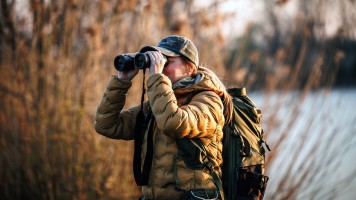
by Mathew Malwitz · Posted
Birds, they’re all around us. If you haven’t paid much attention to them, you’re not alone. But, once you do, you’ll have a hard time stopping. If you haven’t yet dabbled in bird watching, known colloquially as birding, we have just one question. Why not? Birding is the perfect way of partially disconnecting from the digital world we find ourselves in and connecting with nature through observation, and one of the most relaxing pastimes imaginable.
If you’re fascinated by our feathery friends but don’t know where to start, we’ve got you covered

by Mathew Malwitz · Posted
There’s an old adage that claims in order to be a wildlife photographer, you need a lot of time and a lot of money. This is only partly true. Many great wildlife photo opportunities can occur in urban parks and even in your own backyard, as long as we know what we’re doing. In this article, we’re going to cover a number of essential tips that will help you become a better wildlife photographer.
If you’ve read our introduction

by Mathew Malwitz · Posted
If you’ve been around photography for any length of time, you’ve probably heard of ISO. ISO is one of the three settings that determine our exposure in photography. These settings are collectively referred to as the exposure triangle. ISO is unique in this equation, and in this guide, we’re going to explore why.
ISO can be referred to in two ways. It’s most commonly spoken as an abbreviation, but it is also sometimes referred to as a word pronounced as eye-so. General consensus is that you call it whichever you like. After all, it’s not what

by Mathew Malwitz · Posted
Photography is by definition, the capture of light on a light sensitive surface. That surface could be glass, tin, film, or a digital imaging sensor like those found in most modern cameras. The amount of light that reaches our light-sensitive surface is what we can define as exposure.
A good exposure will look accurate to life or the photographer's creative vision. It will maximize an images quality and

by Mathew Malwitz · Posted
For macro photographers, having the right gear is essential. Magnification and lighting are key, but you don’t necessarily need the biggest, priciest macro lenses out there to get close-up shots. If you’re a macro photographer yourself or buying a gift for one, we have some excellent recommendations for every budget.
Gifts Under $50
1. Close-up macro filters (like this Macro Lens

by Tim Ireland · Posted
Macro photography allows photographers to explore the intricate details of subjects at a 1:1 or greater magnification ratio. However, capturing sharp, stable, and well-lit macro shots can be challenging, due to factors like camera shake, focusing difficulties, and lighting issues. This comprehensive guide will delve into the support systems and related tools that can enhance your macro photography experience, addressing specific challenges that may arise.
Stabilization Tools
Studio Stands: Studio stands are large, stable support systems

by Allan Weitz · Posted
Sometimes, the phrases, acronyms and strings of numbers or number-letter combinations used to identify photographic hardware or techniques can be daunting to the uninitiated neophyte photographer.
We've prepared a list of the basic terms. Have we left any out that you think should be added? Please let us know!
0-9 | A | B | C | D | E | F | G | H | I |