|
|
Timers
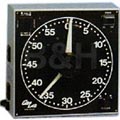 As the name implies, a timer is what controls how long the exposure will be. A timer can be something as simple as a watch or as complex as a high-end multi-functional digital timer. The advantage of an electronic timer is that it can be connected to the enlarger and will automatically turn the enlarger lamp on and off when you press the "expose" button. Timers can be analog or digital. The old-style analog timers are tried and true. They usually have a sweep dial with easy-to-read numbers. To use, just turn the sweep hand to the number of seconds you want, press the "On" button, and the timer starts the process. The enlarger kicks in, the negative is exposed and when the timing cycle is over, the timer turns the enlarger off. A good timer will have two inputs. One is for the enlarger and the other is for the safelight. In addition to turning the enlarger on and off, the timer will turn the safelight on and off during and after the exposure. Most analog timers tell time in full seconds with little space for "tweaking" the exposure between numbers. Analog timers are also very good for developing negatives. The large numbers, such as are found on the Gralab 300, are easy to read when mixing chemicals or processing film. As the name implies, a timer is what controls how long the exposure will be. A timer can be something as simple as a watch or as complex as a high-end multi-functional digital timer. The advantage of an electronic timer is that it can be connected to the enlarger and will automatically turn the enlarger lamp on and off when you press the "expose" button. Timers can be analog or digital. The old-style analog timers are tried and true. They usually have a sweep dial with easy-to-read numbers. To use, just turn the sweep hand to the number of seconds you want, press the "On" button, and the timer starts the process. The enlarger kicks in, the negative is exposed and when the timing cycle is over, the timer turns the enlarger off. A good timer will have two inputs. One is for the enlarger and the other is for the safelight. In addition to turning the enlarger on and off, the timer will turn the safelight on and off during and after the exposure. Most analog timers tell time in full seconds with little space for "tweaking" the exposure between numbers. Analog timers are also very good for developing negatives. The large numbers, such as are found on the Gralab 300, are easy to read when mixing chemicals or processing film.
On the other hand, digital timers are much more accurate. A digital timer usually reads out in LEDs. Like their analog brothers, they will also control the safelight. However, digital timers are designed to do other functions as well. Some can control more than one machine at a time, or change the display from full seconds to tenths of seconds. Some printers feel that that the accuracy of a digital timer is offset by the smallness of the buttons which can be difficult to see and use under a safelight. Conversely, analog timers, although easier to use, are not as accurate - particularly if your exposures require fractions of seconds. The reality is that both serve a purpose in your darkroom.
A fully stocked darkroom has more than one timer: one for exposing the print, another for timing the development, and, on occasion, a third one for timing a wash. Once you become adept at printing, you will find that you can run several operations simultaneously. i.e. printing, developing and washing.
|
