Pro Audio
- Recently Added
- Popularity
- Name
About 721 filtered results
by Freddy Gerngross · Posted
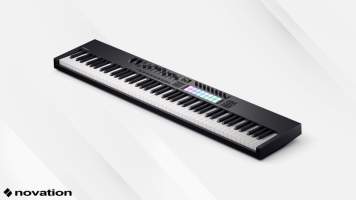
Novation has announced the rollout of the next generation of Launchkey MIDI keyboard controllers with the Novation Launchkey 88 MK4, modernizing and improving the build and performance of the well-regarded series of keyboards.
Novation Launchkey 88 MK4 USB MIDI
by Freddy Gerngross · Posted
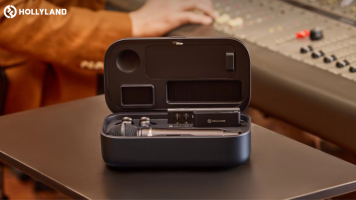
Hollyland has announced the release of a new all-in-one vocal mixing system dubbed the MELO P1. Taking a form factor reminiscent of a giant earbud case, the MELO P1 is an entire wireless audio production studio in one box, including a 1” large diaphragm condenser microphone, 100mm dynamic driver wireless earbud monitors, a smart audio mixer, remote control, and the charging case itself.
The Hollyland MELO P1

by Freddy Gerngross · Posted
Solid State Logic has announced the new SSL 1, a compact and affordable audio interface with the same form factor as the powerful and popular SSL 2+. The new SSL 1 promises to be perfect for those with small home studios doing personal projects to those wanting to refine their craft and enter the next level of production.

by Freddy Gerngross · Posted
Allen & Heath announced an updated lineup of their SQ series of digital mixers with the all-new SQ5+, SQ6+, and

Posted
teenage engineering's EP-136 KO Sidekick is a small, versatile beast with a secret. Join Gabe as he runs down how to utilize this two-channel mixer. It might be your sidekick in your future music endeavors!
Sponsored by

by Freddy Gerngross · Posted
Mackie is releasing the next evolution of their Thump PA systems with the new ThumpV4 lineup, updated with their new SoundCheck DSP system, which promises to deliver better flexibility and convenience with even more instant processing settings that designed to cater to almost any application.

by Freddy Gerngross · Posted
Sennheiser has unveiled the new HD 480 Pro professional recording and monitoring headphones, positioned as their highest tier closed-back pro-audio headphones for monitoring, music production, and mixing (not to be confused with the iconic open-back HD 600 series and audiophile reference-monitoring HD 800 series).
Sennheiser HD 480 PRO Plus Professional Recording and

by Freddy Gerngross · Posted
RODE has developed a brand-new Micro-Electro-Mechanical-System (MEMS) microphone technology they’ve dubbed SONAURA, the culmination of five years of research and development collaboration with Infineon Technologies. The new SONAURA microphone technology aims to redefine how professional audio is captured, with its ultra-compact 4mm x 5mm dimensions, industry-leading Signal-to-Noise Radio (SNR) of 83 dB, and a self-noise of 11 dBA.
This tech will be introduced across new next-gen products from RODE and the Freedman Group lineup beginning with

by Freddy Gerngross · Posted
Denon just announced the AVR-S980H Audio/Visual Receiver, the newest member of its updated A/V receiver lineup that looks to expand and improve upon the features and performance of earlier models.
Denon AVR-S980H Audio/Visual Receiver
The AVR-S980H maintains all the highlights of its predecessor, the S970H, particularly its 7.2

by Freddy Gerngross · Posted
Deity has announced the new PR-4 Portable 4-Input 32-Bit Float Field Recorder, a compact recording solution that offers four microphone inputs and six-track recording in a small enough package to be mounted directly onto a camera and carried in a lightweight production bag.
Deity Microphones PR-4 Portable 4-Input 32-Bit Float Field Recorder
The new field recorder caters to

by Freddy Gerngross · Posted
Professional musicians and synth enthusiasts who want to get their hands on a rare edition of the classic Minimoog Model D (and perhaps the final production run of the instrument ever) should consider new Bob Moog Tribute Edition—a faithful recreation of the original featuring the identical sound engine and signal path from the 1970s.
The newly handcrafted synths are built by the Moog Music team in North Carolina

by Freddy Gerngross · Posted
Yamaha has announced the release of the passive CXR/CXSmk3 loudspeaker and powered/active DXR/DXSmk3 subwoofers. They look to offer live venues and fixed installation firms new and improved features, easier installation, and better sound quality.
Every product in the new series offers bigger horn sizes, central ports that reduce wind noise and standing waves, symmetrical design for easier mirrored placement, and two-angle pole sockets (0˚ and 7˚) to choose from.

by Freddy Gerngross · Posted
RF Venue’s flagship wireless antenna, the Diversity Fin, has been updated with an IP44 rating to withstand the rigors of the outdoor elements. The new offering is perfect for large outdoor venues and other event or production spaces that need reliable and solid wireless performance.
RF Venue Diversity Fin IPX Antenna & DISTRO5

by Freddy Gerngross · Posted
TASCAM has unveiled a major update to their 2025 DR-40X with the DR-40XP 4-Channel 32-bit Float Portable Field Recorder, offering new features, fixes, and updates that promise to provide even higher quality recordings while staying easy and intuitive to use.
TASCAM DR-40XP 4-Channel 32-Bit Float

Posted
With the MPC sample, Akai gives us the smallest and most compact MPC to date. And although it's small, the MPC sample packs a punch and brings together the iconic sample-based workflow MPCs are known and loved for with modern performance tools like Pad FX and Flex beat. Join Gabe in a deep dive of AKAI’s small but mighty all-in-one portable sampler.
0:00 - Intro
0:24 - Opening Jam
1:59 -