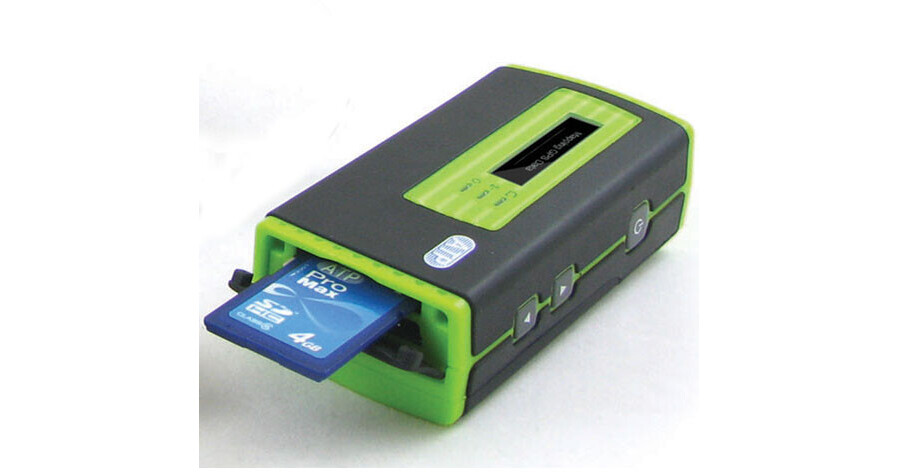
The ATP GPS PhotoFinder is a GPS datalogger that features a card slot and USB connectivity to apply GPS coordinates to JPEG images. Unlike other GPS datalogging devices, this product can apply the EXIF data to the files without the use of a computer. It is a compact and portable unit that is usable by point-and-shoot digital camera owners as well as digital SLR users.
In further detail, the PhotoFinder has two key elements of connectivity. The first is a combined Secure Digital/MMC and Memory Stick card slot. When a card in inserted during downtime or at the end of the day, the PhotoFinder reads through the JPEG filed contained within and appends the EXIF metadata with GPS coordinates. The other port is a mini USB port that has two modes of functionality. In one mode, a USB card reader may be connected and other card formats like CompactFlash can be used with the PhotoFinder as long as they are formatted with the FAT32 file system (nearly all digital cameras format cards FAT32). The other mode allows the PhotoFinder to connect to a home computer (Mac/PC/Linux) and it will appear up as a 128MB USB drive. What is on that drive is the saved tracklog in a KML format that can be easily imported and mapped by Google Earth or other software applications that accept the format.
In use, the PhotoFinder is extremely simple to operate. When the unit powers on, it will seek out the signals from GPS satellites above. Once the channels are "locked," the device can and should be left on and operating as long as the user is out shooting. The time to lock will vary depending on the ready state of the GPS and the clarity of the satellite link. "Cold-start" times can be as quick as 45 seconds; "hot-start" is 1 second. A set of two AAA batteries will provide 7.5-8 hours of constant use.
When ready, all a user has to do following a day of photography is insert a card into the PhotoFinder or copy the tracklog into their favorite photo editor that can accept such data. Actually, the Geotagging operation using either method can be done at anytime as the PhotoFinder is simply matching the times it has recorded, with the time stamp the camera records onto each photo. Couldn't be easier!