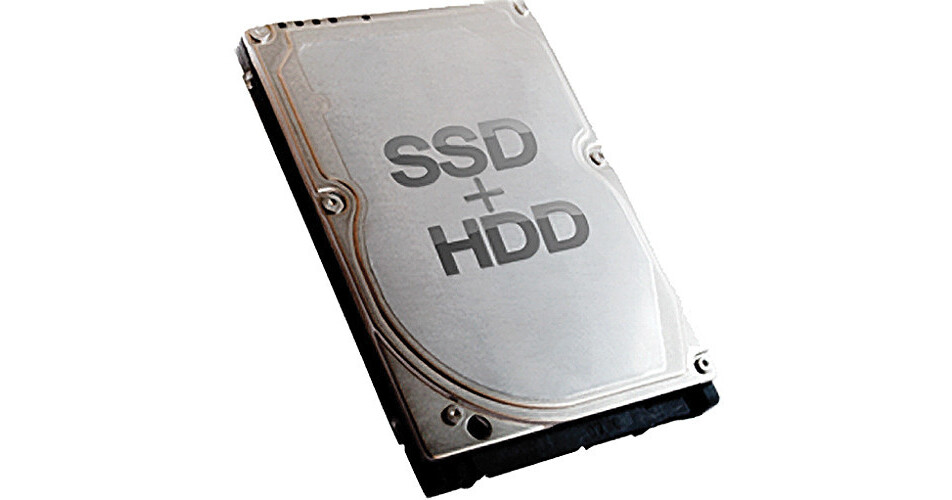
Combine the capacity of a traditional spinning hard drive with the performance of an SSD using the 1TB Laptop SATA III 2.5" Internal Hybrid Drive from Seagate. The purpose of the SSD in a hybrid drive is to act as a cache for the data stored on the hard drive, improving the overall performance by keeping copies of the most frequently used data on the SSD. This can help to increase overall system performance, resulting in quicker system boots, faster application loads, and improved responsiveness when compared to traditional hard drives.
Designed for gamers, creative professionals, and high-performance laptop experiences, this hybrid drive features a 1TB capacity, 8GB of NAND flash memory, a rotational speed of 5400 rpm, and a 64MB cache. Built with a 2.5" / 9.5mm form factor, this drive will fit into SATA III 6 Gb/s drive bays that match its form factor, while also being compatible with SATA II 3 Gb/s and SATA 1.5 Gb/s. In addition to being compatible with Windows and Mac, this hybrid drive is also compatible with gaming consoles such as the PlayStation 3 and 4. This hybrid drive has also been rated for 600,000 load/unload cycles, can achieve sustained data transfer rates of up to 100 MB/s, I/O data transfers of up to 600 MB/s, has an AFR of 0.48%, a non-recoverable read error rate per bits read of 1 in 1015, is rated for a yearly workload to < 55TB, and uses both QuietStep Ramp Load technology and Adaptive Memory technology.
Please be aware that this drive does not contain any of the parts required for installation.
Adaptive Memory technology is also referred to as self-learning technology. This is because the SSHD makes intelligent determinations about which data to store in NAND flash memory, without any influence from the host or related storage device drivers. Adaptive Memory technology works by identifying data elements that are important for enhanced host-level performance and promoting such data elements from HDD storage to NAND flash memory.
Because it works entirely within the drive, Adaptive Memory technology has first-hand knowledge of the data elements that are best handled by solid-state memory versus traditional HDD storage, and can promote data to NAND flash memory based on this knowledge. For example, data elements associated with booting, restarting, and hibernating a computer, in addition to other frequently requested data, are prioritized for storage in solid-state memory. However, data elements associated with long, sequential data strings, such as in video or audio data files, do not benefit from being stored in NAND flash