
If you have any interest in drones, there’s no better place to start than at the beginning. In simple language, we’ll go over the absolute basics of multi-rotor drones, explaining how they fly, popular types of multi-rotor configurations, and important aspects of each one.

How Do They Do What They Do?
The “multi” in multi-rotor is the key to understanding how exactly they fly. Quadcopters, hexacopters, and octocopters are the most common types and mainly differ in how many spinning propellers they have. They all take to the air using the same principles, so we’ll focus on the most popular type: the quadcopter.
Quadcopters have four motors with spinning propellers on individual arms. If you think of the configuration like an X, one diagonal line has two propellers spinning clockwise (CW), with the other counterclockwise (CCW).

Why not all in the same direction? Well, for every action there’s an equal and opposite reaction. So, when they spin one way, the body will spin the other way. The result is less a majestic flying machine, and more a big, wild fidget spinner that never leaves the ground. The alternating directions cancel this spin out, leaving only one option for the drone: to go up.
Now that we know how a drone flies into the air, how does it hover and move around? It’s actually pretty easy and all comes down to how those propellers spin…
-
Hover: All propellers spin at the same speed, pushing air down, which results in air being pushed up to make it fly. It stops and hovers when that upward thrust equals the Earth’s gravity pulling the drone down
-
Spin: On one diagonal, the pair of CW propellers increase their speed, while the pair of CCW decreases their speed by the same amount, spinning the drone in one direction. Flipping that speed change spins it the other way. Otherwise known as yaw.
-
Forward & Backward: Similar to spin, the propellers’ speed changes. To go forward, the front pair of propellers (CW & CCW) go slower, dipping the front of the body down. At the same time, the back pair speed up, which pushes the drone forward. Flipping that speed change will make the drone go backwards. Otherwise known as pitch.
-
Right & Left: This is the same as forwards/backwards, except the pair of propellers are on each side of the drone. One pair slows to dip the drone’s body left or right, and the other pair increases, pushing it in one direction. Otherwise known as roll.
-
Stabilization: All of this movement is based on the wind being calm, which it usually isn’t. The drone’s IMU (Inertial Measurement Unit) senses the drone’s movement and orientation, sending that data to the FC (Flight Controller), which constantly makes adjustments to the speed of each rotor to compensate for these changes.
Quad, Hexa, Octo … and Coaxial?
Multi-rotor drones come in different configurations that are usually all named based on the number of propellers they have. That’s because a rotor is what spins a propeller. So, a quadcopter has four, a hexacopter has six, and an octocopter has eight. Easy enough.
A coaxial multi-rotor on the other hand is much different. It stacks two rotors/propellers on the same arm, vertically, with one propeller above another. One spins CW and the other CCW. So, a quad coaxial multi-rotor drone will have eight propellers like an octocopter. Now let’s go over advantages, disadvantages, and why you’d want to fly one vs. another.
Quadcopter

-
The most common and beginner-friendly of all multi-rotor configurations.
-
While they can be large, they are primarily small, compact, and easier to fly.
-
With a heavy focus on smaller sizes, quadcopters are relatively weak, making them excellent for racing or shooting videos, as they can only carry a camera on a small gimbal.
-
They lack redundancy. With only four rotors, if one were to fail, the drone would crash immediately.
Hexacopters/Octocopters
-
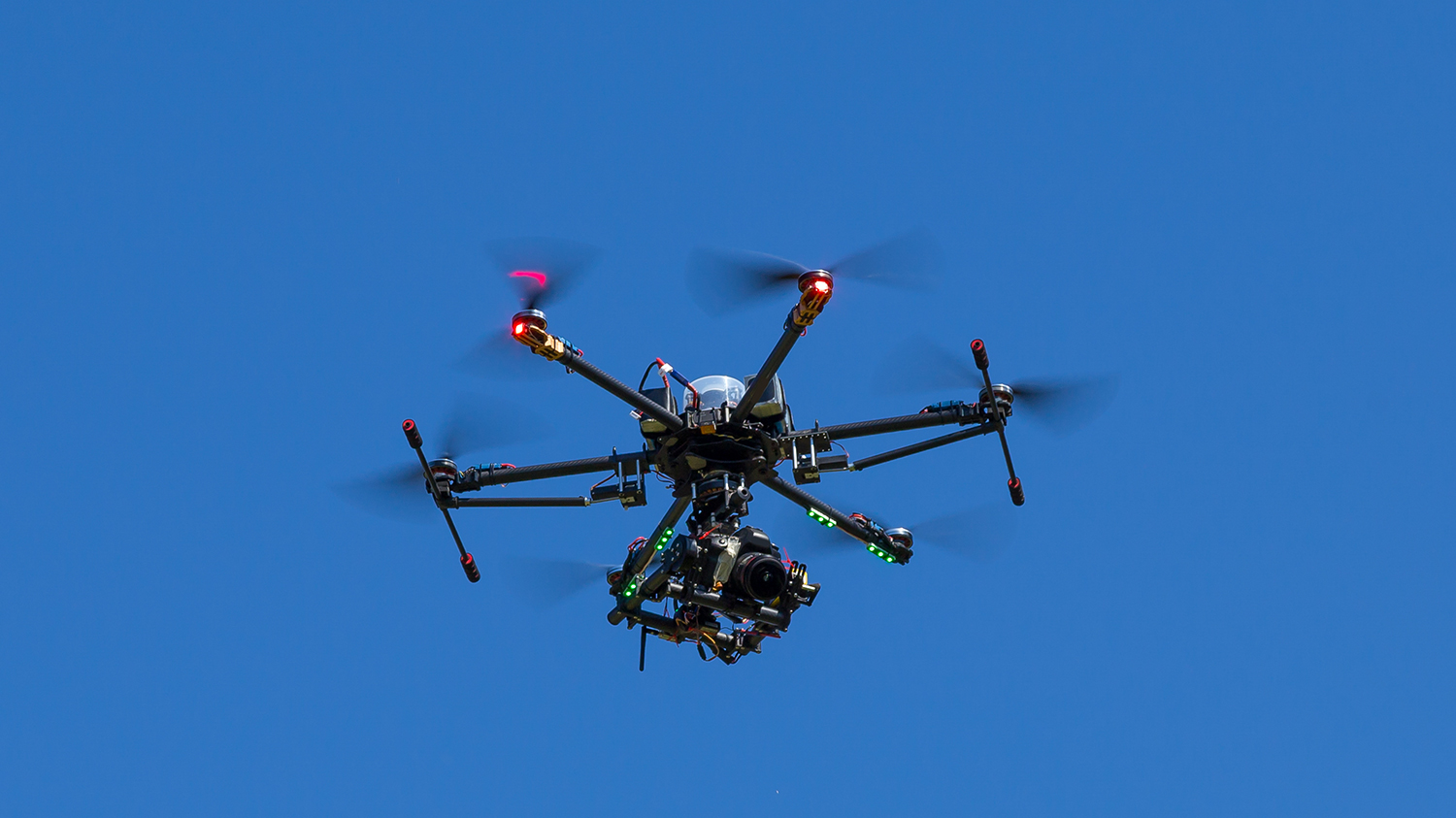
Less common and geared more to enterprise and commercial applications.
-
With more, and larger, rotors and propellers, these drones have greater thrust, making them ideal for carrying and delivering payloads other than a camera.
-
The increased power also makes them more resilient to harsh weather, making them useful in remote areas.
-
They offer redundancy due to the number of rotors they have, making them safer. A hexacopter can generally stay in flight if it loses one, with octocopters able to sometimes lose two. This ability is very reliant on a good FC that can compensate quickly, and the luck of the draw on which rotors fail.
-
They are large, heavy, and expensive. This greatly limits their use in most locations in terms of safety, travel, and deployment.
Coaxial

-
These drones share many aspects of a hexacopter and octocopter, except for size. By combining two rotors and propellers into one arm, the footprint is drastically smaller. This makes them somewhat safer and much easier to deploy and travel with.
-
A disadvantage to coaxial drones is the slight decrease in thrust. While they typically have significant thrust in general and can carry heavy loads, the bottom propellers have to deal with the turbulent air of the top propeller, resulting in a slight loss of efficiency when compared to the dedicated rotors of standard hexacopters and octocopters.
You should now have a good understanding of how varied the multi-rotor category actually is, and how they all share a similar basic foundation in how they function. For more information about all types of drones, be sure to check out our expansive selection of drones and accessories.
