
Pitting mirrorless against DSLRs has been happening for a decade. The variables have also completely changed after the past couple of years. This year saw the introduction of just two DSLRs from Canon and a development announcement of the Nikon D6. Compare that to more than a dozen mirrorless entries from multiple brands, many of which were significant releases that cover everything from entry-level to professional. In light of the numerous changes in the industry, many are seriously debating whether to go with a mirrorless camera or stick with a DSLR for their next purchase.
Optical or Electronic?
For the decade mirrorless has existed, there have remained some key differences between them and classic DSLRs. The main change is obviously the use or lack of a mirror. DSLRs use a mirror box to reflect light through the optical viewfinder for a through-the-lens viewing experience. Mirrorless eschews this design in favor of a digital image pipeline, relying on the use of electronic viewfinders or rear displays to provide the real-time view for composing your shots. And so begins the EVF versus OVF debate.
Neither is better. It will all depend on personal preference. Optical finders have the benefit of being older and manufacturers have decades of experience in creating brilliant ones. They also have no lag, no noise, and don’t require any power. They do however require a precisely calibrated (and loud) mirror box to sit in front of the sensor and numerous elements to create that sharp image. This is where the downsides of the OVF are introduced as this mirror system adds weight and size to the camera body, and unless finely tuned and built will limit the continuous shooting rate of the system. It also enables the use of a separate AF sensor with dedicated focusing points, though arguably this system has its own faults in that it may require adjustments to deal with manufacturing variances from model to model.

Newer electronic viewfinders will alleviate many of these “problems,” but they also lack the same immediate and clear TTL view of optical finders, and may be bothersome to experienced shooters not used to looking at a screen all day. They do not provide a natural view, but instead a preview of the actual digital image being created by the sensor, so you can experience things such as blown highlights or lost shadows in an EVF. Previewing the final image can be an asset, and as it is a digital display you can use the finder for video too. It will also boost the brightness in dark scenes so you can always see your subject regardless of ambient light. The lack of a mirror system means cameras can be smaller. A downside to the EVF is that it requires power to run and in low-light you can experience lagging and noise issues.

To be honest, my opinion on the mirrorless versus DSLR debate comes down to the finder. If you can’t stand the EVF and don’t care about the various benefits, then stick with a DSLR. Shoot a lot of video or perhaps need the reduced sound and size of a mirrorless and the EVF is more beneficial.
Autofocus and Speed
The tides have certainly turned when it comes to autofocus and shooting speeds. Now, the fastest cameras are arguably mirrorless options. In general, when you compare similar DSLRs and mirrorless cameras you will find mirrorless offering much faster continuous shooting speeds and more advanced autofocus systems. DSLRs still rely on separate AF sensors that must be calibrated to ensure accuracy. Mirrorless cameras benefit from featuring phase-detect systems on sensor and the ability to analyze the image from the sensor at all times, allowing for fancier AI-driven analysis of the image to focus automatically on things like a person’s eye or the front of an approaching vehicle.
Many camera manufacturers just starting up new lines are still working on these systems and will be adding features over time. These systems aren’t perfect, but they have a lot more potential, thanks to the advanced image-processing power that can be crammed into compact tech these days—and it’s only getting better. Sony introduced Animal Eye AF this year as an example of how it can improve without needing additional hardware, and this is a great advantage for mirrorless over DSLR. Some DSLRs do offer on-sensor focusing on par with mirrorless at the cost of using the optical finder, which defeats one of the main reasons to use a DSLR. We do have some new flagship DSLRs on the way, such as the Nikon D6, and we might see some new tech there that swings the AF and speed camp’s return to the DSLR. For the most part however, mirrorless is pulling ahead if you need speed.
The Lenses
For a true comparison, we need to look at the systems as a whole. DSLRs are tried and true, and still growing. Mirrorless are the newcomers, and while many are quite fleshed out, equally as many are lacking key options. Where this becomes clear is in lens lineups. Looking at options from Canon and Nikon, you can clearly see the difference. Both of these manufacturers’ DSLR lines include over a hundred current and legacy options. Most notably, this growth over time means that they offer more unique and specialized options, such as tilt-shift and super telephoto. It also means that there may be multiple choices along the same focal lengths, so you can find an option that may fit your budget or needs better.
Plenty of mirrorless systems are well fleshed out—Fujifilm X Series and Micro Four Thirds come to mind—but plenty are lacking. Nikon and Canon’s new full-frame systems, the Z series and EOS R, respectively, each only have a handful of lenses out of the gate. It takes some time to flesh out lineups. Sony has been working hard over the years to fill out its lenses, including adding a couple of super telephotos in the form of 400mm and 600mm in the past few years but, even so, is missing some lenses we have long had for DSLR systems. DSLRs have nearly everything already available and a wider supply of third-party options. If you job requires you to pick up or use a specific type of lens and it is only available in either a DSLR or mirrorless, go with that system.

This does lead into one of the distinct advantages of mirrorless: the mount. The shorter flange distance, and in some cases larger diameter, means native lens designs can be smaller, unique, and higher quality. Take Canon’s RF 28-70mm f/2L USM and upcoming RF 70-200mm f/2.8L as examples of new exciting creations. Another benefit is support for various adapters. Without needing any optics, mirrorless cameras can be set up to work with legacy lenses and current lenses from other brands and systems via adapters, effectively increasing the number of lenses available to the photographer to hundreds or thousands. Adapters aren’t a perfect solution, especially when electronics are involved, but can certainly help fill the gaps in certain lineups.
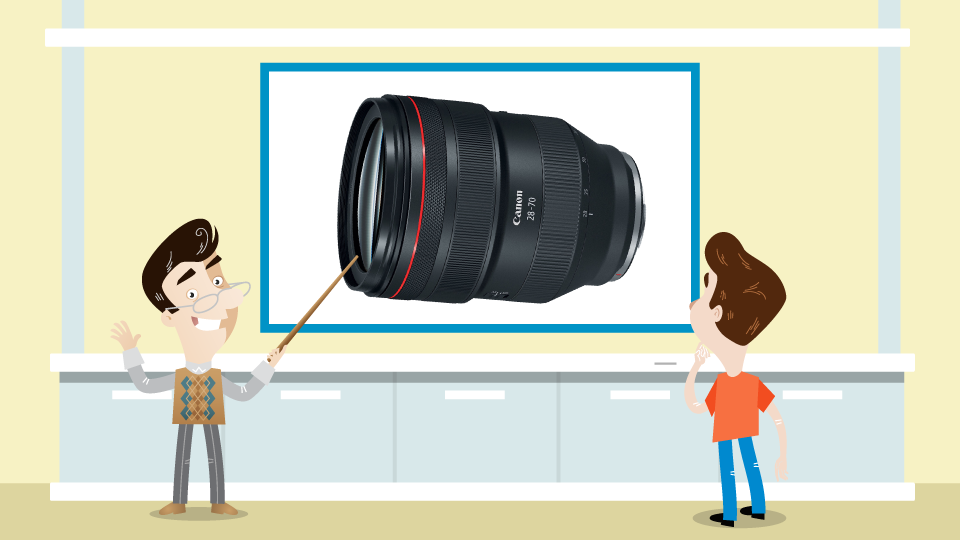
Need a specific lens and peak performance? I’d recommend going with the native mount. Only if you are comfortable with adapters and/or the current offerings should you jump wholly into a new mirrorless system.
Design Differences
Weirdly, mirrorless has seen more of the innovations than the DSLR side of things. For example, plenty of the latest mirrorless cameras (the X-T3, EOS R, Z7, S1H) have 10-bit video capabilities. They also see boosts to continuous shooting rates, have new control options, and in some cases have new mount systems that are supposed to be better than the DSLR offerings. That doesn’t mean DSLRs are worse here, the long history of design has led to impressive ergonomics and control schemes. Many photographers will be able to pick up a DSLR and instinctively grasp many of the controls well enough. This advantage comes with the cost of having a naturally larger form that can support larger grips and more/larger buttons and dials.
Mirrorless is smaller as a general rule of thumb. This is great if you want to cut every once you can from your kit. It is unfortunately also a downside as you can no longer cram as much tech into the camera. Recent years have seen plenty of reports of overheating from the small bodies, cramped controls, and more as a result of the trimmed down body designs. Another downsizing disadvantage comes with batteries. Many early mirrorless models had notoriously small batteries and runtimes dramatically lower than their DSLR counterparts. Current offerings have been slowly but surely catching up, but the fact that many pack in an EVF and rely more heavily on constant digital processing then tend to burn through power sources quickly.

Can’t survive without a large grip and a dedicated button or dial for every one of your custom settings? Go with the DSLR. Have large hands? Pick up a DSLR. Absolutely need to shave weight for your next trip? Mirrorless wins here. Prefer smaller and lighter bodies and only need essential controls? Mirrorless is the right choice.
If you need to pick between DSLR or mirrorless, my advice is to boil it down into the viewfinder, lens selection, and body designs. One will give you more than the other. If you don’t have any requirements though, go with a camera that gives you all the features you need. I’m even going to argue that many functions are equivalent between the two models. No longer are DSLRs the sole kings when it comes to autofocus, the Sony a9 and even Canon’s Dual Pixel AF have proven that. Picking a particular sensor size is also available on both, especially with medium format and full-frame growing substantially in the past year. Either a DSLR or mirrorless camera will work for you.

Any other questions? Want to throw your own thoughts into the mirrorless vs DSLR debate? Leave them all in the comments section below!
