
The Mamiya 7 II is the best camera ever made. At least I think so, and I know I’m not the only one who thinks this. It is the perfect mixture of form and function; uniquely precise and casual at the same time. Its system contains some of the finest lenses available during the film era, many of which are still likely optically superior to lenses being developed today. It is a 6 x 7 format film camera—dubbed “the ideal format,” by Mamiya—and this aspect ratio is by far my favorite due to its not-too-long, not-too-squat shape. And, of course, the differentiator of the Mamiya 7 II is that it is a rangefinder camera,something somewhat rare nowadays, but a focusing system that has quite a cult following.

The Mamiya 7 II was introduced in 1999, and succeeded the Mamiya 7, which came out in 1995. Both versions effectively do the same thing, but this second iteration has an improved body design, multiple exposure capabilities and, in addition to the common black color, is also available in the prized, but somewhat saccharine, champagne finish (it’s my dream to own the champagne version someday). While 6 x 7-format cameras were somewhat plentiful around and before 1995, the 7 II separated itself by being the ultimate camera for traveling. Compared to Mamiya’s other 6 x 7 offerings—the RZ67 and RB67 series, as well as the Pentax 67 and Bronica GS-1—the 7 II is light and nimble. It is portable without compromising on lens quality or most capabilities. The one area where it does not perform well is with close-up shooting… but that’s never been a rangefinder’s strong suit. Where the 7 II excels is in its flexibility and its ability, simply, to work. It is perfect for backpacking, perfect for lifestyle work or mid-range portraiture, perfect for documentary work, and so on. Once acquainted with the rangefinder method of focusing, it is also, arguably, faster and more precise to use than an SLR. And, objectively, a rangefinder’s viewfinder is brighter, clearer, and larger than essentially any eye-level SLR’s will ever be.


I’ve written before about the Mamiya 7 II, and my personal history with the camera, but I would also like to get a bit more technical about why this camera is so near and dear to me. Somewhat rare for 6 x 7 film cameras, it has a built-in exposure meter along with the ability to work in aperture priority mode. This convenience is very much taken for granted nowadays, with digital, but for a medium format film camera to function so intuitively is a major selling point. And even more is that the exposure meter is truly brilliant, with its semi-spot metering area (just about the size of the focusing patch), easy to use LED readout in the viewfinder, and +/-2 EV exposure compensation. This camera also has the most successful implementation of AE lock I’ve ever used. Whereas many cameras have a secondary button or a locking switch to lock-in a metered exposure setting, the 7 II lets you meter with a half-press of the shutter, and then hold the shutter halfway to keep this reading locked in. Coupled with the rangefinder focusing method, where you are most often focusing and then recomposing, this method of metering and then recomposing, too, is quite natural.
Another highlight of the Mamiya 7 II is that it uses an electronically controlled leaf shutter, which affords full flash sync with all shutter speeds, up to 1/500-second. It has a PC sync port and hot shoe for working with external flashes, also. Since a leaf shutter is used, and there is no in-body, focal plane shutter, Mamiya also developed an ingenious built-in dark slide curtain to allow for mid-roll changing of lenses. Compared to most medium format cameras with leaf shutters, including the RB67 and RZ67, which required a loose metal dark slide to be inserted to protect the film when a lens was removed, the 7 II has a small crank on the bottom of the camera to draw out an opaque curtain over the film and permit removing the lens—no more cumbersome dark slides you’re bound to lose or bend anyway.


Finally, and perhaps equally important as the camera itself, is the neat set of lenses developed for the 7 II. There were only six lenses designed for the system, covering an ultra-wide to medium telephoto range. Because there is no mirror that needs to be accommodated with a rangefinder, the optical designs for these lenses are quite a bit freer than ones you see for SLRs. For example, the rear element of the 43mm f/4.5 can be pressed very close to the film plane to promote more even illumination, along with greater sharpness and virtually no perceivable distortion. Along with the one oddball lens of the series, the 210mm f/8, which cannot be focused through the viewfinder, these two lenses required the use of auxiliary shoe-mounted viewfinders for proper use when composing. Besides these two quirkier optics, Mamiya also developed 50mm f/4.5 and 65mm f/4 wide-angle, 80mm f/4 normal, and 150mm f/4.5 portrait-length lenses to sate most photographer’s needs. The 80mm f/4 is the most common lens of the bunch, is effectively the kit lens of the system, and is renowned for its compact, lightweight design and surprisingly excellent optical performance. The 65mm f/4 is the general wide-angle option, chosen to reap the full scope of the viewfinder and provide a broad field of view. The 50mm f/4.5 is an ultra-wide that's not quite as extreme as the 43mm (but a bit more open than the 65mm) and technically requires the auxiliary viewfinder for accurate composing, but in a pinch you can get away with the full viewfinder. And finally, my personal favorite is the 150mm f/4.5, which is a short telephoto apochromat with truly impressive sharpness, even when used wide open. Also, these lenses are well matched to one another for a consistent look, if your shooting requires a mixture of focal lengths.

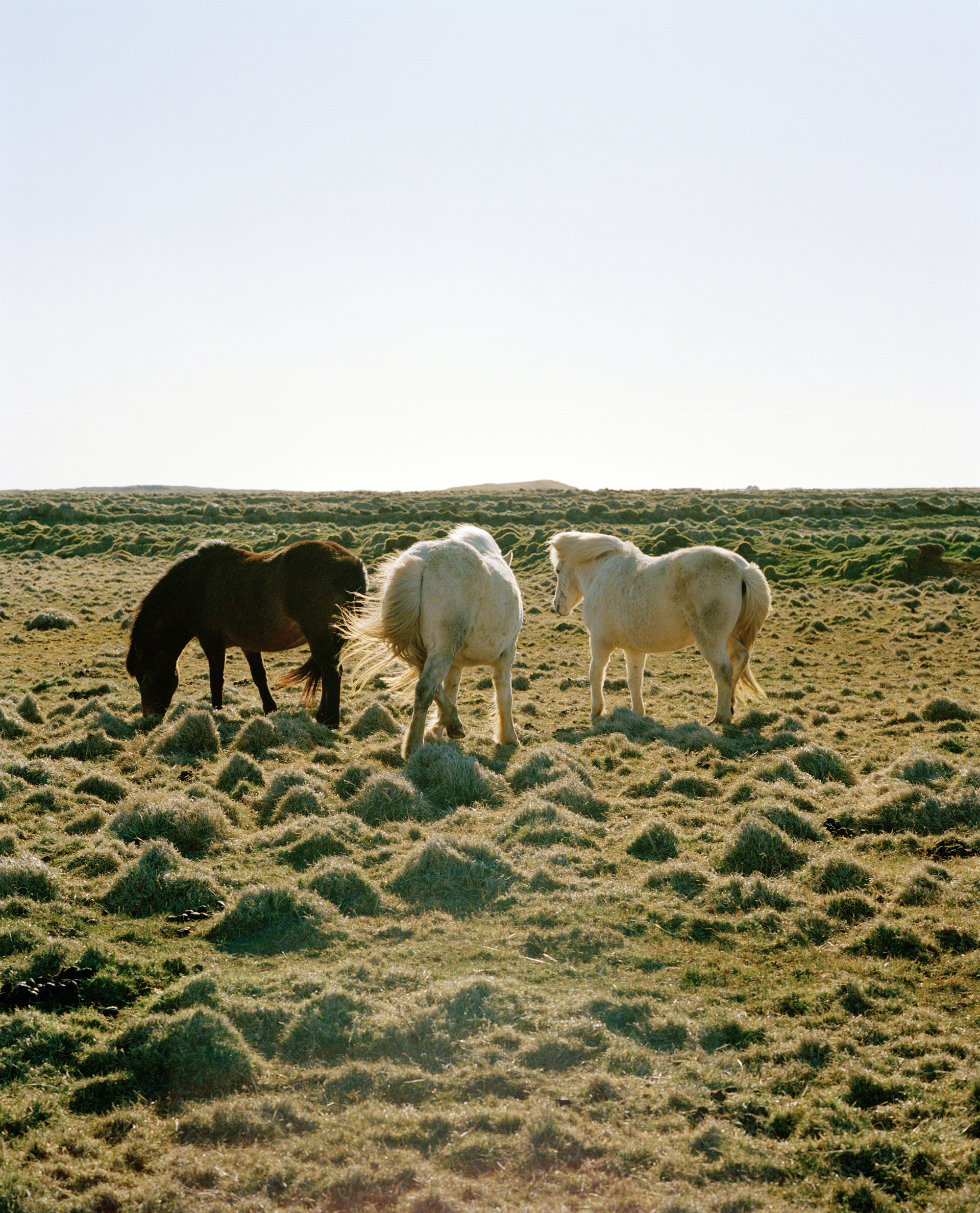
If you can’t tell, I’m obsessed with the Mamiya 7 II. I have been ever since I bought mine, around 15 years ago. It is the most perfect camera system I’ve ever used, and is my benchmark from which all other cameras, even contemporary digital ones, are evaluated. Mamiya nailed this camera with a perfect blend of useful features and simplicity. It’s the camera I’ve used the most throughout my life, and it’s the only camera I’ve ever been tempted to buy more than one of.
Have you ever used a Mamiya 7 II? What’s the most perfect camera in your eyes? Besides just specs, what do you value most from a camera? Give us a shout in the Comments section.
To read about more great classic cameras, click here.
