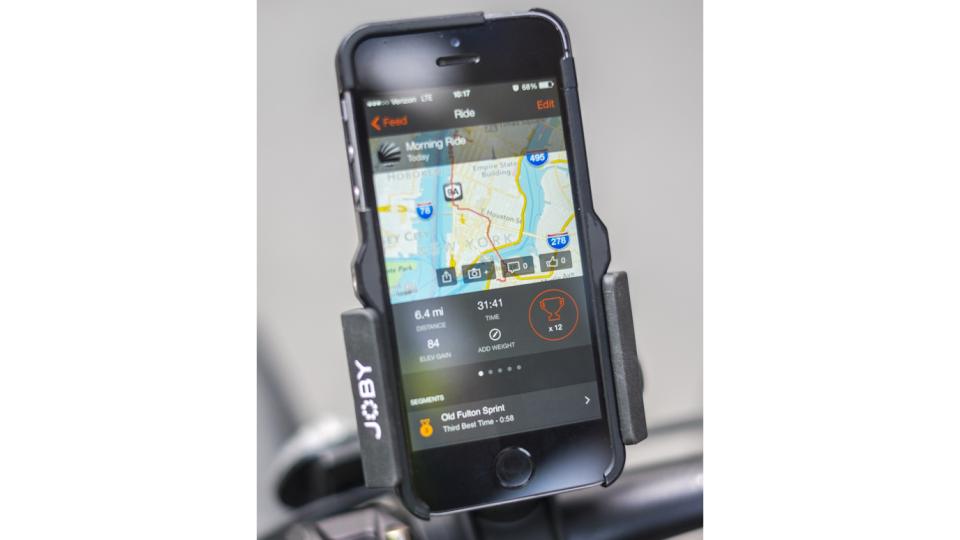
Riding your bike to work is good for the environment, reduces congestion on the roads, decreases crowding on public transportation (yes, that is an issue in New York City), and is a great way to exercise. But because of the time that cyclists spend breathing heavily in close proximity to motor-vehicle exhaust, is commuting by bike in New York City as healthy as we would like it to be? A team of researchers from Columbia University's Mailman School of Public Health & Lamont-Doherty Earth Observatory is trying to figure that out. And, to help me participate in the study, I have equipped my commuter mountain bike with the Joby GripTight PRO Bicycle Mount.
The study, a brainchild of Dr. Darby Jack and Dr. Steven Chillrud, is in its second year of a pilot program. “Our study has two goals: first, to improve exposure assessment techniques for health studies by incorporating the variation throughout the day in how much air we breathe into our lungs, rather than just looking at the concentration of air pollutants. Second, we know that air pollution is harmful and that exercise is beneficial, but policy-makers need insight into how short-duration air pollution events and exercise-related exposures affect cardiovascular parameters. Our biking study should allow us to look at all of these issues,” says Dr. Steven Chillrud.
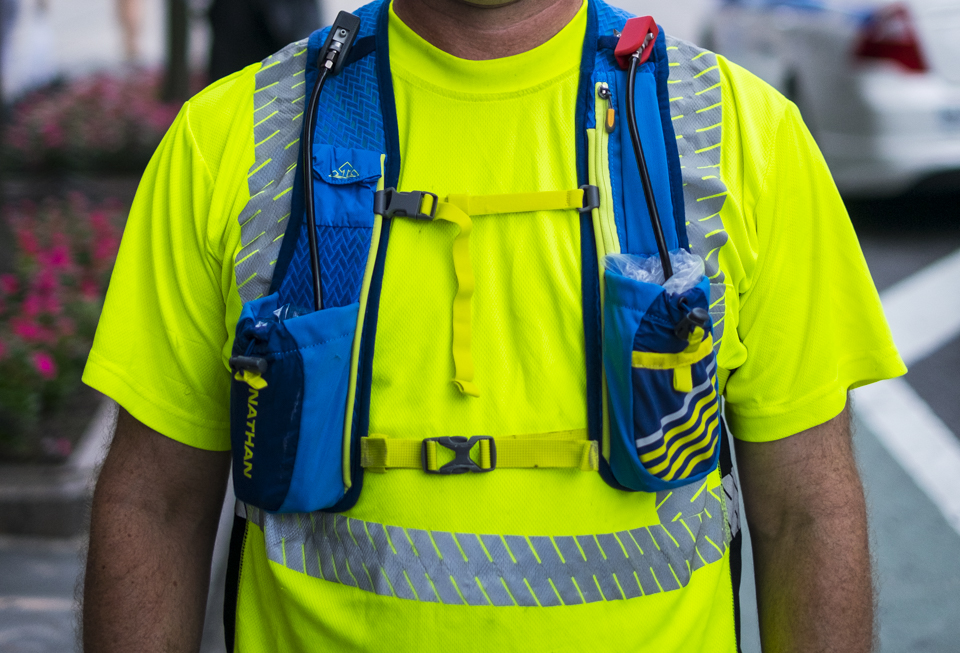
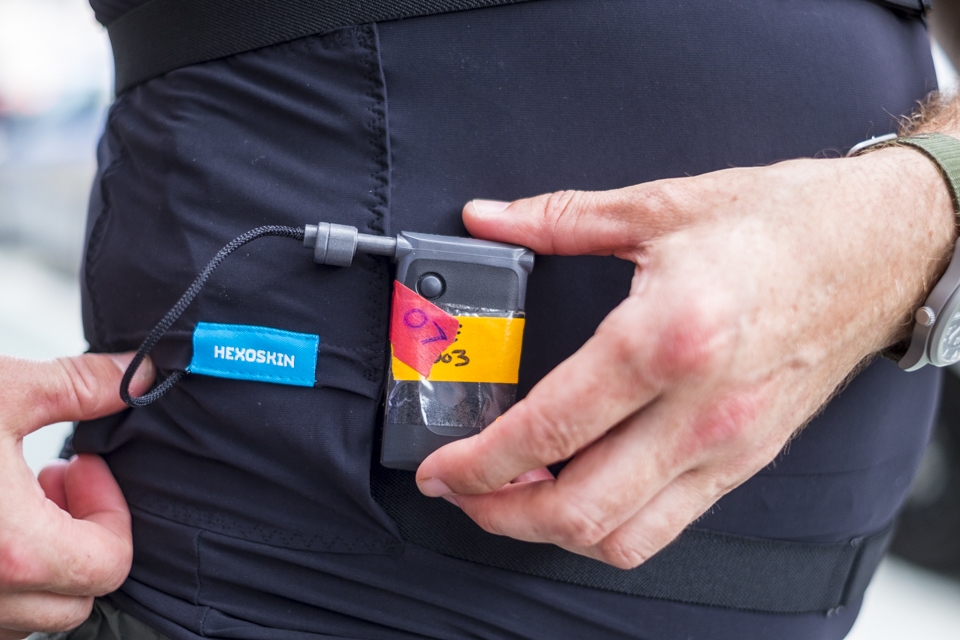
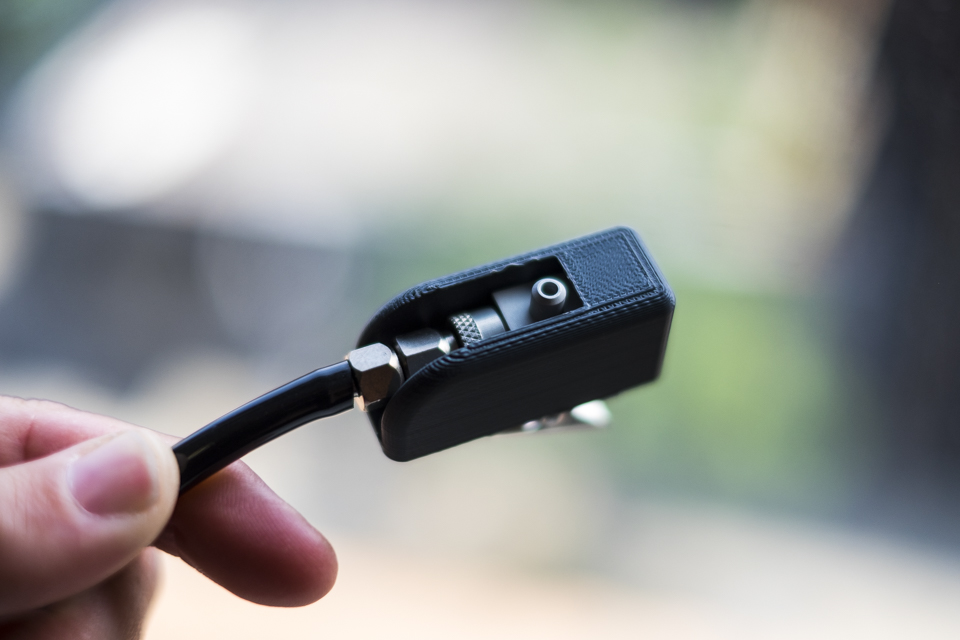
To collect data for the study, cyclists must wear an ensemble of specialized gear. After waking in the morning, the study participants have to don a skin-tight Hexoskin undergarment over their torsos. The Hexoskin contains sensors that span the width of the wearer's chest and connect to a small, battery-powered data logger that rides in a small pouch below the chest above the right hip. Over the Hexoskin I wear my standard neon and reflective shirts. And, above the outer garments, a workout vest's front pockets contain an AethLabs air quality monitoring device, with a sensor connected by tube to the upper portion of both sides of the vest. A battery-powered blood-pressure cuff is worn before and after rides. The gear is worn for 24 hours, but the vest with the air-quality monitors is hung in close proximity to where the participant sleeps. After a 24-hour trial, the air quality monitors are swapped out for new units by a member of the research team.
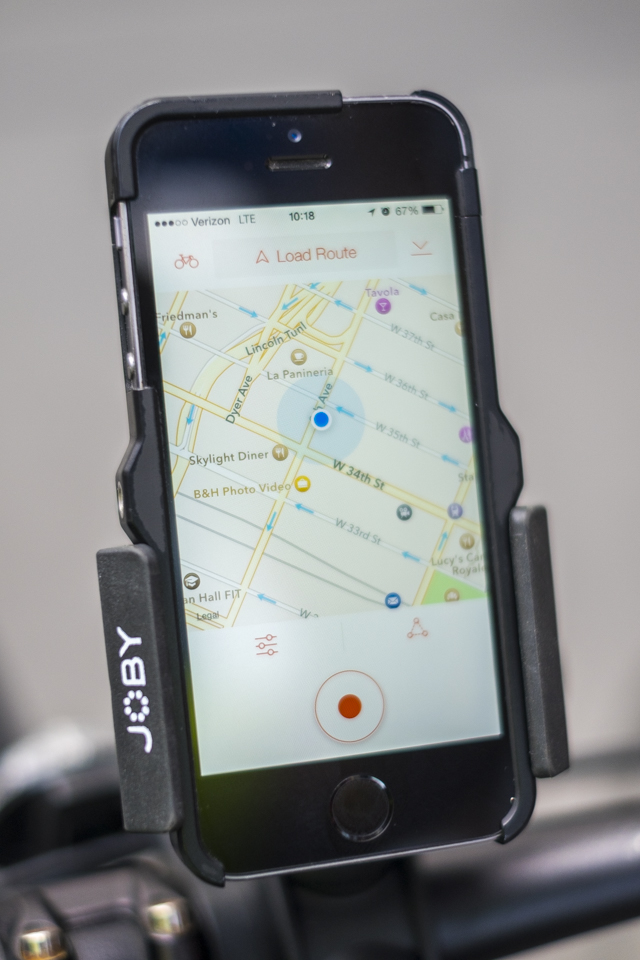
Monitoring the cyclist's ride information is a smartphone running the Strava fitness running and cycling mobile application. Distance, route, and speed information is saved by the app and then emailed to the research team, where the data is correlated with the information from the Hexoskin, microAeth, and blood-pressure cuff for study.
The one piece of gear I brought to the party, besides my Specialized Rockhopper 29, was the Joby GripTight PRO Bicycle Mount that allowed me to mount my iPhone on the handlebars of my bicycle to monitor the Strava app as it tracked my commute. The Joby GripTight PRO, like all of the Joby products I have had the pleasure of working with, is very well engineered. Unlike some other smartphone handlebar-mounting systems, the Joby does not have any straps covering your screen. Attached to a fully articulated mounting system, the main grip holds the sides of your phone and the grip is tightened by a screw in the back. Loosen the screw and the grip stays tight, yet allows you to pivot the smartphone from a vertical orientation to a horizontal one without letting go.
The Joby is not easy-on/easy-off. It is not difficult to install, but it is not designed to be mounted and removed several times a day. In New York City, the bike theft capital of the world, anything that is not welded to your bicycle is likely to be removed by thieves. I have had a water bottle and crossbar pad stolen. Someone even took my taillight mount (I hope the thief had an identical brand of tail light, or the mount will be useless to him or her). So, for urban or NYC use, the Joby would be better served by a quick on/off mounting system. But, to test its attractiveness to criminals, I have left the Joby GripTight PRO attached to my bicycle for the past two weeks while parked outside the B&H offices, and so far no one has found it tempting enough to remove.
How well does the Joby grip your phone? On my first ride with the mount, I had installed it incorrectly (I was in a hurry to get to work and did not take my time tightening the various clamps). As I mentioned above, the mount is fully articulated and, as I was riding a mile from my Brooklyn apartment, the Joby flipped my phone from upright vertical to straight down. The phone stayed in the grips even though gravity was now working against it. Also, on my first day riding with the air pollution study gear, I crashed my bike when my tires caught the edge of a metal road plate in a construction area. I departed the bike and my water bottle left its cage. It wasn’t a total yard sale, as my panniers stayed on. The Joby showed some scratch damage, but stayed put and kept my phone safely cradled while I got to sample the New York City asphalt. No permanent damage to me, the $250 Hexoskin shirt, or the Joby, so I pressed on with my ride and am wondering if the Hexoskin shirt will show a spike in heart rate and respiration at the time of the crash. The $5,000 MicroAeth did crack a pair of ribs, but the device is working fine.
Last spring, the study received a $250,000 grant from the National Institute of Health and partnered with local NPR station WNYC to put the word out for volunteers. Almost two-dozen volunteers have participated in bike commutes with the equipment. Data from more than 170 rides has been collected. If the pilot programs are successful, the team hopes to get three more years of funding. Results of the study might be able to tell cyclists to minimize their time in certain areas of the city and how bike lane infrastructure can be altered or engineered to make cycling healthier for those commuting by bicycle.
The folks at Columbia University, and I, remind you to always cycle while wearing a helmet. I will encourage you to follow the rules of the road. For more information and to find out how you can participate in the program, go to this website.