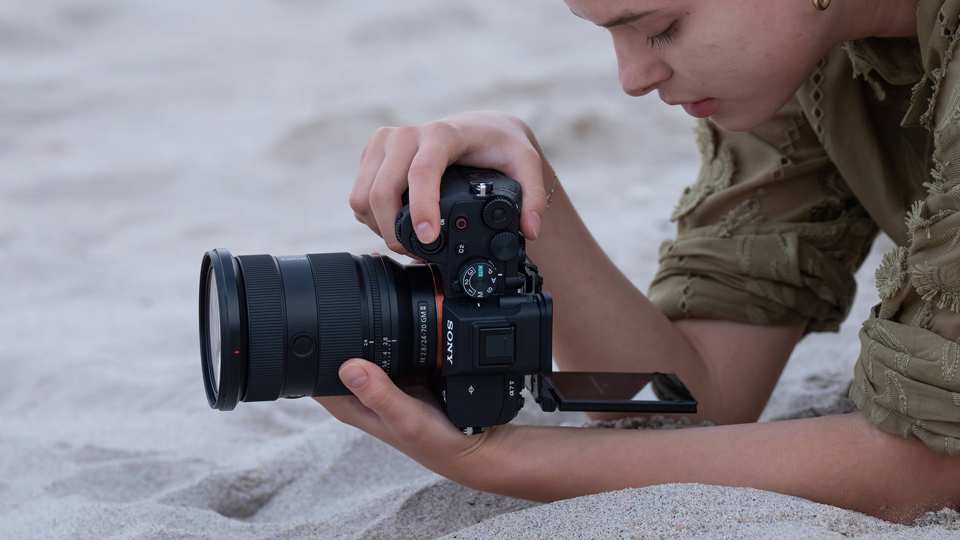
If you've ever gone camera shopping, you've likely run into the term "mirrorless" more than a couple of times. After all, mirrorless cameras account for up to 90% of new interchangeable-lens cameras (according to Canon executives anyhow). But what does "mirrorless" actually mean? In this guide, we're going to explore what a mirrorless camera is, what makes it different from other cameras (hint: it's in the name), and how it can benefit your photography.
What Does "Mirrorless" Mean
Before we tell you what a mirrorless camera is, we should tell you what it isn't, and that's a camera with a mirror. You see, if you purchased a camera between 2001 and 2020, there's a good chance you picked up a DSLR (or digital single lens reflex) camera. These cameras were primarily made by Canon and Nikon and are best known for their interchangeable lenses and big, bulky form factor. So how does a mirror figure into all of this? Well …
When light enters a DSLR camera's lens, it bounces off a mirror that sits between the lens and sensor into a glass prism, which in turn bounces the image around until we see it through the eyepiece or viewfinder.
Still with us?

As you probably guessed, mirrorless cameras earned their name by doing away with this mirror, replacing it with an electronic viewfinder, which is essentially a small screen within the eyepiece. Anything the imaging sensor sees gets played in real time or as close to real time as you can get with today's tech. That includes our setting adjustments, meaning if your image is too bright, you're going to see that before you press the shutter button. Pretty cool, right?
Where Did the Mirrored Cameras Go?
Around 2020, both Canon and Nikon, titans of the photo industry, had announced their last DSLR cameras. Just a few short years ago, most serious photographers would have certainly been shooting with a DSLR, but now many have traded in their DSLRs for the advanced feature sets and streamlined form factors that mirrorless cameras provide. Not only are mirrorless cameras usually lighter and smaller than their DSLR predecessors, but they're quieter, and faster as well. With no mirror to slap up and down and borderline ridiculous frame rates, sports, wildlife, street photographers, as well as wedding and theater photographers, can now shoot virtually unnoticed.
Funny enough, size was a key component of early mirrorless marketing campaigns, as the original Sony A7 camera was notably slimmer and lighter than its contemporaries, all while delivering similar image quality. While still lighter than their DSLR predecessors, the size comparison is almost moot nowadays, as mirrorless cameras have grown larger to more comfortably fit in the hands of users. Don't worry, as there are still plenty of compact options for those looking for a sleek, travel-ready camera.

Advantages of Mirrorless Cameras
Mirrorless cameras share many of the same controls and functions as DSLRs. After all, they're both interchangeable lens cameras that use the same image-making tech to produce high-quality photographs.
Image Sensor
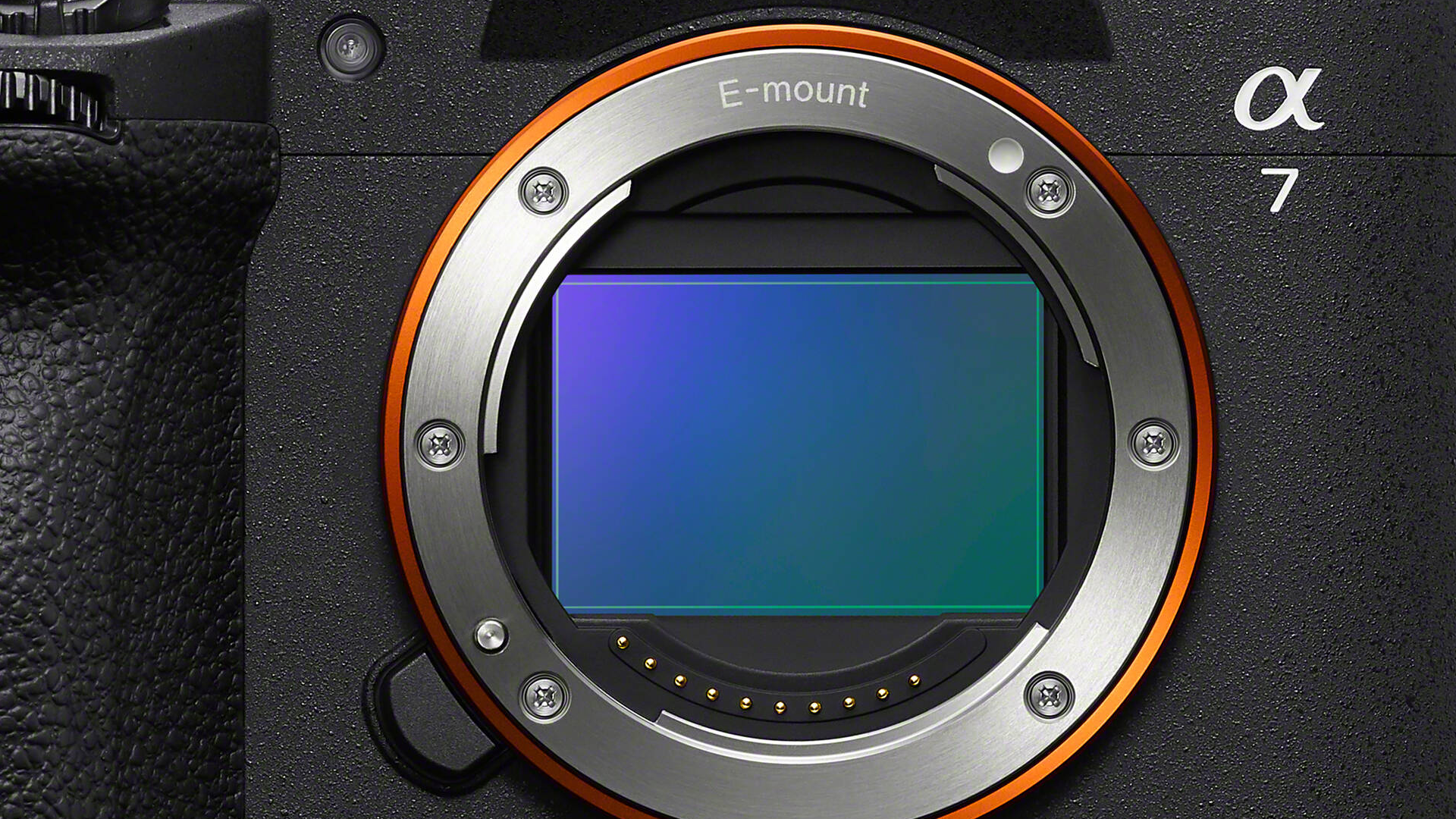
One of the first questions that we often receive at the camera counter is how the image quality holds up compared to traditional cameras. It's exactly the same if not better. The difference is in how it works. In mirrorless cameras, the sensor is always active, which allows for features like real-time autofocus tracking, real-time exposure preview, and faster shooting. Not to mention it gives us the electronic viewfinder, a game-changer for those learning exposure.
Electronic Viewfinder
Unlike the traditional cameras we're used to seeing, mirrorless cameras offer an electronic viewfinder. Older SLRs relied on an optical eyepiece, or viewfinder, to see the image before the shutter press. You'd look through the camera, see the scene, and press the shutter button and hope the image came out well. Now, mirrorless cameras offer an electronic viewfinder, which is essentially a small screen that shows exactly what the camera is seeing in real time.

In-Body Image Stabilization
Image stabilization is a feature many of us may be familiar with. It's designed to keep our image stable while shooting, allowing users to keep at it even when working in difficult lighting conditions. Where DSLR cameras relied on optical stabilization, which works by moving a glass element within the lens to counteract movement and camera shake. Each major manufacturer refers to this function with proprietary terminology like VR (Vibration Reduction) in the Nikon System or O.S.S. (Optical SteadyShot) for Sony.
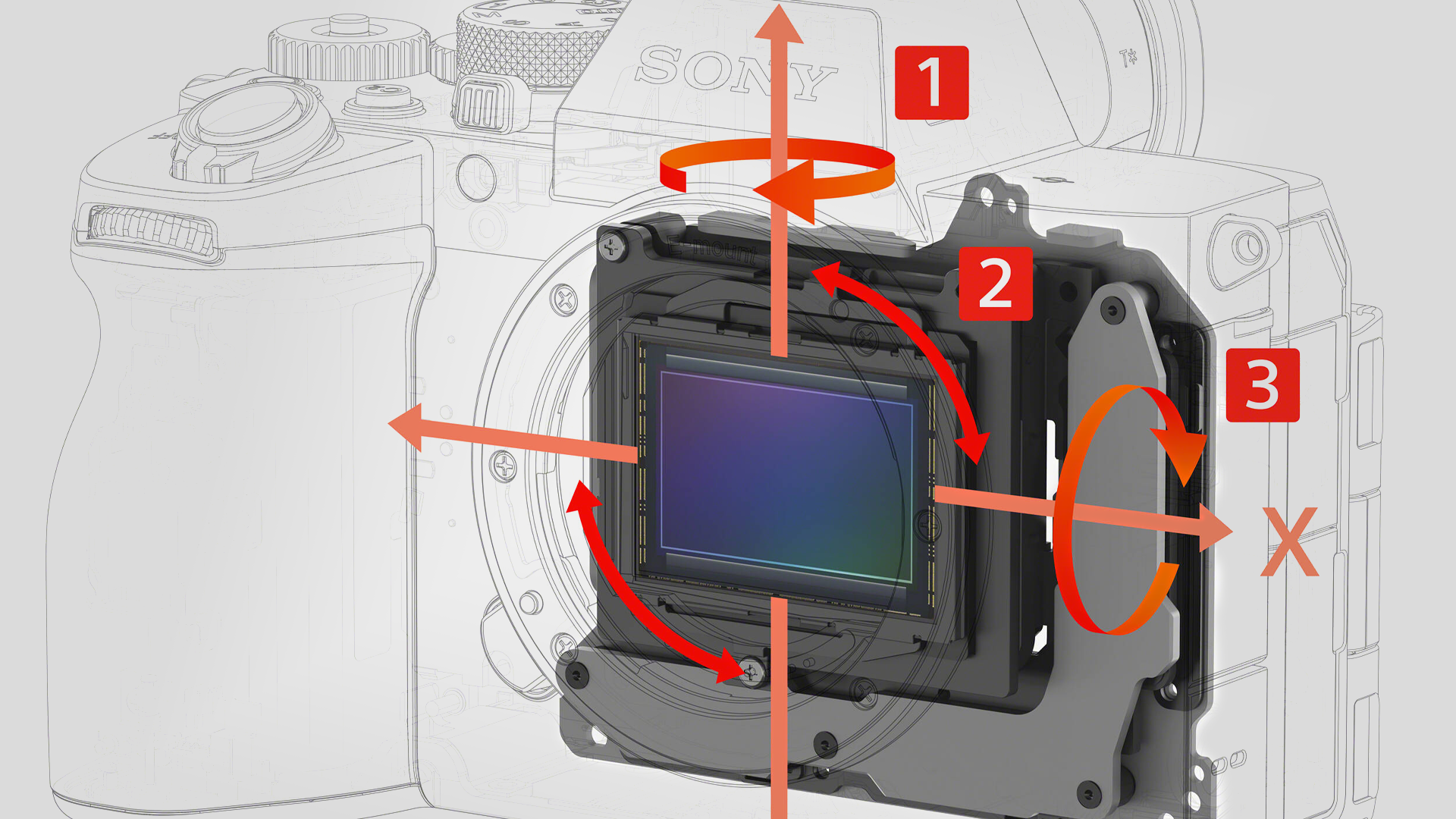
In-body stabilization, often shortened to IBIS, lives up to its name, putting this feature into the camera itself. Unlike optical stabilization, the sensor moves along various axes to compensate for camera shake and vibrations. To make things even more enticing, when paired with a lens featuring optical support, many cameras can work with both, gaining even more compensation.
Do note that not all mirrorless cameras have IBIS, though the few that do trade it for a smaller frame and lower price tag.
Lens Mount/ Interchangeable lenses
If you're coming from a point-and-shoot camera or even a smartphone, this is the real game-changer. Mirrorless camera systems offer a wide array of lenses for photographing both close and distant subject matter. It's partly the nature of these lenses that give us those smooth, blurry backgrounds that make portraits pop.

Yes, DSLR cameras had interchangeable lenses, but not with the additional features added above. Plus, lenses are lighter than they've ever been, with big bulky primes that once weighed upwards of 12 lb coming in at just half that figure. This makes mirrorless cameras popular among travelers and those who need to lug around gear for hours on end.
Fast, Silent Shooting
Remember the mirror found in older DSLRs? Well, when you pressed the shutter button to take a photo, and the camera went kachunk, that noise was mostly the sound of that mirror slapping up and down to allow light to reach the image sensor behind it. This is also why your camera's viewfinder goes black for a brief moment when taking photos.
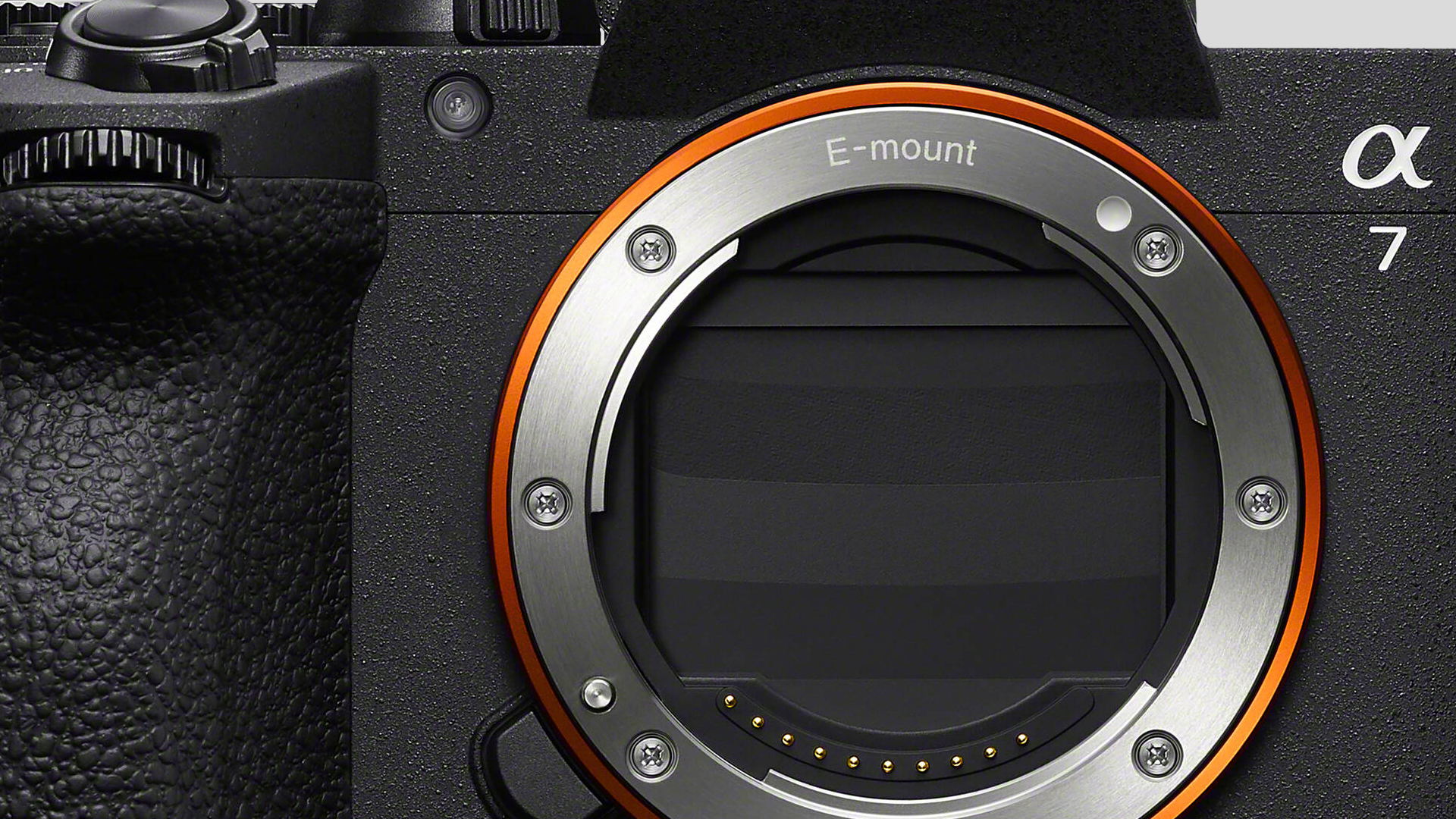
If we remove that mirror, we remove that sound. What's left in most cameras is the default mechanical shutter, which uses physical shutter curtains to briefly expose and then cover our image sensor. This carries over to most mirrorless systems, though they now have a new trick up their sleeves in the form of electronic shutters.
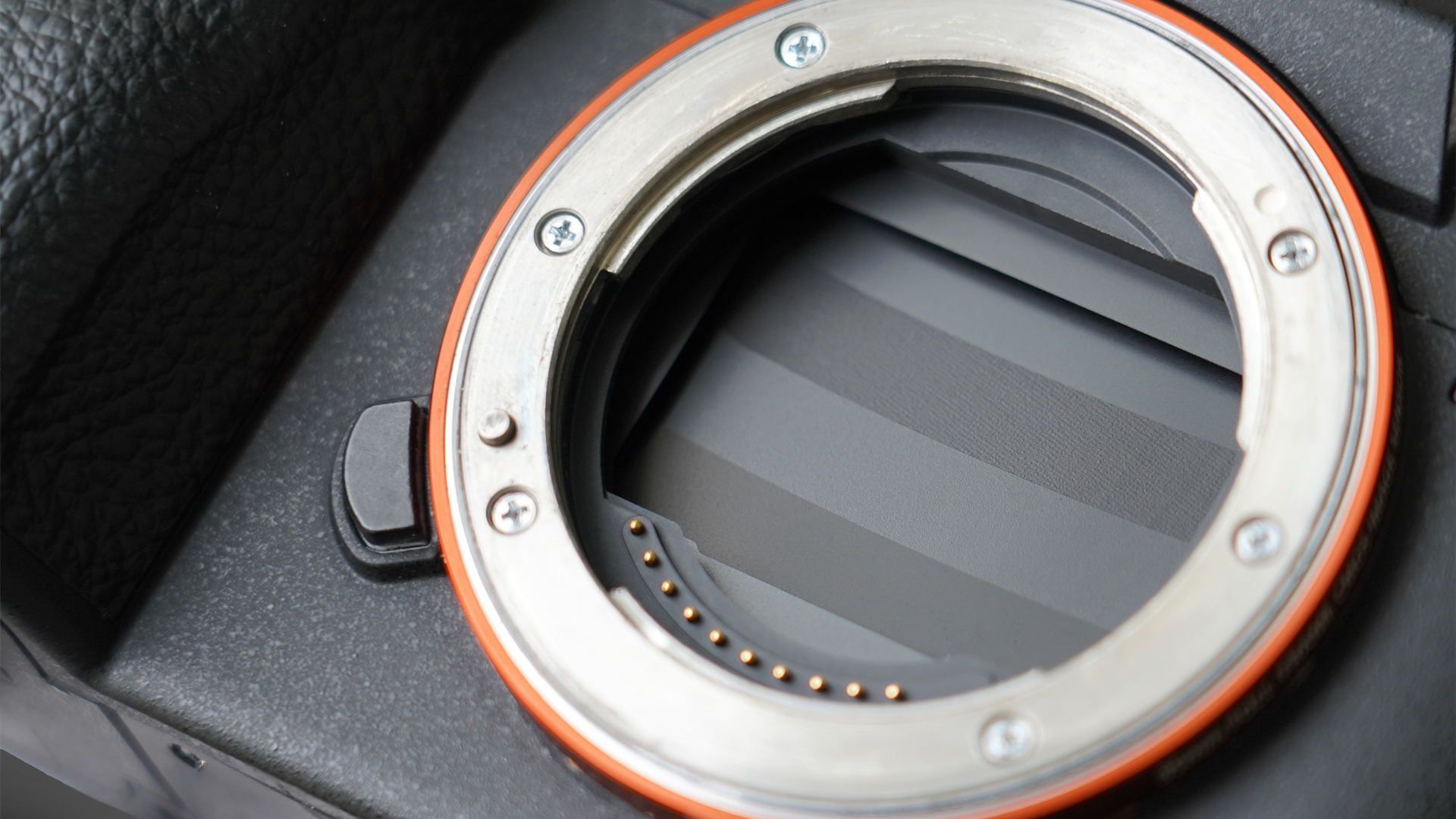
Electronic shutters typically scan the image from top to bottom without the need for a physical curtain. This style of shutter mechanism is often called a rolling shutter, a term also associated with one of this systems limitations. Rolling shutter artifacts manifest in scenes with motion, particularly panning motions. Objects that move quickly through the scene are rendered as slanted. This occurs in both stills and video.

Luckily, manufacturers have found solutions to this issue in the form of faster image sensors. Some cameras feature what is known as a stacked image sensor, which is still a rolling shutter mind you, but one that reads data at extremely fast rates. This nearly eliminates the skewed object dilemma, though, granted you'll likely never find them, stacked sensors still have their limits. For that reason, the global shutter exists, but that's a topic for another day.
So, what does all of this have to do with fast shooting? Easy, the faster our sensor can read information, the faster we can shoot continuously. DSLRs reached incredible shooting speeds of 15-16 fps toward the end of their reign. Just listen to a press conference pre 2018 to hear this in action. That said, without a mirror to calibrate and electronic shutter mechanisms, it's not unusual to see camera's fire off 20-30 frames per second silently and without that pesky blackout from old DSLR and slower shutter types.
Who Should Consider a Mirrorless Camera?
If you enjoy photography and wish to explore it further and create certain images that your phone or point and shoot camera just can't seem to deliver, an interchangeable lens camera is the way to go. They deliver improved image quality thanks to a larger imaging sensor as mentioned above. It's that easy. A bigger question to ask is if there's still a reason to buy a DSLR in 2026 and beyond.
It comes down to this. Mirrorless is the current technology, and going forward, all new lenses from both manufacturers and third-party companies will be made for these cameras. They offer the latest and greatest tech and have made photography easier and more accessible than ever.
That said, there's a tactile feel to shooting the older SLR style digital cameras thanks to their many moving parts. Not to mention their color science. This is going to be a bit nerdy, but many photo enthusiasts clammer over the colors of old Canon 5D cameras. Similar to how some generations prefer the look of old point and shoot camera files, so prefer early DSLR images for their imperfect appearance (by today's standards).
What Camera Should I Buy?
Buying a camera can be a daunting task. There's a lot of technical jargon to digest, and it can be overwhelming if you're just looking to take some photos for fun. With that said, we'll say this. If you're just looking to get into photography or have a specific genre you'd like to explore, get a mirrorless camera. The learning curve is a bit more palatable, and it will open the door to new and exciting lenses.
If you're an existing photographer shooting a Nikon or Canon DSLR, stick with what you've got. As mentioned above, you can continue to use your existing lenses via the available mount adapters for as long as you need. Plus, you can take older pro level glass and use it with new features like IBIS for a fraction of the cost of a new mirrorless one.
4K video was once considered a premium feature, yet now all you need to do is get the next model up from the entry level and you've got features that rival those of flagship DSLR of days gone by.
Time to Go Mirrorless
As you can see, there are many advantages to choosing a mirrorless camera. Features that once set one line of cameras apart from the lower range have trickled down, making even entry-level cameras exquisite imaging tools. So, get the best camera your budget allows, and build your kit from there.
And I guess it's now that we must come full circle and answer the question: What is a mirrorless camera?
It's a camera without a mirror in it.
