
When you’re venturing into public spaces for street photography, a compact camera is a must-have. Sure, a lightweight camera is easier to carry around, but an unobtrusive shooter is also the key to getting those perfectly spontaneous shots. You’re going to want to go small and pocketable, with accessible settings to adjust easily while you’re on the move. Let’s explore some solid options for your everyday carry bag as a street photographer.
FUJIFILM X100VI
Reminiscent of classic street photo film cameras, the FUJIFILM X100VI looks the part as much as it is a stellar option for street photography. Equipped with a powerful APS-C-format 40.2MP X-Trans CMOS 5 HR sensor and image processor, the X100VI boasts blistering fast performance and responsiveness. The tried-and-true compact 23mm f/2 lens provides shooters with an equivalent 35mm focal length for a comfortable working distance with immense versatility. New to the X100 line, in-body image stabilization (IBIS) systems keep images and videos sharp in some of the most challenging low-light scenarios with up to 6.0 stops of compensation.
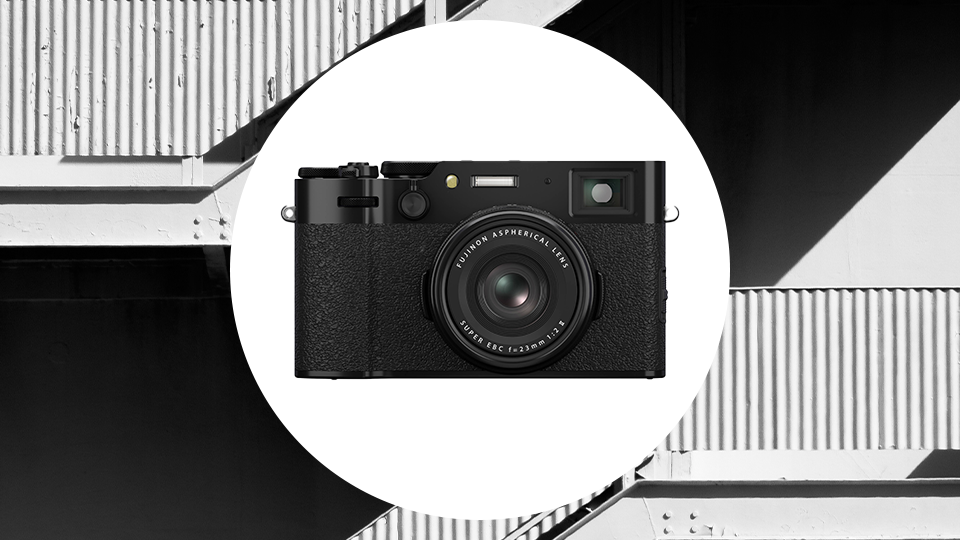
Users also benefit from the X-Processor 5’s subject detection, which accurately tracks a range of subjects from animals, birds, and humans, to bicycles, airplanes, and even drones. As far as handling goes, the X100VI also has just the right number of physical dials and controls for comfortable on-the-fly operation. The unique hybrid viewfinder is also nifty, allowing users to toggle between optical and electronic types based on specific creative needs. The X100VI additionally features 20 Film Simulation modes―a collection of genuinely good-looking presets that replicate the look and feel of a few classic film types.
Fujifilm X-E5
At a quick glance, one could almost mistake the FUJIFILM X-E5 for the X100VI. After all, their designs are strikingly similar—with one major difference: interchangeable lenses. The X-E5 features the same 40.2MP sensor, 6.2K video recording, and Fujifilm’s many film simulations. The simulations are now accessible via a newly designed dial and indicator window. Custom film simulation recipes can be saved and set to the FS1-FS3 positions on the dial. Designed to emulate the classics, the X-E5 also features a new classic display mode, which provides a clean, viewfinder image with just the most important exposure data at the bottom of the frame.
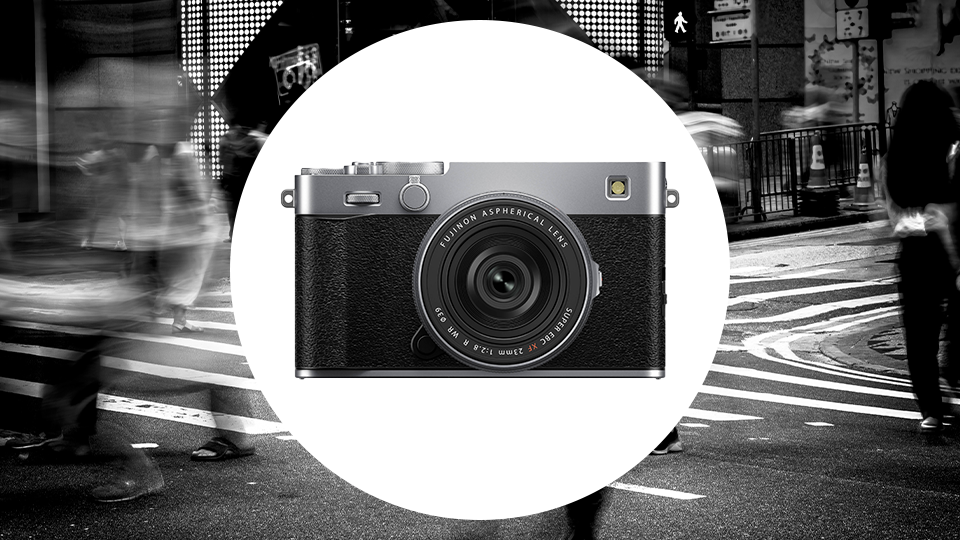
The X-E5 was announced alongside another X100-adjacent product, the FUJIFILM XF 23mm f/2.8 R WR lens. Together, this combination rivals the X100 in form factor, though the camera is compatible with over 40 X-mount lenses, so the possibilities are endless.
Ricoh GR IV
The Ricoh GR series continues to enjoy immense popularity in the street photography scene because these cameras are compact, minimalist, and fun to use. The Ricoh GR IV is no exception, because this third APS-C iteration maintains the design and feel of its predecessors. Featuring a newly designed 25.7MP APS-C CMOS sensor and a 28mm equivalent f/2.8 lens, users can enjoy sharp, rich imagery across the board. In addition to full-resolution wide-angle images, the powerful sensor supports two crop modes that allow you to simulate working with longer focal lengths. Controls on the camera are minimalist and intuitive, allowing you to adjust settings easily with the touch of a button.
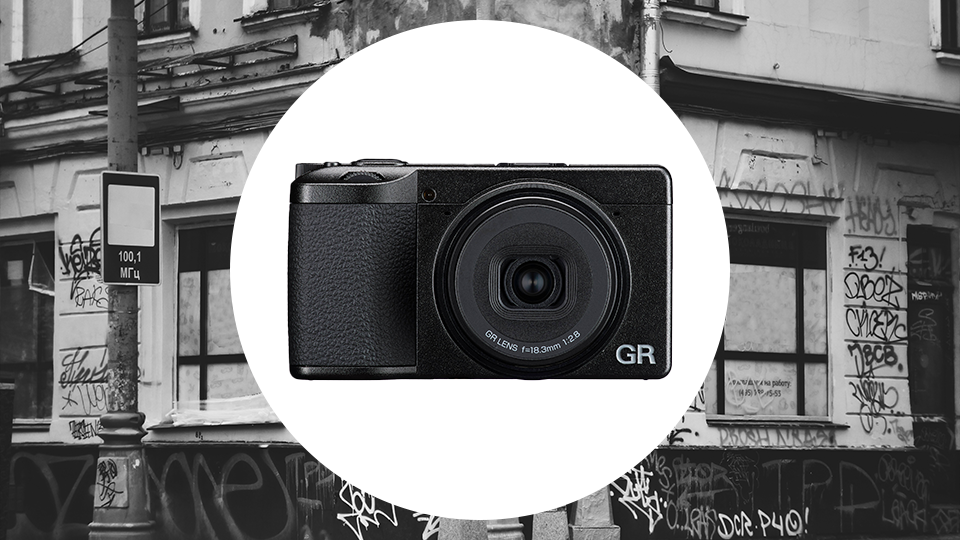
The GR IV is equipped with an improved 5-Axis 6 Stop Shake Reduction System for even better low-light sharpness without compromising on size and weight. The camera is slimmer than its predecessor while maintaining the same lightweight yet robust magnesium alloy construction. Ricoh has also announced the brand-new GR WORLD app for wireless control and image sharing.
Sony RX1R III Premium Compact Camera
After years of uncertainty, Sony revived the RX1 line with an update that rivals even Sony’s best mirrorless interchangeable lens cameras. At the heart of the Sony RX1R III is the full frame 61MP Exmor R BSI Sensor, the very same high-resolution sensor found in the a7RV and a7CR. Sony has also implemented intelligent subject tracking and recognition capabilities the Alpha system is known for. Real-time AF tracking features seven different selectable targets (Human, Animal, Bird, Insect, Car, Train, and Airplane).
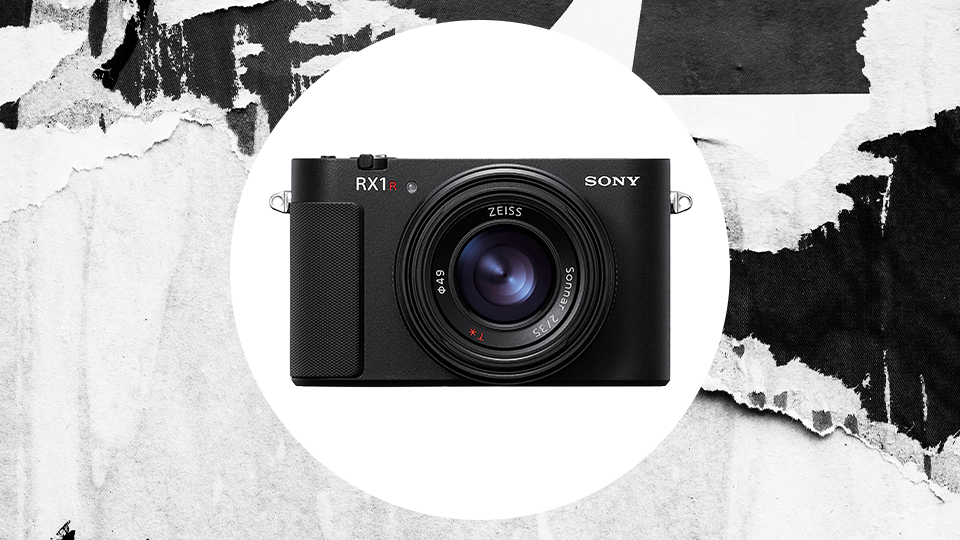
The Fast Hybrid AF system incorporates 693 phase-detection points across 79% of the sensor for greater tracking ability compared to the 399-point grid found on the RX1R II. Another update is the addition of a fixed position EVF as opposed to the pop-up EVF found on previous models.
The same legendary lens from previous models returns. The ZEISS Sonnar T*35mm f/2 lens is fast and well-suited for day-to-day needs and features a dedicated macro position on the barrel, allowing close up focusing between 7.9” and 11.8”. With the built-in lens, this camera is just as light as the a7C II body alone, making for one of the most portable full-frame cameras on the market.
Leica Q3/Q3 43
Like our FUJIFILM option, the Leica Q3 is a stylish shooter that is perfect for street photography. Fans of Leica’s Q series are no strangers to this camera’s fixed focal length full-frame design, but the Q3 benefits from a 60MP sensor and hybrid AF system to guarantee excellent performance and gorgeous imagery.
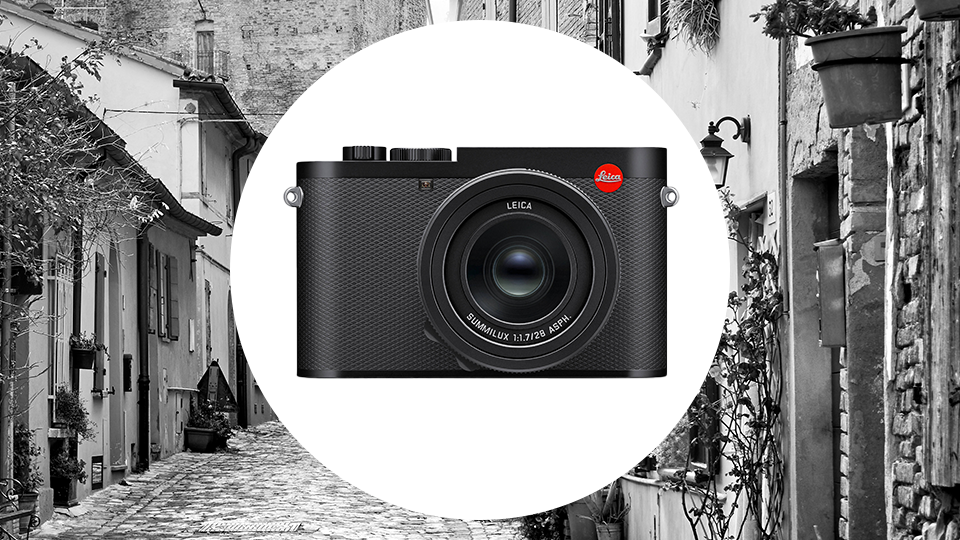
The Q3’s Summilux 28mm f/1.7 ASPH lens is a familiar feature, garnering a superlative reputation among street photographers using older Q models. Of course, the lens really shines when paired with the more powerful 60MP full-frame BSI CMOS sensor, making this particular model well-suited for more detail-oriented shooting. Like our Ricoh option, the Q3 can also simulate different focal lengths, with four different crops available to render your shot best. Proudly bearing the Leica red dot, the Q3 provides all the usability and control you would expect of a street-photography camera.
Leica offers a variation of the Q3 paired with the new APO Summicron 43mm f/2 ASPH lens. The Q3 43 is the same powerful, portable camera with a longer native focal length. Beyond the lens and a minor aesthetic difference, the Q3 43 remains identical to its sibling.
Sony Cyber-shot DSC-RX100 VII
Sony’s esteemed RX100 series is beloved by many, including us! The seventh-generation Cyber-shot DSC-RX100 VII is a great little camera for street photography, offering impressive specs and features for a flexible shooting experience. Equipped with a reliable 20.1MP 1" Exmor RS BSI CMOS Sensor and a 24-200mm equivalent ZEISS Vario-Sonnar T* lens, users are afforded a range of focal lengths for great shooting versatility, especially when you consider its compactness.
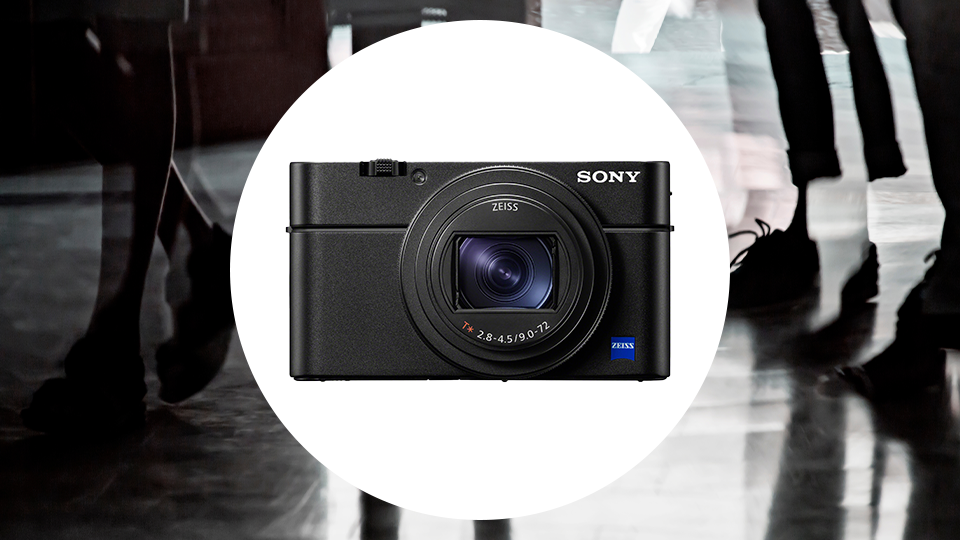
Other features include a powerful hybrid AF system with accurate subject tracking. While continuous shooting is available at up to 20 fps, users can also opt for Single Burst Shooting―a 90 fps setting for working with the fastest moving subjects to get those difficult shots every time. Controls are intuitive via the tilting LCD touchscreen, and users can conveniently switch between the LCD and pop-up EVF viewing options for better comfort and utility.
Fujifilm GFX100RF
A true first of its kind camera, the FUJIFILM GFX100 RF pairs the 102MP medium format sensor with the compact rangefinder form factor. Above the LCD on the rear side of the camera is an aspect ratio dial with nine distinct options (4:3, 3:4, 5:4, 1:1, 3:2, 7:6, 65:24, 17:6, and 16:9). On the front of the camera, a rocker lever allows the user to switch between three different crop modes or digital teleconverter settings. The base lens is a fixed FUJINON GF 35mm f/4 (28mm full-frame equivalent) but can be cropped to 45mm, 64mm, and 80mm.
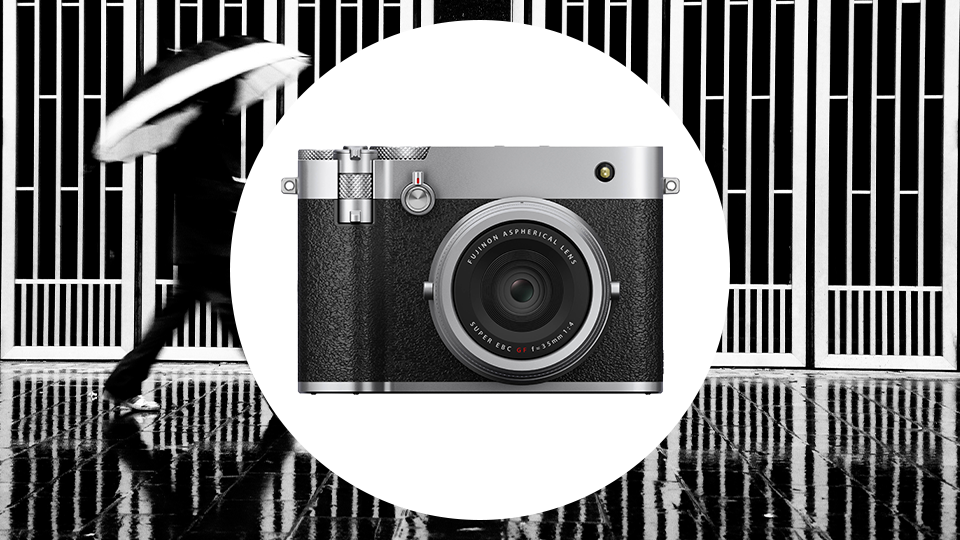
The built-in lens is a versatile tool suited for interiors, travel, and of course, street. The minimum focus distance of the lens is just 7.8”, making it a great choice for close-up work as well. An internal 4-stop ND allows the user to shoot at slower shutter speeds and wider apertures when working in bright conditions.

Just as all current cameras in the FUJIFILM system, the GFX100RF comes equipped with 20 different Film Simulation modes, emulating classic film stocks like Provia, Velvia, Acros, and so many more.
Leica M11-P
Considered by many to be the original street photographer’s camera, Leica rangefinders are still coveted today for their superb build quality and reliability. The M11-P exemplifies this, evoking the classic M3 design from 1954 with all the modern bells and whistles to make it a great little street photography or photojournalism camera.
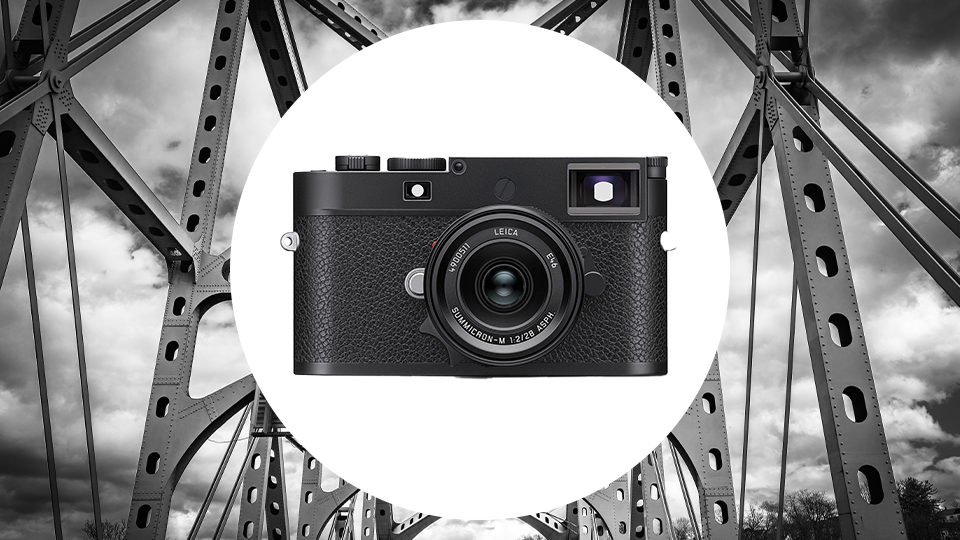
The M11-P enjoys a high-resolution design with a 60MP full-frame CMOS sensor that captures even the most minute details. The beautiful 0.73x optical viewfinder is a dream to work with, and photographers are afforded both electronic and mechanical shutters to use super-fast lenses sans ND filter. Like the Q3, users can select one of three sensor resolutions to achieve just the right dynamic range and noise level. All of this and more is easily accessible via the refurbished menu layout, which closely resembles the Q and SL systems.
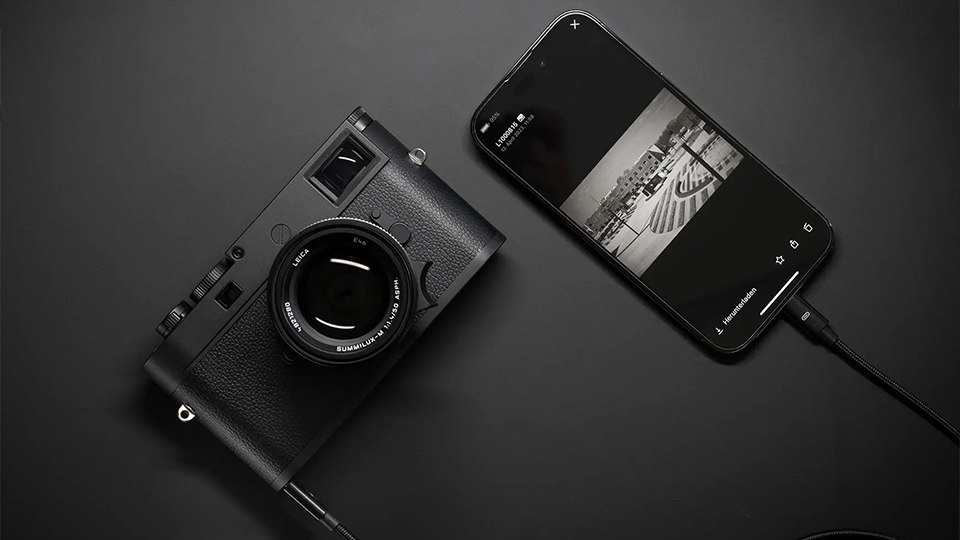
The menu layout has been revised to match the aesthetics of the Q and SL systems for easier navigation and uniformity across cameras. Like the M11, this camera continues to borrow design queues from the Q and SL systems such as the new BP-SCL7 battery, which is inserted directly into the bottom plate of the camera. Gone are the days of removing the bottom plate to access the battery and memory card. The M11-P is also the first camera to feature Content Authenticity Initiative (CAI) technology, with the goal of preserving authenticity in the world of digital storytelling.
Street photography is a deceptively difficult medium that requires skill, effort, and a little luck. Working with the right camera will go a long way when you are out and about. We’re lucky to be experiencing a resurgence in the popularity of compact, pocketable cameras. These are the perfect choices for those getting started, and those looking to keep a low profile, so we hope our top choices have been helpful in your search. There are also plenty of terrific entry-level cameras that can be used for street photography if you are a new photographer looking for additional recommendations.
