Search results for: photography tips solutions everything you need to know about using nd filters
About 8 filtered results
by Steven Gladstone · Posted
Whether you’re a student or a seasoned veteran, selecting the right camera can make your head spin with questions. Does sensor size matter? What’s the difference between 4:2:0 and 4:2:2? Do I really need a camera that can record 8K? What about raw? We’ll explain the key components that help a camera produce cinematic images, and in doing so, hopefully help you make that all-important decision.
Evaluate Your Needs and Your Budget
Before considering certain cameras, you must know your needs and your budget. And be realistic. If you are a student

by Shawn C. Steiner · Posted
Time lapses feel a lot like photography during capture stages and a lot like video during the editing process. Creating them is a common progression for photographers looking to dip their toes into video and motion because you can start making high-quality time lapses with your current still photo equipment. If you are starting to tackle time-lapse projects, applying some video tricks can help smooth out your final product.
The Absolute Basics
I’m hoping that by the time you make it to this article you already have a basic understanding of how

by Todd Vorenkamp · Posted
When most of us think of “sports photography,” we immediately think of iconic images from the world of land-based sports—American football, track and field, boxing, baseball, and others. One could argue, however, that yacht racing and sailing regattas provide the canvas for some of the most spectacular images in all of sports. And, if you have spent time around the water, seen the framed print on the wall of my physical therapist’s office, or flipped through the pages of any sailing magazine, you might have noticed that professional sailboat

by Bjorn Petersen · Posted
There is a lot of talk about lighting and photography, and specifically how learning to use light can make you a better photographer. This is true, of course, but is also a notion that’s more often applied to working with artificial lighting, such as for portraits or products, where you can work in a studio with a strobe or LED to fine-tune how your shot looks. When it comes to landscapes, on the other hand, most likely you won’t have the ability to or just won’t want to use artificial lighting for your scenic shots. This is part of the

by Bjorn Petersen · Posted
Nowadays, making a proper exposure with your digital camera is simple and straightforward: set your camera to A, S, or P and let the camera do the work. It’ll work most of the time and, in those instances where it doesn’t, you might pull out an external meter for a bit more precision. In all of these cases, you always have the rear LCD to double-check your shots if you’re unsure and, for the fanatical, you can even use a live-exposure histogram while shooting. When you’re using film, however, the luxury of being able to check your exposure by
by Shawn C. Steiner · Posted
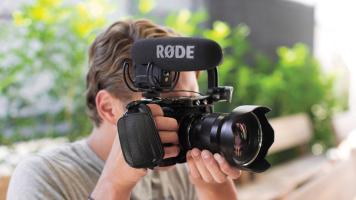
While you can definitely get by with the same kit you use for your still photography, video adds some additional concerns that require extra equipment. Now that you know a few basics about shooting video, or you should if you read the first part of this series, Getting Started, you will definitely want some of these helpful tools to step up your game.
The essentials
An

by Steven Gladstone · Posted
In the world of film production, a Digital Imaging Technician (DIT) can be many things. Depending on the scope of the production, the scope of their job is constantly evolving. Taking advantage of the wonders of email, I checked in with a few working DITs to get a better understanding of their complex and ever-changing job. What became apparent quickly was that although most people in the industry start off as beginners, taking on the role of DIT requires a healthy balance of experience, people skills, technical knowledge, and an almost

by Susan Seubert · Posted
As an assignment photographer for National Geographic Traveler for the last 10 years, I’ve learned that being prepared prior to leaving is the most important thing.
Research, Research, and More Research
The Internet has become my essential tool. I use a Google image search to help identify good locations for making iconic images. I also use it to find locales for an insider’s perspective. Locating a good paper map is also critical, particularly if you are heading to a place where satellite connectivity might be an issue. I also look at as many