Search results for: photography tips solutions understanding diffraction
About 4 filtered results
by Todd Vorenkamp · Posted
A lens’s hyperfocal distance—a mathematical combination of lens focal length, aperture or f-stop, and focus distance—is a tool that photographers can use to maximize their depth of field for capturing nearby foregrounds and distant backgrounds in acceptable sharpness.
While you can always dial up your lens’s sharpest aperture (sweet spot), many landscape photographers want as

by Todd Vorenkamp · Posted
Specular out-of-focus highlights have appeared in photographs since the first photos were taken through lenses. In 1997, Photo Techniques magazine introduced the word “bokeh” to the photography world’s vernacular and the out-of-focus areas of photographs have been scrutinized ever since. Before the term, there was certainly discussion about the aesthetics of the out-of-focus specular highlights of a photograph, but until 1997, there wasn’t a good word in the English language to describe the phenomenon. Credit goes to Mike Johnston, article

by Todd Vorenkamp · Posted
Aperture is the size of the opening in the lens. Some lenses have fixed apertures, but most photographic lenses have variable apertures to control the amount of light entering the lens. This aperture is regulated by a diaphragm made of overlapping blades that can be adjusted to vary the size of the opening through which light passes. The size of the opening also has a secondary effect on the photograph, as the diaphragm also changes the angle at which the light passes through the lens. We will discuss two "side effects" of changing the
by Shawn C. Steiner · Posted
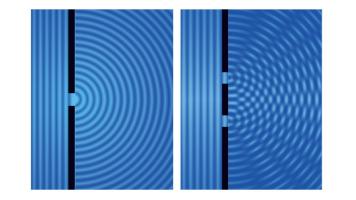
With the ever-increasing number of pixels manufacturers can cram onto a single digital image sensor, the optics themselves are beginning to become the limiting factor in image quality. This is making it all the more important to stop down our lenses in an effort to squeeze as much sharpness from them as possible. Unfortunately, while stopping down is a great way to sharpen pictures, if we go too far, we end up with deteriorating image quality. This optical effect is called diffraction.