Search results for: photography tips solutions understanding focal length perspective photography
About 7 filtered results
by Luke Rollins · Posted
Learn about how to get started with dental photography, including what gear to use, which photographic fundamentals you should be focusing on, and why dental photography is critical for both clinical care and promoting your own dental practice.
IN THIS ARTICLE
1. (Don’t Fear) the Gear2. Good Dental Photography Is Good Photography3. Macro Discipline, Portrait Mindset4. Embrace the Flash5. Clinical,
by Luke Rollins · Posted
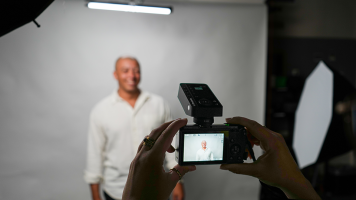
At first glance, studio photography and the compact camera may seem strange bedfellows. The type of work associated with the studio—still life, product photography, portraiture, macro photography—usually wants cameras with larger sensors and interchangeable lenses, especially in professional applications. Compact, point-and-shoot cameras, for their part, have their natural home in everyday, travel, nightlife, and street applications, where their discretion and size become virtues.
It might seem almost cruel to introduce the compact to the

by Todd Vorenkamp · Posted
Specular out-of-focus highlights have appeared in photographs since the first photos were taken through lenses. In 1997, Photo Techniques magazine introduced the word “bokeh” to the photography world’s vernacular and the out-of-focus areas of photographs have been scrutinized ever since. Before the term, there was certainly discussion about the aesthetics of the out-of-focus specular highlights of a photograph, but until 1997, there wasn’t a good word in the English language to describe the phenomenon. Credit goes to Mike Johnston, article

by Paige Denkin · Posted
It’s common knowledge that things won’t go according to plan. Deadlines will be missed; projects will go awry, and part of the adventure is learning to roll with the punches. But this felt like more than a few punches—we felt defeated. Our renovation process took a turn for the worse, not once, but twice. After five months of heartbreak, heated arguments, and two renovation companies with less than noble intentions, our 29' Airstream ended up in my childhood backyard. Our timeline had us on the road by mid-January, but life had other plans for

by Todd Vorenkamp · Posted
The job of a photographic lens is to capture light and bend it toward the film or digital sensor. The refraction of light exerts a variety of side effects on the image projected onto the film or digital sensor. Your understanding of how this bending can affect the image may factor into how you compose your images.
Anomalies and Lens Distortion
Glass, crystal, liquid, or plastic lenses made for photography are never “perfect”—just like the lenses in our own eyes. Photographic lenses often comprise multiple lens elements. Because of the way

by Todd Vorenkamp · Posted

by Todd Vorenkamp · Posted
The primary measurement of a lens is its focal length. The focal length of a lens, expressed in millimeters, is the distance from the lens’s optical center (or nodal point) to the image plane in the camera (often illustrated by a "Φ" on the top plate of a camera body) when the lens is focused at infinity. The image plane in the camera is where you will find your digital sensor or film plate. If you are an optical engineer, this is important