Search results for: video tips solutions how to light food for video
About 9 filtered results
by Steven Gladstone · Posted
Whether you’re a student or a seasoned veteran, selecting the right camera can make your head spin with questions. Does sensor size matter? What’s the difference between 4:2:0 and 4:2:2? Do I really need a camera that can record 8K? What about raw? We’ll explain the key components that help a camera produce cinematic images, and in doing so, hopefully help you make that all-important decision.
Evaluate Your Needs and Your Budget
Before considering certain cameras, you must know your needs and your budget. And be realistic. If you are a student

by Darrell Holdaway · Posted
There is a first time for everything, and if you have your mind set on producing a wedding video, you will encounter plenty of “firsts” during that initial wedding weekend. There is a first kiss, a first dance, and a first slice of cake. Where will you have your cameras set up for each of these memorable moments? Will you need lights for every shot? How will you manage the audio? When the bride says “I do,” you will want everything in place to ensure that you capture every word and angle. This guide will address equipment needs, event

by Todd Vorenkamp · Posted
Specular out-of-focus highlights have appeared in photographs since the first photos were taken through lenses. In 1997, Photo Techniques magazine introduced the word “bokeh” to the photography world’s vernacular and the out-of-focus areas of photographs have been scrutinized ever since. Before the term, there was certainly discussion about the aesthetics of the out-of-focus specular highlights of a photograph, but until 1997, there wasn’t a good word in the English language to describe the phenomenon. Credit goes to Mike Johnston, article

by Lindsay Finnegan · Posted
Are you new to food photography or looking to advance your lighting techniques? This article takes you through how to use existing light to your benefit as well as how to create it yourself. Both approaches will yield similar results, but each has its own unique advantages. It’s up to you which path to take.
Natural: Work with Window Light
The simplest way to photograph food is to shape light that already exists


by Cory Rice · Posted
Photo studios come in all shapes and sizes. If you are working with small subjects, there is no reason to rent a massive loft or build an addition onto your house to get the shots you need. In many of these cases, a functioning setup can take up as little space as a table. Like all things related to photography, tabletop studios can be as simple or complex as their creators require. For basic applications, plenty of all-in-one kits exist for “non
by Mary Latvis · Posted
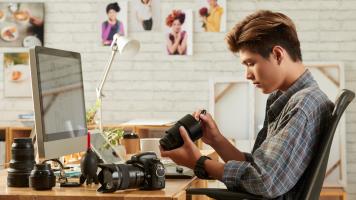
If you’ve taken the plunge and invested in one, two, or a full set of cine-style lenses, you’ll now want to take the best care possible of your lenses. Not only will the lenses function better if they’re properly maintained, but you’ll be protecting your (probably substantial) financial investment. Most cine-style lens care and maintenance is the same as for still or ENG-type lenses, so if you’ve made the switch from these other lens types, you’ll know the drill.
Carrying Cases
When transporting your cine lenses between locations, although
by Steven Gladstone · Posted
Whether you are working on a narrative, webisode, documentary, or commercial, at some point you are going to end up shooting in an unfamiliar location. Being prepared will improve your shoot and the chances that you will be allowed to return. There are many things to consider when shooting on location, and they will vary depending on the kind of location, so consider these few suggestions a starting point. If you’ve got some of your own to add, please share them in the Comments section—we are all in this together, after all. For the purposes
/explora/tag/17486
/explora/tag/17491

by tom kirkman · Posted
In this B&H Photo Event Space video, photographer Steve Hansen explains and demonstrates the uses of LED lighting in the studio. LED lights enjoy the advantages of being continuous and daylight-balanced, which makes them ideal for still and video applications. Hansen discusses the pluses and limitations of LED lighting, how to expose for LED lights, and how to maximize the attributes of LED lighting systems when shooting commercial still-life photographs in the studio.
by Steven Gladstone · Posted
The truth of the matter is that whether you are working on an indie film or a big-time Hollywood production, set etiquette is really the same. As you work on more shoots, you will most likely start out as a production assistant and work your way up to other positions, and understanding proper set etiquette will help you build and protect your reputation. Your reputation will precede you as you work in the industry, and it can take a long time to change your reputation if you develop a bad one. So it is worth it to protect your reputation. I