About 47 filtered results

Posted
Photographing an osprey diving for a fish is one of the most exciting challenges in bird photography. In this video, Matt heads into the field to share his approach to finding and photographing ospreys, from choosing the right position and camera settings to tracking a fast-moving bird through a dive.
00:00 - How to Photograph Osprey
00:44 - Where to Find Osprey
01:14 - Photographing Osprey Responsibly
02:09 - Positioning Yourself for the Shot
03:05 - -Capturing an Osprey Catching a Fish
04:00 - Best Camera Settings for Osprey
05:03 - How to

Posted
Landscape and wildlife photographers swear by photographing at sunrise and sunset. But, there is another time of day when you can shoot nature photography and still get beautiful results. Join Sam and Matt in the Everglades to learn how to capture photos both in golden hour and blue hour.
0:00 Intro
0:52 Why Sunrise & Sunset?
6:44 Blue Hour for Landscapes
9:34 App for Identifying & Finding Birds
10:13 Mid-Day Wildlife & Landscapes
11:52 App for Tracking the Sun & Moon
12:31 Time of Year
13:26 How Early to Arrive
14:03 Can You
Posted
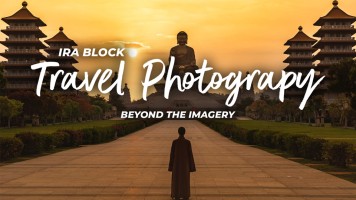
From photographing for the local news to expeditions for National Geographic, Ira Blocks shares his stories of traveling around the world. Ira captures history and culture, but it wasn't easy. He discusses how he was hired by Nat Geo, and all the logistics and planning that goes into his assignments.
0:00 - Intro
2:46 - Working for Nat Geo
6:00 - Ira's first assignment
14:18 - How Ira got started
17:30 - Photographing in color film
21:49 - Olive Oil story
31:29 - Getting into lighting
38:05 - Archaeology work
1:11:29 - Prints on location

Posted
The prime lens vs. zoom lens debate is back, this time for wildlife. There are many features to consider when choosing a lens that's right for you. Matt takes these Canon lenses to Yellowstone National Park to see which focal length has better image quality, autofocus, low light performance, and more.
0:00 - Telephoto Prime or Zoom?
1:05 - Prime Lens Pros & Cons
3:38 - Zoom Lens Pros & Cons
5:12 - Image Quality
5:49 - Fall Off
6:14 - Autofocus (Speed, Accuracy & Tracking)
8:12 - Ease of Use
10:43 - Low Light
12:54 - Which Works

Posted
Photographing wildlife can be unpredictable. Which of these cameras (the Canon R5 II and R1) will have your back? Matt shares what you'll have to consider when deciding between these two cameras.
0:00 - Can You Bear These Puns?
0:13 - Today's Video
1:28 - What's the Same and What's Different?
4:36 - Low Light Performance
5:36 - Pre-Capture
6:52 - Black-Out Free Shutter
8:21 - IBIS & Handheld
9:45 - How Does It Compare in the Edit?
10:19 - Which Is Better for You?
Sponsored by

Posted
Is the Canon RF 100-300mm f/2.8 the best option for wildlife photographers? From relatively wide environmental shots to animal portraits, this lens just might be able to do it all. Matt shares what this lens has to offer in Yellowstone National Park.
0:00 - Intro
0:43 - Specs & Photographing Bison
4:17 - Big Horn Sheep
6:01 - 1.4x & 2x Teleconverters
7:21 - Dueling Bison
8:32 - Why This

Posted
Should you raise your ISO or lower your shutter speed? How do you compose a wildlife photo? Evan Watts (@wattswildlifephoto) shares five tips that'll help you take better wildlife photos!
0:00 - Intro
0:10 - Aperture
1:52 - Composition
2:54 - Shooting Mode
3:43 - ISO
4:38 - Understanding Wildlife

Posted
Choosing the right camera gear can feel overwhelming, especially when you're just starting out. Whether you're venturing into wildlife photography, launching a portrait business, diving into travel photography and videography, or exploring landscape photography, having the right setup is important. To help you navigate your choices, our resident photographers and videographers share their top gear recommendations based on their own experiences.
0:00 - Intro
0:25 - Portrait Overview
0:45 - Portrait Gear Under $500
1:36 - Under $800
2:22 -

Posted
In this video, SIGMA Ambassador Martina Abreu goes over the best ways to find and photograph birds without disturbing their natural habitats.
0:00 - Introduction
2:25 - Bird Photography Ethics
9:11 - Sigma Lenses Used
9:57 - Birds in Flight
14:30 - Challenging Light and Weather Conditions
25:07 - Challenge Yourself
26:21 - How to Handle Your Camera in Certain Situations
28:40 - Lens and Settings Discussion / Q&A
Have any tips for photographing birds you’d like to share? Let us know down below.
Sponsored by

Posted
Join Kristi Odom as she shares her wildlife photo-editing workflow in Lightroom Classic, from culling a large number of photos using Photo Mechanic, to settings to use when exporting.
0:00 - In this Video
1:05 - Culling and Selecting
8:42 - Jaguar Photos
13:03 - Bees in Flight Photos
16:58 - Macaw Photos
20:04 - Adaptive Presets
26:32 - Bee on a Flower Photo
27:55 - Export (Settings & Organizing)
What does your editing workflow look like? Let us know down below.
Sponsored by

Posted
Kristi Odom explores the Bolivian Amazon to share and photograph its gorgeous biodiversity, from the birds to the insects.
0:00 - In this Video
0:44 - Deforestation
1:57 - Bees
5:44 - Yellow-Rumped Cacique Bird
8:20 - Insects
10:38 - Hummingbirds
14:07 - What's Next
Sponsored by
The close-up photos of animals are organic interactions taken from inside an animal sanctuary. There was no baiting or luring of wild animals.

Posted
Nikon Ambassador Kristi Odom is in La Senda Verde, Bolivia, to photograph the native bee population. In this video, Odom explains how she utilizes photography to tell their story. She also walks through working with experts to learn the best way to photograph the bees.
0:00 - Why Macro?
0:52 - In This Video
1:54 - The Story
3:14 - Flash and Continuous Light
4:28 - Consulting Animal Experts
5:04 - Today's Gear and Set Up
6:41 - Creativity
8:46 - Photojournalism and Conservation
10:42 - What's Next
Sponsored by

Posted
Photography has the power to make change. Nikon Ambassador Kristi Odom’s work is not only beautiful, but it sends a powerful message. Join her at La Senda Verde, in the Bolivian Amazon, as she explains how storytelling can help you create impactful photos.
0:00 - Introduction
1:02 - La Senda Verde
3:17 - Adult Jaguar
4:57 - Bears and Birds
7:03 - Rewilding
8:32 - Biodiversity and Balance
9:19 - Baby Jaguar
10:02 - Capybaras
10:55 - What's Next
Does storytelling play a role in your photography? Let us know in the Comments section, below.

Posted
Nikon Ambassador Kristi Odom has a passion for wildlife conservation. Join her in the Bolivian Amazon for a new series as she shares her techniques for impactful storytelling through photography and videography.
Sponsored by
Watch The Wildlife Conservation Series: Storytelling for Wildlife

Posted
Nate Luebbe (@nateinthewild) has an understanding of animal behavior that allows him to go beyond the typical snapshot. Join him in the field as he uses his knowledge of wildlife to inform his choice of gear, settings, and composition.
0:00 - Introduction
1:06 - Behavior and Storytelling
5:17 - Bison (Gear and Composition)
9:25 - Elk and Foxes (Camera Settings: Continuous Shooting, Shutter Speed, ISO, Aperture)
16:16 - Bears (Crop)
20:48 - Why Luebbe is a Nature Photographer
22:00 - How to Improve
What are your tips for wildlife photography?