Search results for: depth of field cinematography
About 12 filtered results
by Steven Gladstone · Posted
Whether you’re a student or a seasoned veteran, selecting the right camera can make your head spin with questions. Does sensor size matter? What’s the difference between 4:2:0 and 4:2:2? Do I really need a camera that can record 8K? What about raw? We’ll explain the key components that help a camera produce cinematic images, and in doing so, hopefully help you make that all-important decision.
Evaluate Your Needs and Your Budget
Before considering certain cameras, you must know your needs and your budget. And be realistic. If you are a student

by Steven Gladstone · Posted
Day for night for color cinematography is an old shooting methodology that relies on a number of techniques regarding human perception, socially accepted convention, and technical qualities of film/sensors. There are a variety of reasons for shooting day for night, and understanding the whys and wherefores can help you create believable images.
Moonlight Is Blue
It isn’t really, any more than sunlight is blue. The reality is that moonlight is reflected sunlight, so why do people think moonlight is blue? Sunlight has a color temperature of
by Jennifer Hahn · Posted
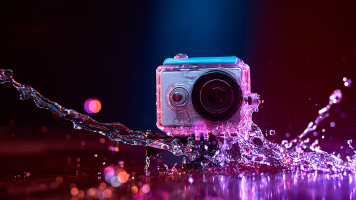
When I was shooting video as a one-person crew, to get some of the motion shots of cars or other moving vehicles, I needed a camera that I didn’t have to worry about operating but which also had high enough quality to match my main camera as closely as possible. I settled on different action camera setups since they have a few qualities that are indispensable to a filmmaker or videographer who needs to add motion shots or angles that aren’t possible with their main camera. Below are five reasons every filmmaker needs an

by Jill Waterman · Posted
Here’s a hot tip: In addition to photo, video, and audio gear, as well as other tech products, B&H carries thousands of books and tutorials covering the fields of photography, video, audio and computers, plus inspirational titles to get your creative juices flowing. For all you bibliophiles out there, we’ve compiled this shortlist of must-have publications spanning photography basics, photo careers, marketing and promotion, business practices, teaching photography, lighting technique, specialty photo subjects, creative inspiration,

by Jill Waterman · Posted
Rachel Jo Silver did not anticipate the secret flash mob dance her guests pulled off at her June 2013 wedding—nor did she have a videographer on hand to capture the unscripted scene. When planning her wedding, she had pictured wedding videography as an overwhelming nuisance involving a giant camera and bright lights, so she decided to spend the necessary funds elsewhere. Yet, soon after returning to her life as Marketing Director for a New York City-based beauty retailer, Silver began to regret her decision to pass on video coverage, as she

by Steven Gladstone · Posted
I can remember the SMPTE meeting that took place in 2010. It was a defining moment in digital capture, with discussions comparing three sensor-prism cameras and single-sensor cameras, all following the news that after 88 years, a prominent film lab in New York had decided to stop processing film. Then, ARRI showed the demo footage from its newest digital camera. The subject of the footage was exactly what we all asked for, but never seemed to get to see, until then. I’d love to write that you could hear the jaws hitting the floor, or wild

by Steven Gladstone · Posted
Cinematography, videography, photography: ultimately, it is about showing something in a way that hasn’t been seen before. How you achieve this is a combination of framing, exposure, and post effects. It is the Digital Age—you can create just about any effect you want if you have the time, tools, talent, and software, of course. You can also hire someone to pull it off for you. While either of those options are valid, as you probably know, there is more than one way to skin a cat, so the focus of this article will be practical lens
by David Adler · Posted
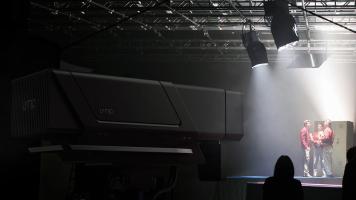
Admit it: when you heard about the Lytro Light Field and Illum cameras, you wanted there to be a Lytro Cinema Camera. The ability to refocus and determine your image’s depth of field after the time of capture would be invaluable to nearly any production. Today, Lytro announces just that—the Lytro Cinema. Not just a camera, Lytro
by Justin Dise · Posted
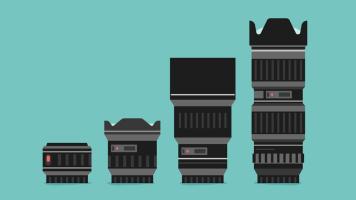
Whether you’re assembling a personal lens kit or compiling the equipment-rental list for your next film, selecting a lens package is an important decision. It can also be a daunting one, especially if you’re new to the game. So what lenses should you get? A complete set of primes? A couple of zooms? Both? The answers aren’t always clear. Ask ten DPs what their favorite lenses and focal lengths are, and you’ll likely get about as many answers.
The fact is that everyone has his or her own preferences, from focal length to build quality, to a
by Peter Ward_1 · Posted
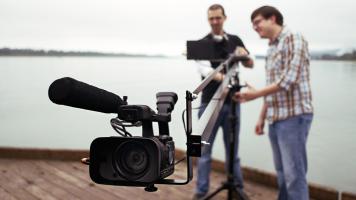
What makes a great shot? Is it the lighting? The camera angle? The mise en scène? Is there even a formula? Who can compare the gritty naturalism of much postmodern cinematography with the deliberate, expansive visuals of classic Hollywood? I can, I hope, show you many of the tools that have the potential to make great shots possible.
Tripod
I can already hear yawns in the audience. The humble tripod!? Yet, if there is one piece of camera support every DP,

by Steven Gladstone · Posted
I have been using filters ever since I first shot Super 8 film with a little Kodak M-22 camera. Just press the funny-looking piece of metal into the top of the camera to drop in (or remove—I can't remember which it was) the Wratten 85 filter that allowed you to use tungsten-balanced film in daylight, and achieve the correct color balance. Over the years, my filter experience has pretty much stayed the same—I use filters to achieve a
by John Harris · Posted
Samyang is forever on the move, quickly responding to our unfulfilled focal-length and format needs by producing quality manual-focus lenses at affordable prices. They sometimes even fill needs we didn’t realize we had.
The company's most recent releases include an 8mm f/2.8 Fisheye for mirrorless APS-C cameras, a 10mm f/2.8 lens for DSLR and mirrorless APS-C cameras, a 35mm f/1.4 with an AE Chip for Canon DSLRs, and a 7.5mm T3.8 Cine Fisheye for mirrorless Micro Four Thirds cameras.
8mm f/2.8 UMC Fisheye II
The Samyang 8mm f/2.8 UMC Fisheye