
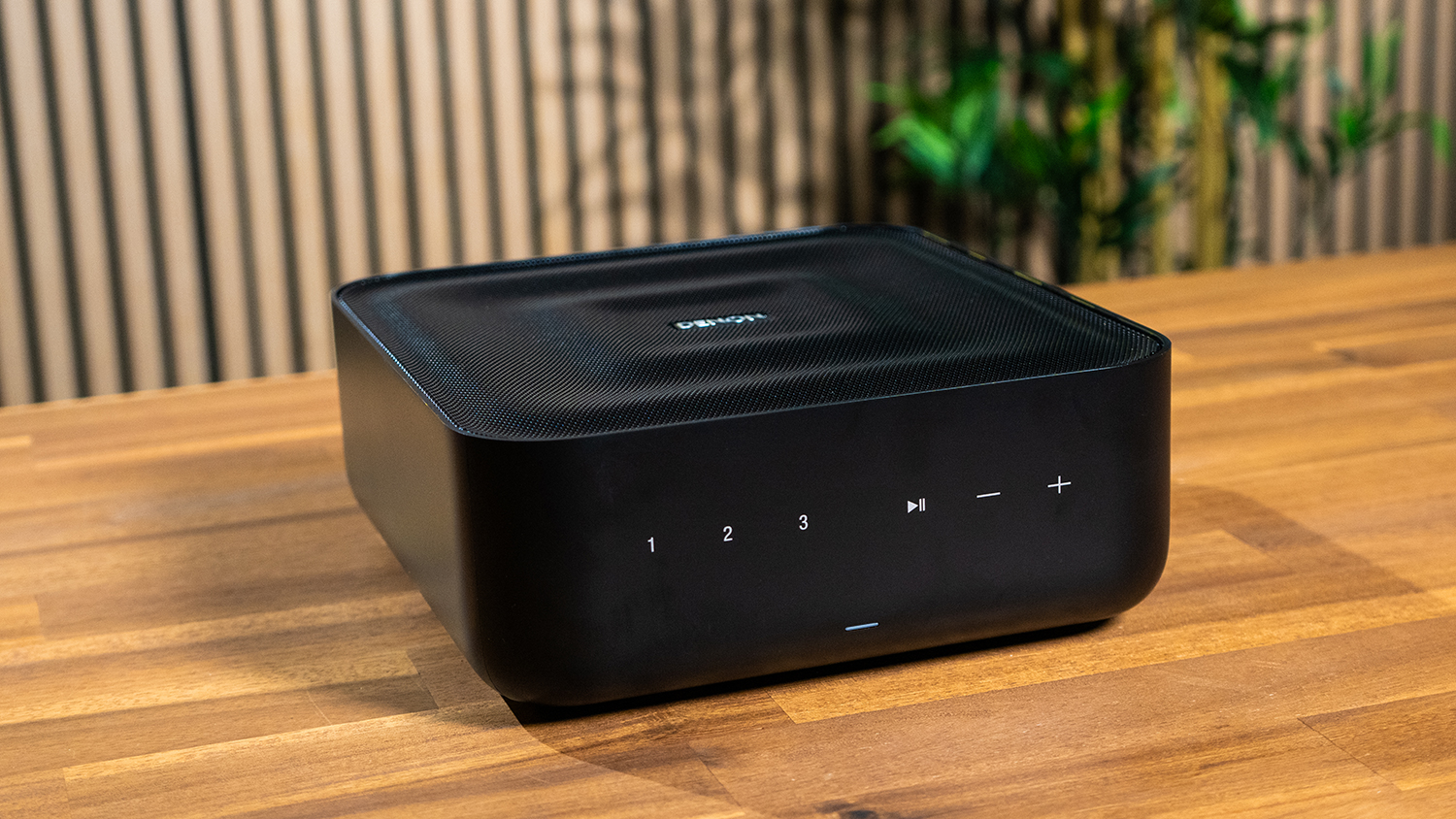
The compact amplifier landscape has grown over the past few years with some notable heavyweights throwing their hats into the ring. While digital amplification is far from a new concept, the evolution of wireless technologies and the expansion of high-quality audio sources has helped models like Denon’s Home Amp stand out in a crowded field due to the brand’s rich audio heritage. As far as compact amplifiers go, the Denon Home Amp is a premium offering aimed at those who want an elevated audio experience, wide connectivity options, and a robust ecosystem. I personally use the now-discontinued Denon AVR-X6700 as the heart of my home entertainment system, so I’m quite familiar with what the brand can achieve when nothing but the best will do. To evaluate the day-to-day livability and performance of the Home Amp, I used it to drive my 2-channel garage system, powering Polk’s Atrium 8 outdoor speakers. With 100-watts per channel of class-D amplification at 8 ohms, the Home Amp is well suited for a wide variety of listening spaces and should drive the Polks to reference volumes without incident. Spoiler alert, it did, and quite well.
Connectivity & Interface
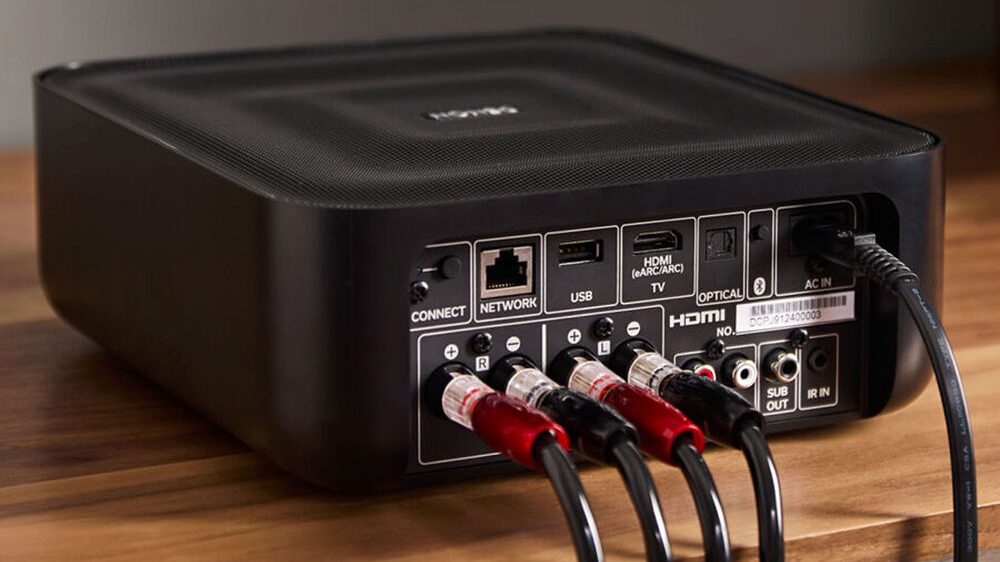
The Home Amp is well outfitted for wired and wireless audio sources. On the rear of the amplifier, you’ll find an HDMI eARC input for connecting to compatible display devices, digital optical and USB-A inputs for PC and music source connections, a subwoofer output, two pairs of high-quality binding posts, and a very welcome Ethernet port. On the wireless side, you’ll find no shortage of options with 802.11ac Wi-Fi connectivity, Bluetooth, AirPlay 2, and support for Denon’s HEOS multiroom audio ecosystem. For my personal listening habits, AirPlay 2 is a must, and I always applaud brands for including it alongside their own ecosystem. In regard to audio formats, Denon has you covered for home entertainment and high-quality stereo alike with support for Dolby Digital+, LPCM, FLAC, ALAC, WAV, DSD, and more.
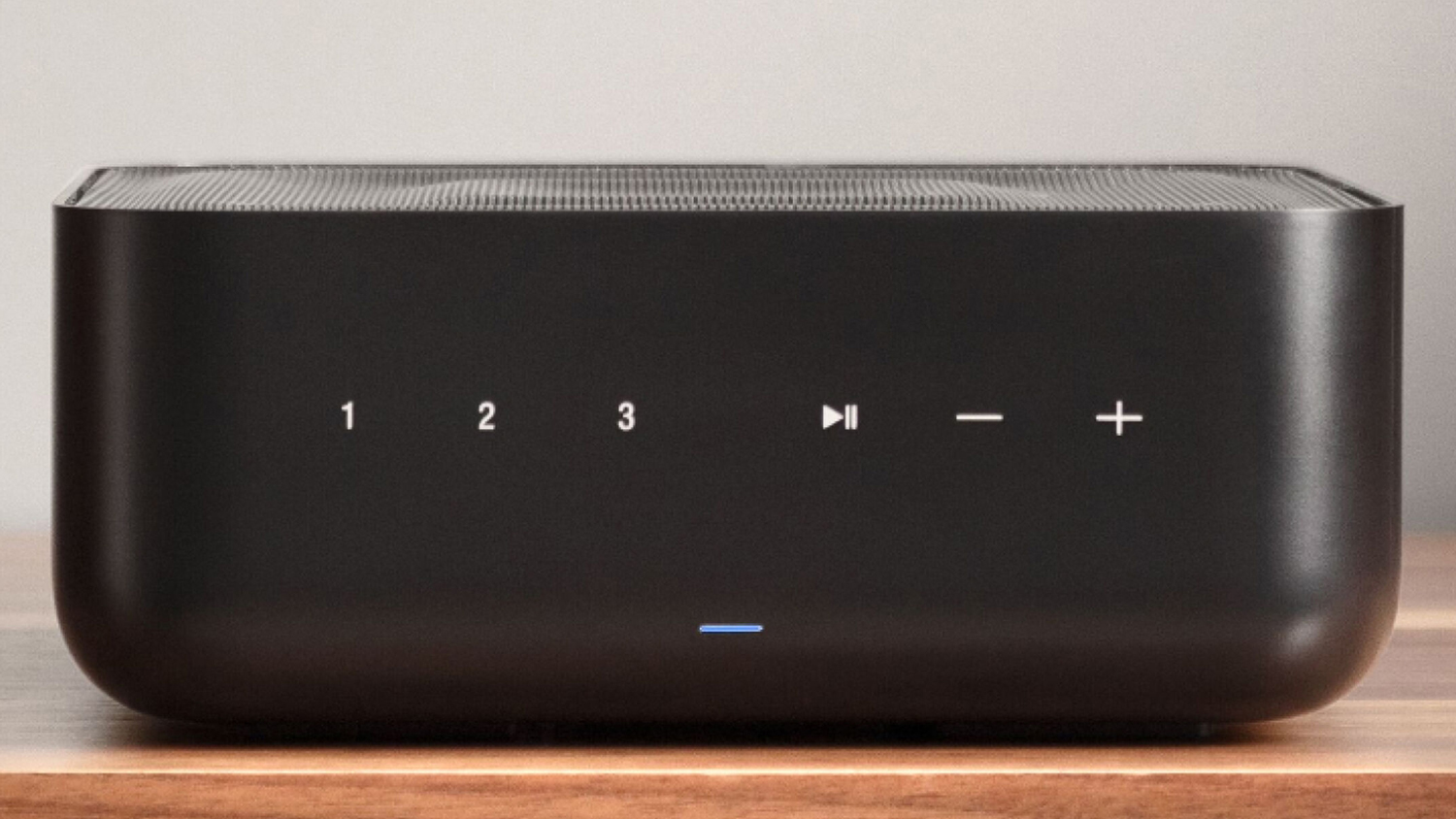
It’s worth noting that the Home Amp doesn’t come with a traditional remote control. Apart from the basic capacitive touch buttons located on the front of the unit, more detailed and intentional controls are relegated to Denon’s HEOS app; but as you dig into the app, you’ll see it’s far from a downgrade, even for physical remote loyalists such as me. If a manufacturer wants you to use an app to interact with its device, the app better be reliable and easy to navigate, both of which were the case during my time with the Home Amp. In addition to essential system controls like input source and volume, the HEOS app allows you to configure a whole home wireless audio system with compatible components and access popular music services such as Amazon Music HD, Pandora, Spotify, and a wide library on Internet radio sources. I also appreciated the app’s tone controls for Bass, Treble, Balance, and Subwoofer. While I didn’t find the need to connect a subwoofer to this system, experience tells me that having some bass management control is better than not having it all.
Another notable inclusion is support for Dirac Live room correction. With the purchase of a Dirac Live license, you can connect the Home Amp to your PC or Mac and use a compatible microphone to calibrate your system based on your room’s acoustics; sometimes with dramatic results. I’ve had the opportunity to experience Dirac on multiple occasions and have always been impressed by not only the difference in sound quality, but the level of control it enables you to have over your system.
Ease of Use & Performance
While the HEOS environment supports a wide range of speakers and components from Denon and its sister brand Marantz, I chose to use AirPlay 2 as the primary connective tissue of my whole home speaker system. There is no brand loyalty in my home setup, with components from a wide array of manufacturers, those that support the AirPlay protocol can work together in a seamless multi-room environment, managed within your smart device’s interface. With that said, getting my Denon AVR and the Home Amp to work together within the HEOS environment was as easy as it gets. As I add additional compatible speakers to this setup, I wouldn’t hesitate to rely on HEOS to connect additional devices to its ecosystem. Additionally, the aforementioned app was very reliable, I didn’t experience a single glitch or disconnection during my extended review period. The menus are also thoughtfully laid out and the device controls are easy to interpret.
Sound quality is subjective, but after years of demoing two-channel and home entertainment gear, I’m convinced I can recognize good sound quality when I hear it. I was surprised by how warm the Home Amp sounded in comparison to other digital amplifiers I’ve experienced. Bass was controlled and weighty, pairing well with the Atrium speakers that are rated down to approximately 45 Hz. While connecting a subwoofer would’ve given the bass even more extension, the sound didn’t feel incomplete without it. Similarly, I was able to push the speakers beyond what I considered to be reference levels and high frequencies didn’t fall apart or become harsh to the ears. For a two-channel garage system, the Denon and Polk pair had no business sounding as good as they did.
Who Is the Home Amp For?
At its compact size of just 8.5” wide and 3.4” high, the Denon Home Amp proves that powerful performance doesn’t have to take up a lot of real estate. The Home Amp is designed for serious listeners and home audio enthusiasts who value high-resolution audio sources, ease of use, and flexibility. From design to in-use, the Home Amp screams premium while also being very approachable. As an AirPlay power user, I loved how easily the Home Amp integrated into my setup, while also giving me the flexibility to explore the HEOS ecosystem. Sonically there’s a lot to like here as well; I consider the Home Amp to be a home run by all accounts.
