
Like a superpower, the addition of thermal imaging within an enterprise drone’s gimbal can reveal what is impossible to see with the naked eye. The benefit can’t be overstated, as it can protect and preserve everything from essential infrastructure to both animal and human lives. With great power comes the responsibility to learn how it works, how it can be used, and what to look for when purchasing a drone with it.
The Basics of Thermal Imaging
Heat. Everything in the world above the temperature of absolute zero emits it in the form of infrared radiation (IR). It’s the intensity of this radiation that is captured and measured by a drone’s thermal camera sensor. Then, through software processing, this information is mapped into a picture or video that depicts each pixel’s actual temperature. This is done with an accuracy of within a few degrees and can span ranges to below zero and above 1000 degrees Fahrenheit.
Thermal Imaging – What is it Good For?
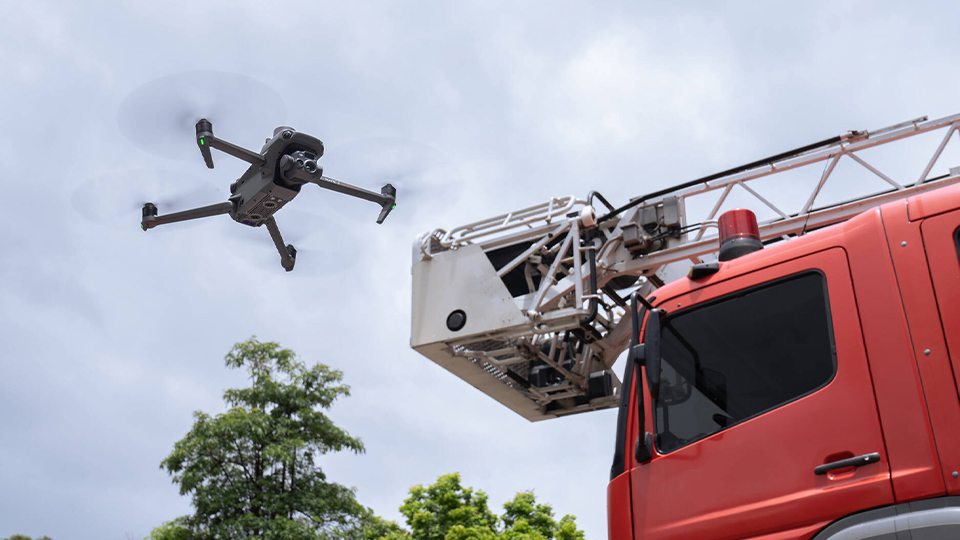
A wide spectrum of professions and industries can use a drone’s thermal imaging capability to great effect. First responders performing SAR (Search and Rescue) missions can more easily locate victims in the dead of night or through smoke and fog. The ability to see through smoke can also let firefighters track a fire’s progress without needing to visually see it.
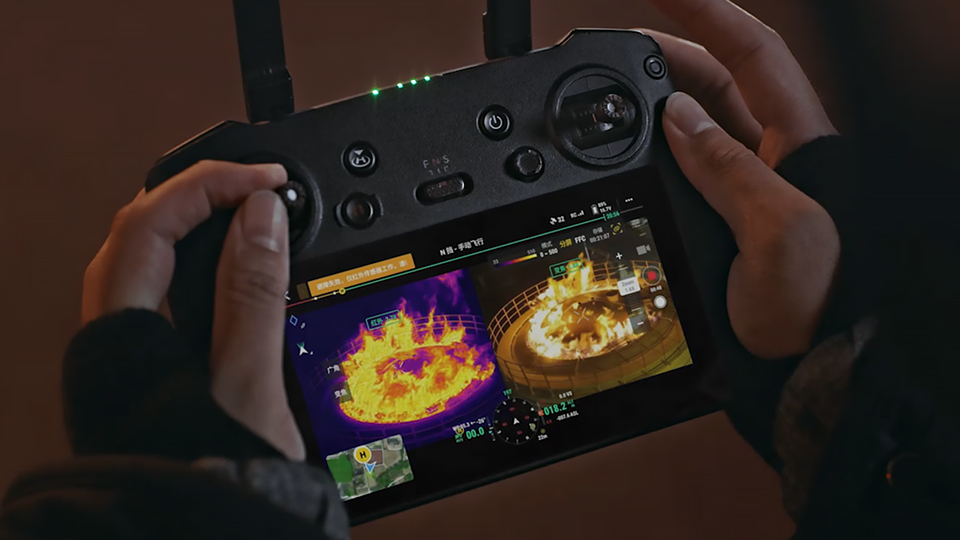
For corporations and governments, essential infrastructure can be quickly inspected for both dangerous head buildup or heat loss. Security teams can better spot intruders, and even wildlife surveying can be performed more accurately and quickly, tracking herds and counting animals as they migrate.
What to Look for in a Thermal Drone
When looking to add a thermal-capable drone to enhance your operational effectiveness, major brands to consider are DJI and Autel Robotics. DJI with the Matrice 4T and Mavic 3 Thermal, or Autel with their EVO Max 4T XE, EVO II Dual 640T, or EVO Lite 640T. If portability is paramount, consider the Nano BLACK OPS from Xcraft, as it sports a micro-sized frame.
In terms of primary features, much of what you’ll find in regard to thermal imaging on enterprise drones is remarkably similar to each other, such as temperature range, minimum focusing distance, and resolution. One specification that can fluctuate more regularly is the field of view, or FOV, which will tell you how wide of an area the sensor can cover at a given time.
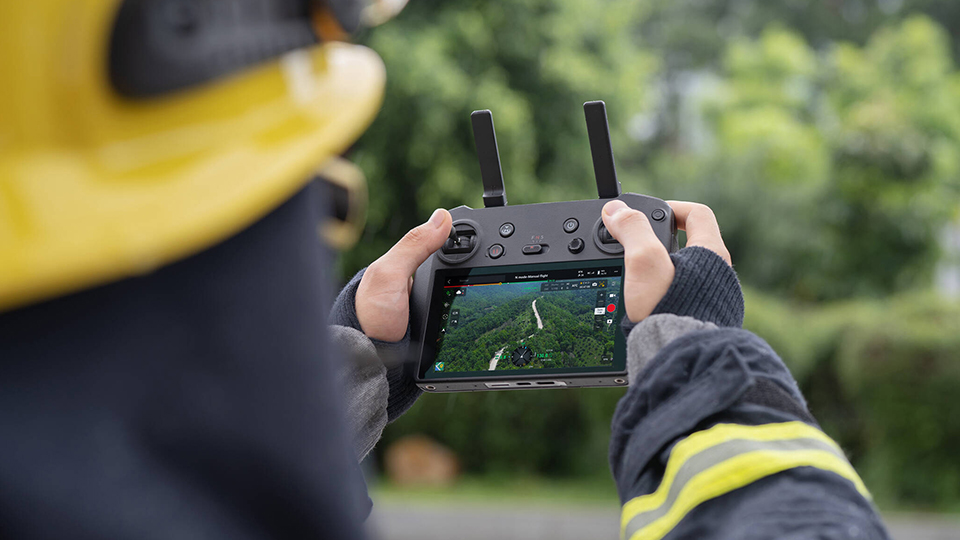
One of the more important aspects of choosing a thermal enterprise drone is to look at what surrounds that technology, such as the ruggedness of the aircraft, the quality of the visual camera sensor(s), and whether it has a laser rangefinder to measure a thermal target’s distance. If you already have a drone with a swappable payload, there is a high likelihood that you can swap it out for a thermal or thermal/visual camera, letting you utilize the aircraft and accessories you already possess.
We hope this overview gives you a better idea of how a thermal camera works and what it can do for you when attached to an enterprise drone. Having a tool that can see the invisible and fly into hard-to-reach locations is a formidable combination for improving the operational effectiveness of many enterprise-level operations. If you’re looking forward to adding this powerful technology to your aerial arsenal, you can find more information by checking out our expansive selection of drones and accessories.
