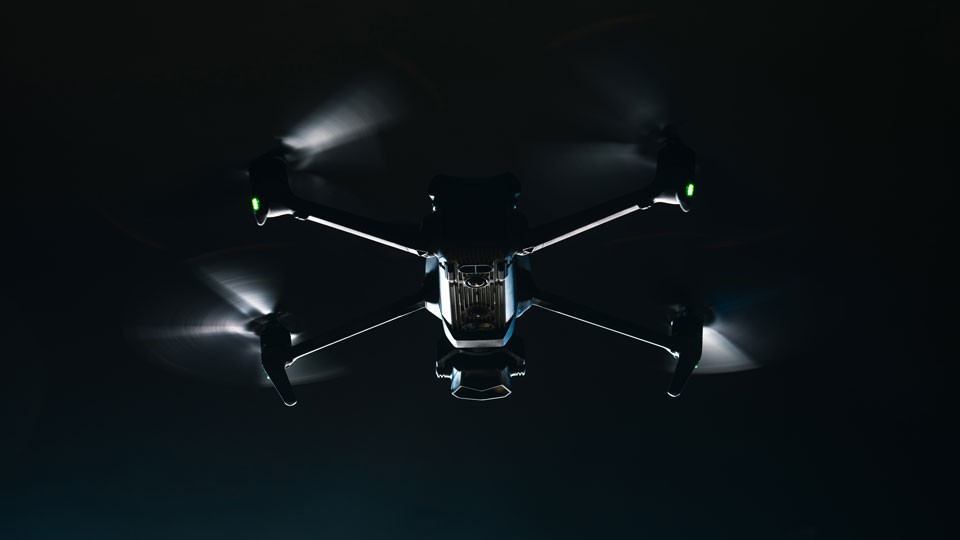
Accessories for flying your drone at night enhance visibility, improve safety, and are often a legal requirement. Accessories for nighttime flying include anti-collision lights, high-powered spotlight or searchlight, colored LED lights, night vision cameras, and more.
Anti-Collision Lights
An anti-collision light is a critical safety accessory of a drone during nighttime operations. Since the built-in small LED lights are not bright enough for this purpose, Federal Aviation Administration (FAA) recommends that the operator (especially those operating commercially) must add aftermarket lights to meet the standard. For commercial (Federal Aviation Administration Part 107) pilots in the U.S., anti-collision lighting is required for night flight and it must be visible for at least 3 statute miles in all directions. These lights make sure the drone is visible to other aircraft pilots, alerting them to the drone's presence.
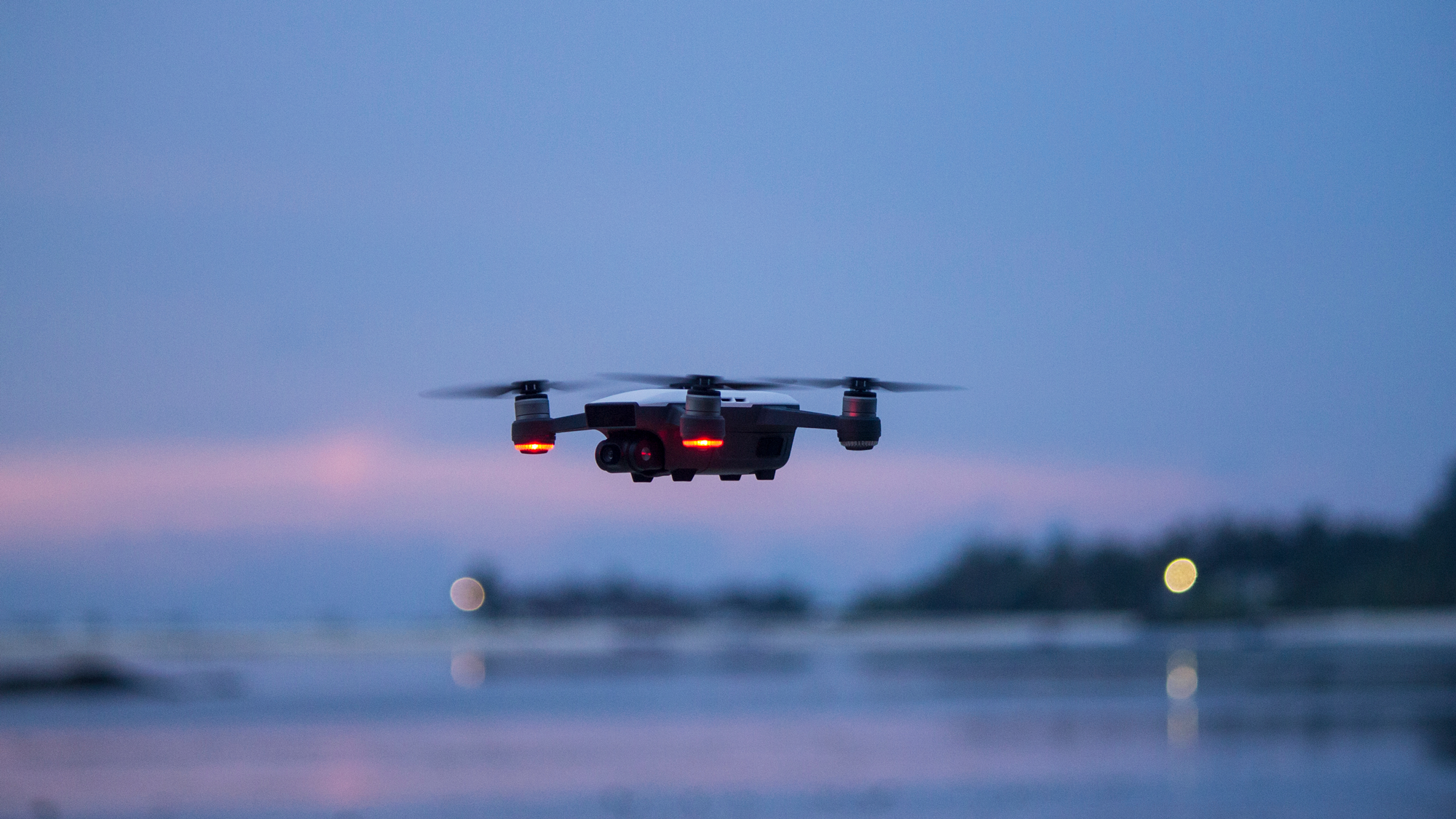
FAA recommends using certified anti-collision lights, flashing or strobing, visible from 3 statute miles away, with a flash rate between 40 and 100 times per minute. The FAA permits either a red or white light, though white is generally recommended for its superior visibility against dark backgrounds. These lights are typically lightweight, small, and come with their own rechargeable batteries. Some units might draw power from the drone which might be beneficial for operations where weight of the drone is more important than the flight time. The advantage of using an anti-collision light with rechargeable batteries is even though it adds weight to the drone, it doesn’t drain the drone’s battery resulting in longer flight times. They are usually mounted on the top of a drone using an adhesive and are charged via USB.
Spotlight/Searchlight
These lights are useful to light up a specific area during inspection, surveillance, and search and rescue. Often commercial photographers or cinematographers use these lights to light up a subject as well. Spotlights are heavier and more powerful than the anti-collision lights and they draw significantly more power from either an external battery or from larger onboard batteries. These lights can be solid (often with adjustable intensity) and beam type (focused or flooded) and it’s important to select one with appropriate beam pattern. For long range search and rescue, a searchlight with narrow and focused beam is often better, whereas roof inspection or lighting up a scene for photography requires a wide flood beam. Since the weight of the searchlights will affect flight time and performance, it’s important to find a balance when selecting a light. The available options are often smaller and lighter for consumer drones to heavier, larger, and more powerful versions for commercial drones.
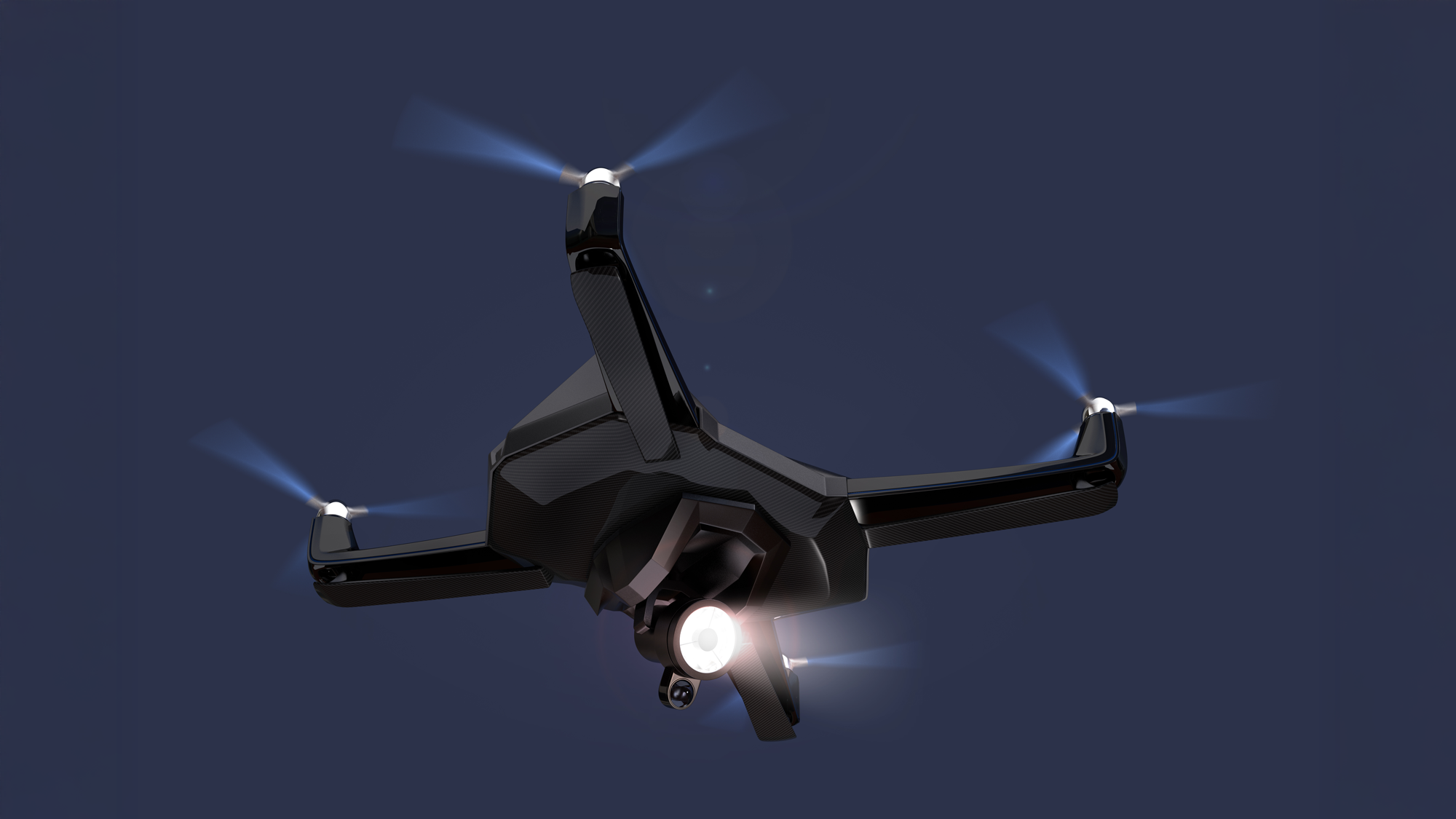
Accident scene mapping can be aided by drones equipped with scene lighting. They are frequently employed to keep an eye on theft and suspicious activities at night at large properties, warehouses, and construction sites.
It’s important to check the compatibility of an accessory before fitting it. Many manufacturers like DJI and FoxFury have searchlights that ensure the center of gravity of the drones is not changed, the light is securely mounted, and the light doesn’t obstruct sensors or propellers. A drone’s camera quality also depends on the amount of light in the scene. Searchlights help to obtain a photo or a video at a lower ISO resulting in better quality (less noise) and resolution keeping the shutter speed ideal. Additionally, lighting helps the camera shoot at a higher shutter speed, increasing the likelihood of crisper images free of motion blur.
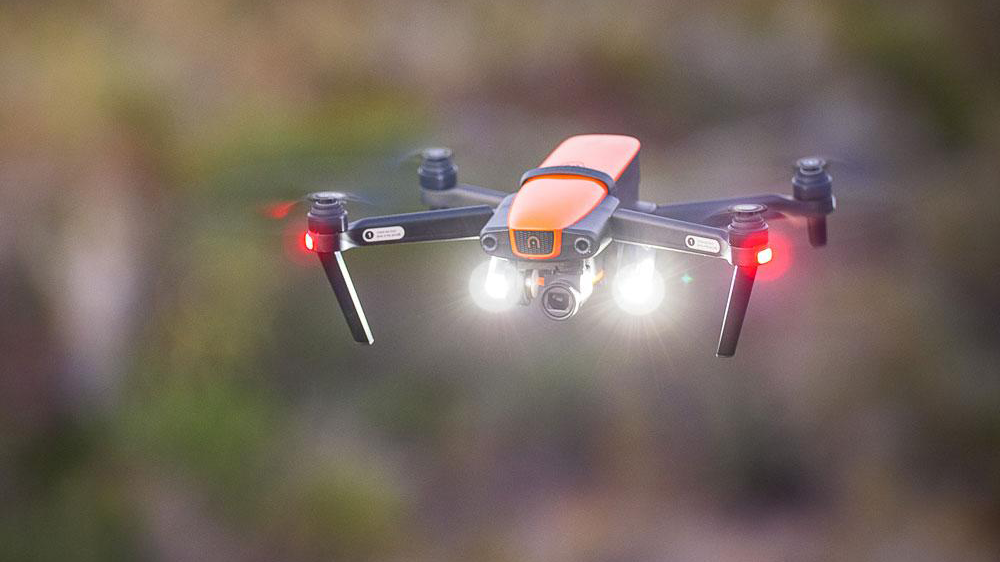
Even with a searchlight, it’s recommended to always fly within your visual line of sight. A visual observer can help spot other aircraft or obstacles while the remote pilot in command can focus on the scene.
Thermal and Night Vision Cameras
Rather than using visible light, thermal and night vision cameras use heat signatures to detect objects. These are crucial for use when it's necessary to detect heat in the dark, such as wildlife monitoring, surveillance, and search and rescue. Often, high-end enterprise drones have a thermal camera built in. Because thermal drones can sense body heat, they can swiftly find an animal or a lost human. With the use of night vision attachments, one can track and latch on to subjects at night in low light levels. Spotlight connected to the drone can help ground team reach the victim and a connected loudspeaker can deliver a message. Thermal imaging helps firefighters and first responders monitor and detect hot spots in a building or wildfire. In a recently burned structure, thermal cameras can also be used to identify hot places that could still be dangerous to enter. Ranchers use drones with night vision or thermal cameras to locate lost livestock, and thermal cameras are used to monitor the population of an animal species.

Colored LED Lights
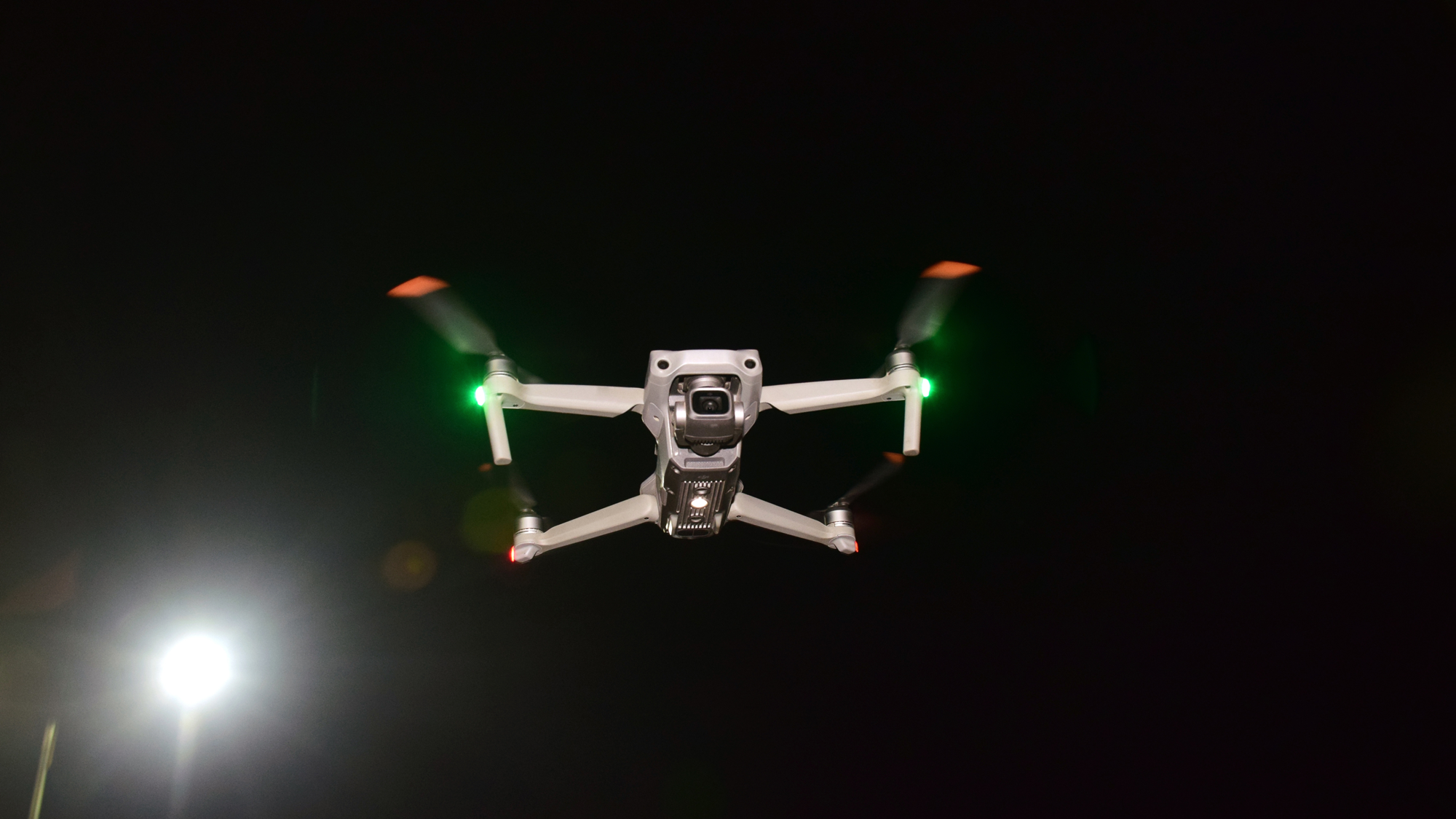
While not a substitute for anti-collision lights, color LED light stripes can be added to a drone to track its orientation at night. Since flying in the dark requires greater concertation from the remote pilot in command and visual observer (if present), green LED in the front and red LED in the back will help determine its orientation.
Conclusion
Flying is still necessary even when the sun sets. Most flying operations take place during the day, however in certain situations, night flights are also necessary. Drones can occasionally work best in this situation. To see where we are flying or what we are looking for, lights are necessary and drone lights enable drones to be used as search instruments at night or in the dark, whether it's examining the interior of an abandoned building or searching for a lost hiker in the wilderness.
