
In terms of safety, FPV (first-person view) drones aren’t all that dissimilar from non-FPV drones. They are bound by the same guidelines and regulations; they benefit from the same preflight safety checks and best practices. However, there are some safety practices specific to FPV drones, including those pertaining to FPV-specific gear. In this guide, we’ll cover everything you need to know about safely operating your FPV drone, including preflight tips and best practices for FPV flight.
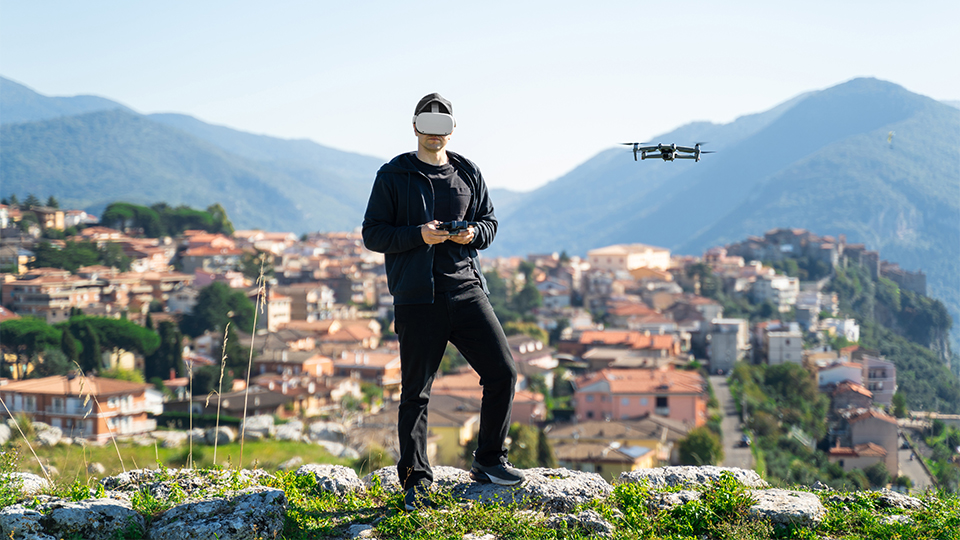
Preflight Safety Tips for FPV Drones
For the most part, preflight safety checks for FPV drones are the same as for non-FPV drones—charge your batteries, check the weather, etc. In addition to those tried-and-true precautions, there are some FPV-specific checks you should perform before takeoff.
Charge Batteries
One of the most obvious preflight tasks is also one of the most essential: charging your batteries. Before takeoff, be sure to double-check the power levels of all your gear, including your FPV drone, headset/goggles, controller, and, if applicable, video monitor. Also, if you rely on a portable battery pack to charge your batteries in the field, make sure that’s juiced up as well.
Double-Check Components
Once you’ve confirmed battery levels, give your FPV drone a once-over to verify everything is properly connected and installed. Check that your props are securely tightened and attached to the correct motors. If you’re piloting a custom-built FPV drone, you should also double-check wired connections and take care of any necessary calibrations.
You’ll also want to make sure both your FPV transmitter and receiver are installed and functioning properly before you take off—nothing worse than losing video feed in the middle of an FPV flight.
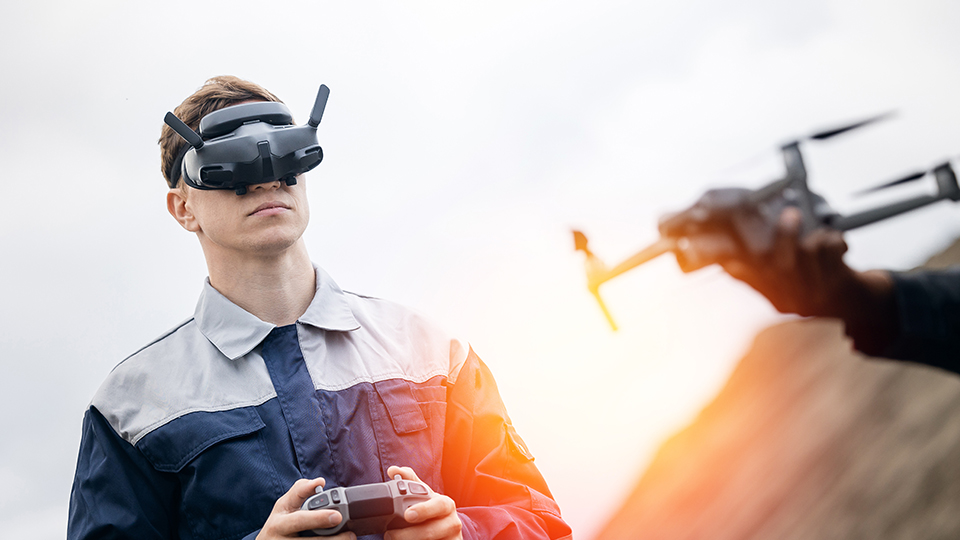
Update Software
Companies frequently update the software of their drones, which can affect the overall performance and, in some cases, restrict flying if not installed. Before you head out, double-check that you’re running the latest software on all your equipment, or else you might be grounded before you even get into the air. Also, if you do need to update your software, it’s a good idea to be connected to Wi-Fi and plugged into a power source—that way you don’t eat up battery life or data.
Check the Weather
If you’re planning on flying your FPV drone outdoors, be sure to check the weather beforehand. Confirming weather conditions is an essential but oft-forgotten preflight precaution. In particular, pay close attention to wind speeds. High winds are one of the most common causes of weather-related crashes. Before you take to the skies, visit a weather-monitoring website like Aviation Weather Center to confirm it’s safe to fly in your area.
Practice in a Simulator
While it’s not absolutely necessary for conventional drone pilots, practicing in a simulator is highly recommended for FPV flight. Flight simulators provide a risk-free environment for FPV flight, allowing you to practice and get accustomed to the unique experience of FPV flight without posing any danger to your drone (or wallet).
There are lots of good FPV flight simulators out there: VelociDrone, FPV LOGIC, Liftoff—just to name a few. When searching for an FPV flight simulator, keep your drone in mind, as well as the type of FPV flight you’re interested in (racing, freestyle, etc.). You want to make sure that simulator offers an experience that translates to the real world.

Read More: Preflight Safety Tips for Drone Pilots
Best Practices for FPV Drones
Much like preflight safety tips, the best practices for flying an FPV drone are similar to those for flying conventional drones—with a few noteworthy additions. When flying your FPV drone, be sure to observe the following best practices:
Use a Spotter: Having a second pair of eyes on your drone is never a bad idea, especially if you’re flying FPV. A spotter can help identify and keep track of potential risks, including those outside your limited field of view.

Maintain Awareness: Regardless of drone type or activity, it’s crucial to maintain constant obstacle and environmental awareness during flight. Be on the lookout for potential collision risks, including people, pets, and/or objects (buildings, trees, etc.). Keep tabs on the weather—if clouds start rolling in or the wind picks up, it might be time to pack it in.
In other words, stay alert, stay aware, so you can stay in the air. Remember that when it comes to drone safety, the best defense is vigilance.
Monitor Levels: Maintaining awareness also applies to your drone and supporting accessories. When you’re flying your drone, make sure you keep an eye on critical performance levels, including battery life and signal strength.
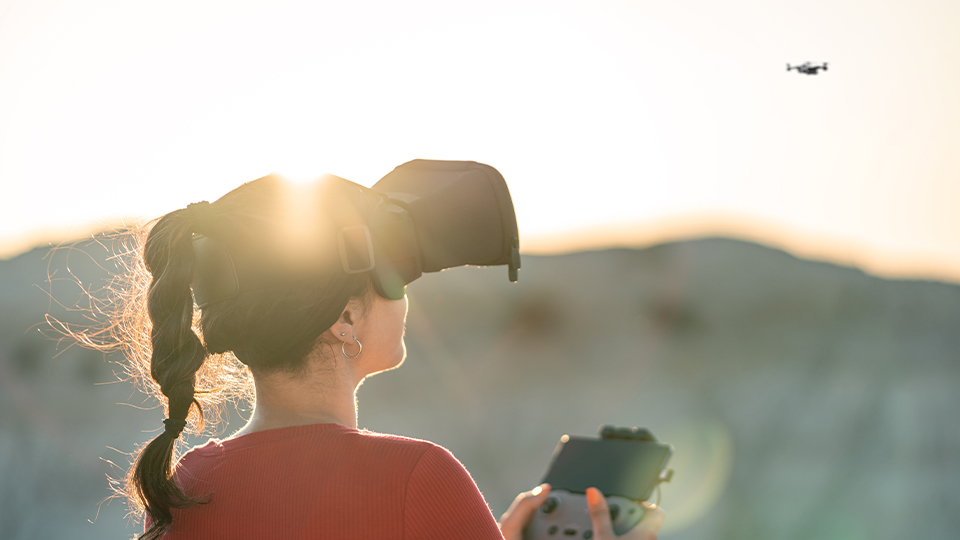
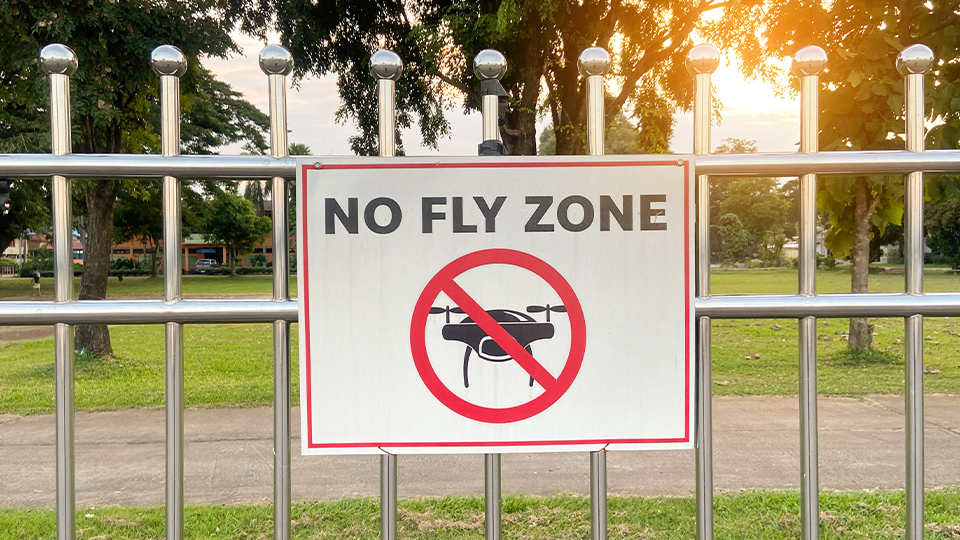
Avoid Restricted Areas: Always clear of restricted areas and no-fly zones, including airports, airfields, and anywhere else drone flight is prohibited. If at any point during flight, your drone’s GPS warns that you’ve entered restricted airspace, retreat immediately.
Start with Self-Level: Most FPV drones let you choose between self-level (or angle) mode and acro mode—also known as manual or rate mode.
Self-level mode utilizes auto-leveling technology to stabilize your drone; it also restricts certain movements and roll angles, making it easier to control your drone and a better fit for beginner pilots.
Acro mode removes flight restrictions and auto-stabilization features, giving the pilot complete control over the drone. This freedom allows you to perform more acrobatic maneuvers. However, because auto-leveling is disabled, acro mode is riskier and comes with a much steeper learning curve.
Beginners—especially FPV pilots—are better off starting with self-level mode.
Keep Horizon in View: If you’re just starting out with FPV drones, one of the best ways to ensure a safe, steady flight is to keep the horizon in view. A level and centered horizon line will help you maintain flight orientation and avoid crashes.
Read More: An Introduction to FPV Drones
Interested in learning more about drones? Check out our comprehensive collection of guides on all things drones, including beginner and advanced guides on flying, use cases, and more.
