
Mackie has been a mainstay in the portable speaker market. Their PAs and loudspeakers can be found in rehearsal studios, event spaces, and rental houses throughout the world. This hands-on review will cover the Thump GO and Thumpsub GO as well as the Mackie ProFX10 GO, so let’s get into it.
Mackie Thump GO and ThumpSub GO—Portable Doesn’t Have to Skimp on Power
The Thump Go is in their recent portable lineup of speakers, powered with an internal lithium-ion battery for up to 12 hours of operation in addition to the standard AC ports. It also has two charging ports for two additional batteries for extended performance. Let’s break down if this new portable take on the classic design means Mackie had to sacrifice on quality.
We were able to take these out of the box and test the performance of the 200W Thump GO 8” Loudspeaker along with the 400W ThumpSub GO 8” Subwoofer. Long story short, for the price, weight, and ease of setup, this system delivers the convenience of portability with great performance and the powerful sound Mackie is known for.


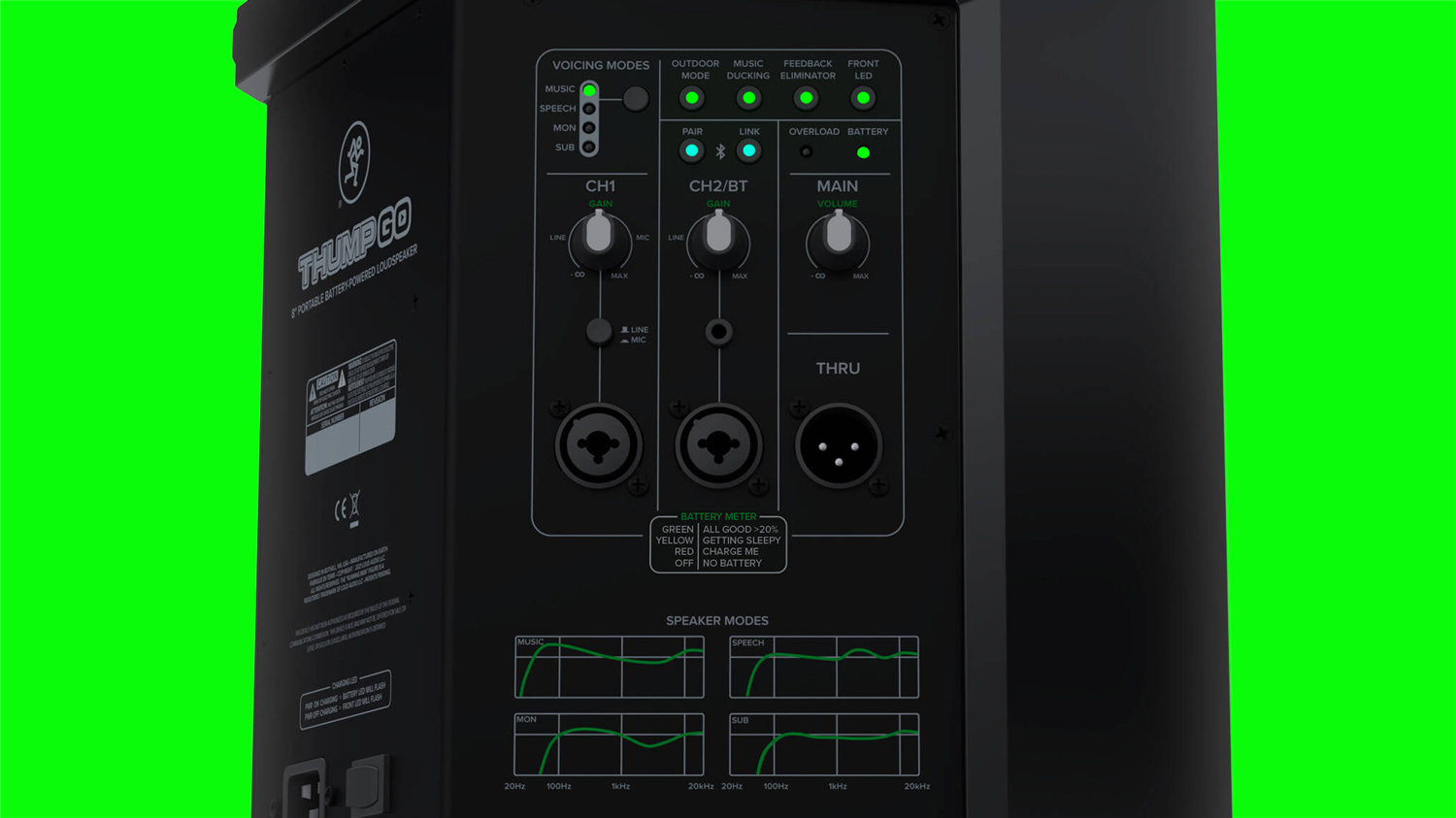
The loudspeaker comes in around 18 pounds each, with the sub coming in at 41 pounds, making this an impressively portable set of equipment compared to the competition. Carrying the speakers to our listening room was a two-man job but we didn’t break a sweat. The DSP and I/O controls on the Thump GO are intuitive and come with some cool features, with different EQ curve settings for music, speech, monitor, and sub modes on the loudspeaker as well as Bluetooth pairing and link modes for wirelessly connecting another Thump Go.
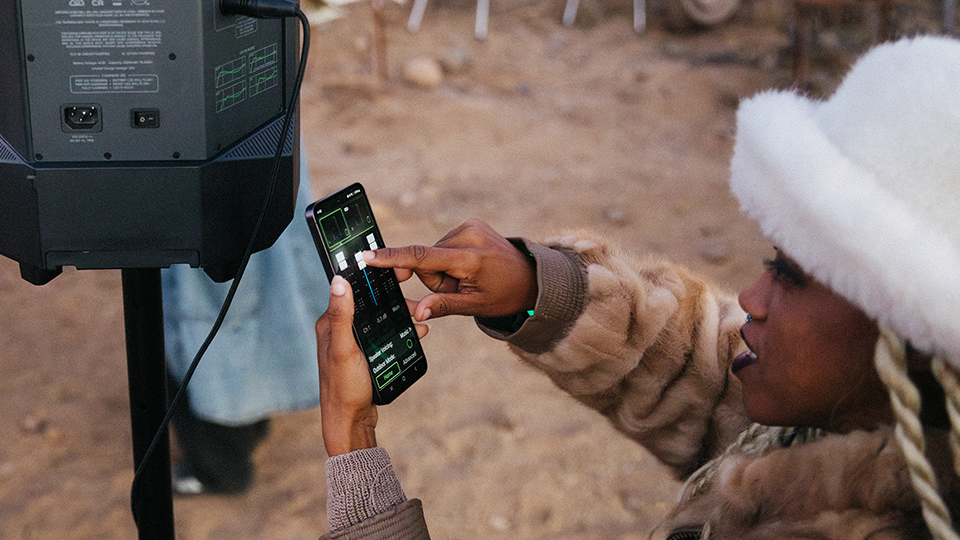
Other DSP features like outdoor mode do some kind of EQ magic to mimic indoor performance, and Music Ducking allows for any signal from channel 2 to duck when mic signal is present in channel 1, making it great for MCing and connecting to the crowd. The polypropylene enclosure can be oriented vertically or horizontally as a wedge with a 45-degree angle for use as a loudspeaker or stage monitor respectively.

The ThumpSub GO has a threaded pole mount cup for the Thump Go or another loudspeaker to be mounted to it when placed horizontally. It eschews separate full-range and high-pass output jacks for a switchable high-pass mode with only a pair of output jacks—these outputs are rarely if ever used simultaneously. Put these in high-pass mode when the outputs are being delivered to the loudspeakers. I`f its going to another sub, keep it full-range. It also features a phase inverter and can be set to send output in mono or stereo.
Setting it up for listening was simple, no manual was needed. While it has all the normal bells and whistles (combo ¼”/XLR inputs, XLR Male Thruput, 1/8” TRS), you can stream stereo audio via Bluetooth to a pair of Thump GOs if you use the link function, giving you control over the levels of both speakers via their app. Interestingly, you can still use the physical inputs of channel 2 while doing this, but those inputs need to have the Thump GOs be physically linked to play in stereo.
Starting with Steely Dan’s Aja as a reference track, the sound quality of the Thump GO system was impressive with full bodied lows from the dual 8” cones on the sub and crisp highs from the independently powered 1” tweeter of the loudspeaker really showcasing themselves during Steve Gadd’s drum solo.
Moving on to EDM, we played SOPHIE’s avant-garde synthesis clinic Faceshopping to really get a sense of what the set could do in a DJ setup. Again, the Thump GO proved itself as a formidable system, really emphasizing the full frequency spectrum of the vociferous track the late music producer so graciously bestowed upon us and we made sure that the system could get LOUD. We couldn’t stop listening to music on the ThumpGO—every genre we played sounded great through the system, and we played many.
My only gripe with the loudspeaker is that the mid frequencies could get a bit muddy when driving the gain hard, but it wasn’t bad enough to be distracting (and for the price, this is hard to even be upset with). The Thump GO is still great for everyday listening or professional studio monitoring where you’d be listening at normal levels. And in an environment where you’re playing music at 115dB or more, a bit of mud in the mid frequencies would certainly go unnoticed by all but the snobbiest of crowds.
Mackie ProFX10 GO—A Familiar Mixer that Can Flex
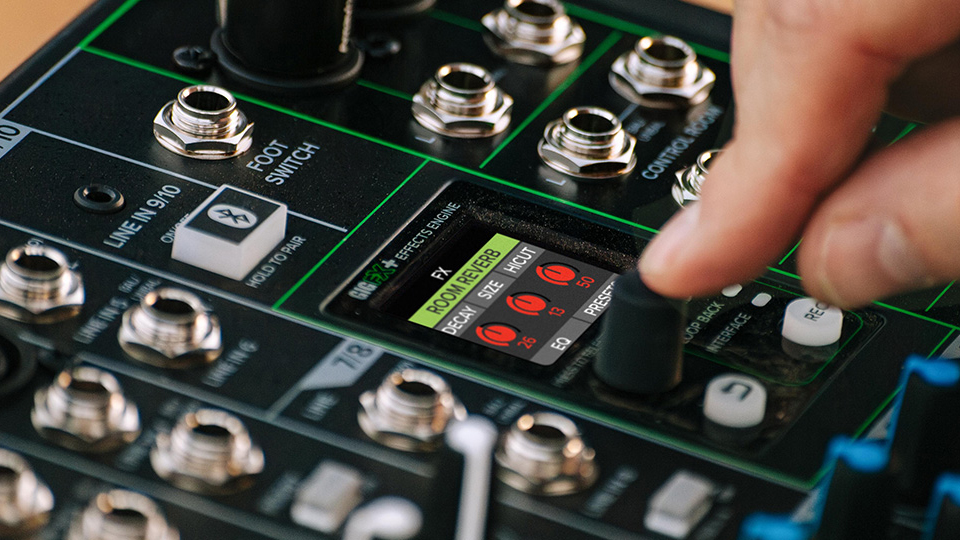
The Mackie ProFX10 GO is a fully featured, battery-powered mixer in a small and lightweight solid steel chassis (I was able to bring it with me in a medium sized backpack with no issue) with Onyx mic-preamps and built-in FX configured via a small LCD screen. It can also be used as a 24-bit/192kHz USB interface via USB-C cable that can power it or charge it for up to eight hours of battery life, along with a 12V power adaptor. You can get the Mackie GB-10 rechargeable battery separately for another 8 hours of battery life.
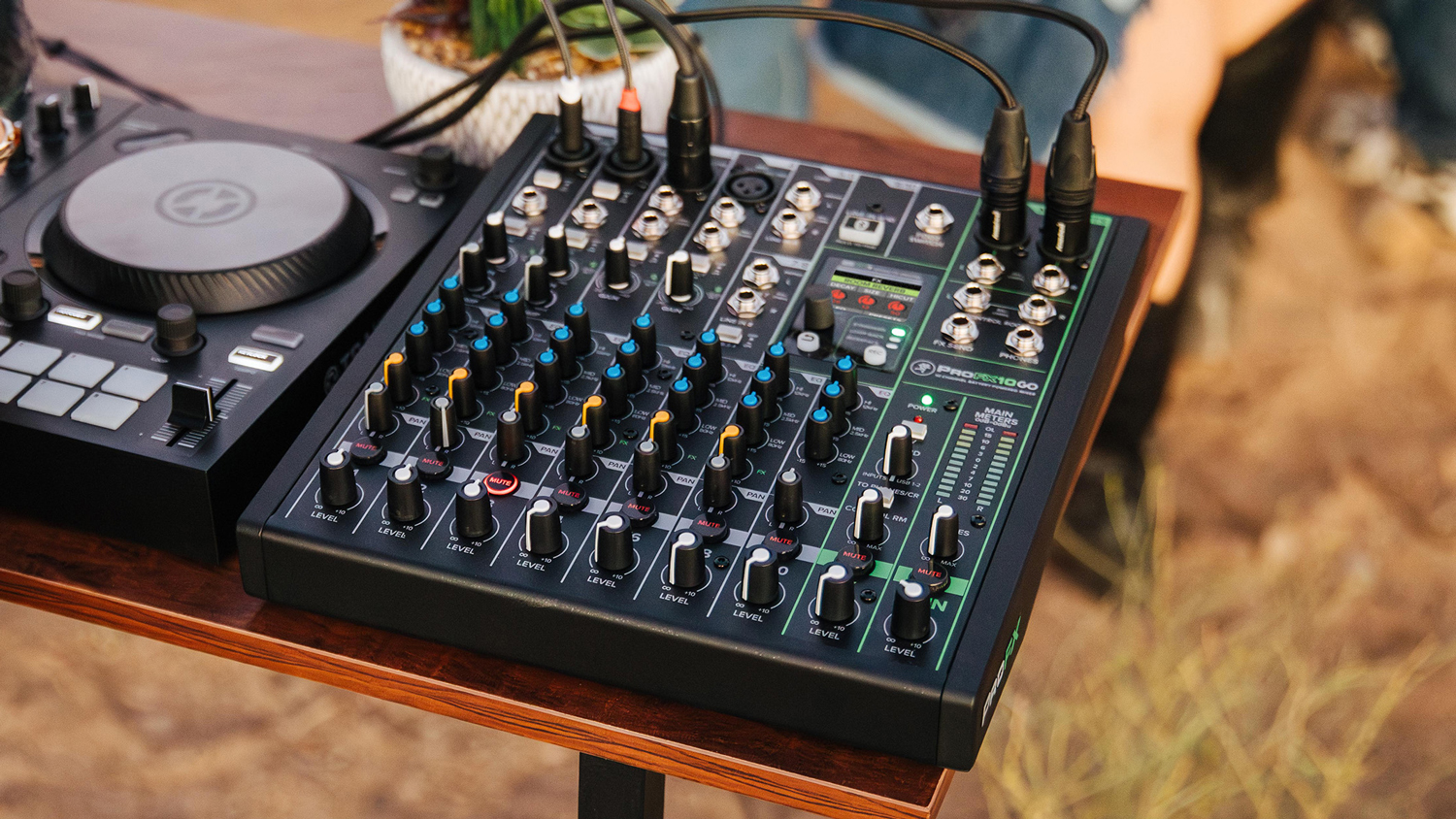
I used the Mackie ProFX10 GO in a rehearsal studio for vocals and guitar inputs as well as a submixer for analog mixing sessions. This ten-channel mixer has bi-directional Bluetooth enabled for playback from a smart device and for your device to receive audio from the mixer, which is a big plus – but I’m more worried about its performance as a pro audio device.
Channels 1 and 2 have hi-Z toggles for the dual XLR/TRS inputs, channel inserts for outboard gear, built-in compression, three band EQ, low cut switches, pan knob, and FX sends. Channels 3 and 4 lose the compression knob and dual input jack but gain a dedicated ¼” line-in input jacks for balanced or unbalanced sources. For its size and weight, it’s impressive to see how professionally featured the ProFX10 really is.
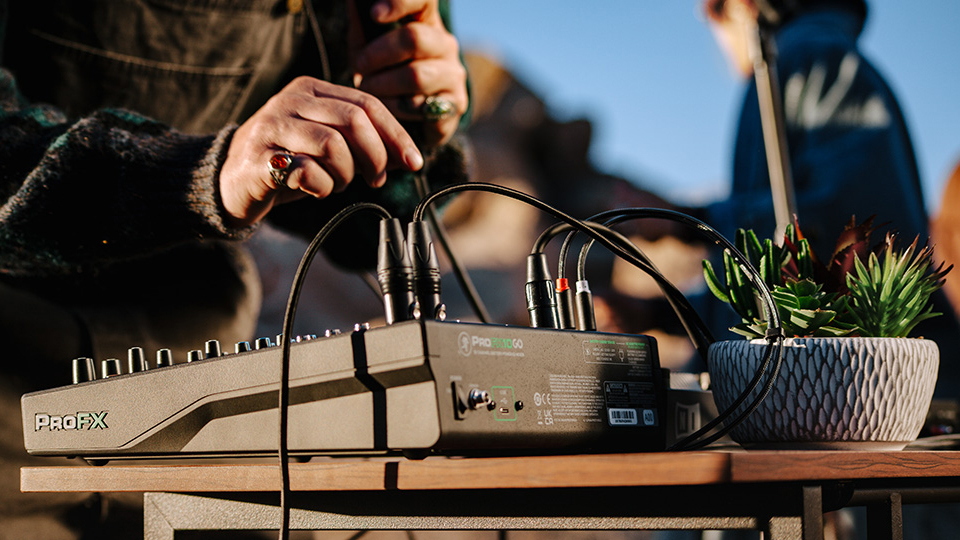
Channels 5/6 and 7/8 are two stereo line input jacks which can be used for mono inputs on the left channel, but channels 7/8 have a USB switch to allow return from a laptop, allowing you to listen to computer audio or use your DAW, which can also be EQ’d or mixed with other signals. Channels 9/10 are simply an input for an 1/8” TRS or Bluetooth and can be EQ’d.
The ProFX10 GO has an impressively powerful FX engine. When we tested them out, they all sounded professional grade and could be manipulated to taste via the LCD screen and selection knob. You can choose from three types of reverbs, two choruses, flanger, delay, echo, and slapback along with a couple combos of these. While not as versatile and featured, Mackie really did a good job making sure their FX engine was up to snuff when compared to the digital pedalboards you can put infinite effects plugins into, which is a refreshing thing to hear. Oftentimes, the built-in FX in portable mixers is less than stellar which is not the case for Mackie.
Overall, Mackie continues to abide by their “built like a tank” philosophy creating a great sounding mixer with a little bit of secret sauce. It functions like any other analog mixer (which is a good thing) but offers more flexibility for musicians, DJs, podcasters, and the like with its lightweight, durable, portable build, and great built-in effects engine. The Mackie ProFX10 GO lives up to its name by being perfect for any creator whose always on-the-go.
Mackie has made some impressively powerful and refreshingly portable gear with their GO series. The quality of build and sound is excellent for the price, and is perfect for any content creator, DJ, or musician who needs to haul their gear from place to place. If I were shopping for a full system, I’d keep Mackie in mind.
