
Composition in photography refers to the way in which we arrange visual elements in an image. It's how we position the subject in the frame and how all elements combine to create a visually appealing photograph.
All photographs © Mathew Malwitz
Expensive cameras and long lenses can only get us so far. It's not the gear that makes the photo, but the photographer. A creative and observant eye is the key to making visually pleasing photographs. These skills can be learned, and with practice, you'll be well on your way to creating strong compositions. That is, as long as you know the rules.
There's no one formula that determines good composition. However, there are several rules to consider when composing. These rules are essential to mastering composition, though that doesn't mean you need to apply every rule every time. To take your photography up a notch, let's look at a few of them.
The Rule of Thirds
The first and most basic rule in all photography is the rule of thirds. This rule imagines that our image is split into thirds, with nine equally sized sections. Where these thirds intersect are points of interest, or areas where the human eye naturally focuses when looking at a work of art. For this reason, we should always place our subject on or around these points, as long as the overall composition supports it.


There are exceptions to this rule, as there are with any rule in photography. Head on portraits are great example of where the traditional rule of thirds can be ignored but let your creativity wander. We recommend experimenting with your compositions where possible. And remember: Don't be afraid to crop.
Perspective
Perspective is used first and foremost to put our audience in the subject's world. By shooting from our subject's eye level, we create a more engaging composition and show our audience the subject in an immersive way. This will involve getting low to the ground or in some cases, above ground level.

We've touched upon this concept in our introduction to wildlife photography guide, and while it serves our images in multiple ways, we understand that not everyone can get down on the ground for a shot. Luckily, there are alternative ways of shooting from our subject's eye level.
First, we have distance. The farther we are from the subject, the less any height difference matters. Now, we don't need to be 300 yards away. After all, there are limits to what's possible. This look, although not perfect, can be achieved with as little as 50 feet of distance between the photographer and the subject. If a shot is not possible within this range, there are other methods of getting eye-level shots.

This next one is very situational and won't be possible in all scenarios, but if you can, shoot from a lower vantage point. This will put the subject closer to our eye level while we remain standing or at most sitting. Beaches are a great place to shoot in this manner as they are naturally sloped. Some more than others.
The same applies to subjects in high places. Shooting from a ridgeline is a great way of capturing eye-level shots of canopy dwelling species. Many mountaintop lookouts are excellent wildlife observation stations for this reason. These lookouts also offer scenic views that are ideal for shots of wildlife in the landscape.

Focus on the Eye
In portraiture, the eye is referred to as the window to the soul, or so they say. What it is, without a doubt, is the key to communication and connection. When you greet a friend or family member, what do you do? You shake their hand or hug them first, sure, but you do so while looking them in the eye.
We do not condone shaking hands with or hugging any wildlife, but we fully endorse and recommend eye contact in a photograph. Always aim to focus on your subject's eye in order to make that ever important connection.

If we're focusing on the eyes, we better be able to see them. Eye contact is only possible if our subject is looking toward or slightly toward the camera, and thus we must mention head angle. If our subject is looking at all away from the camera, even by just a few degrees, we lose a level of connection our audience has with the subject.
A lack of eye contact or a good head angle can take what may have been a great shot and bring it down a notch to a good image. The same can be said for an out-of-focus eye. If we do not have a sharp eye, then we do not have a good image. While a slightly out of focus eye may be salvageable with post-production software, anything more is destined for the trash bin. That is, unless we do with intent. See what we're getting at yet?
Space
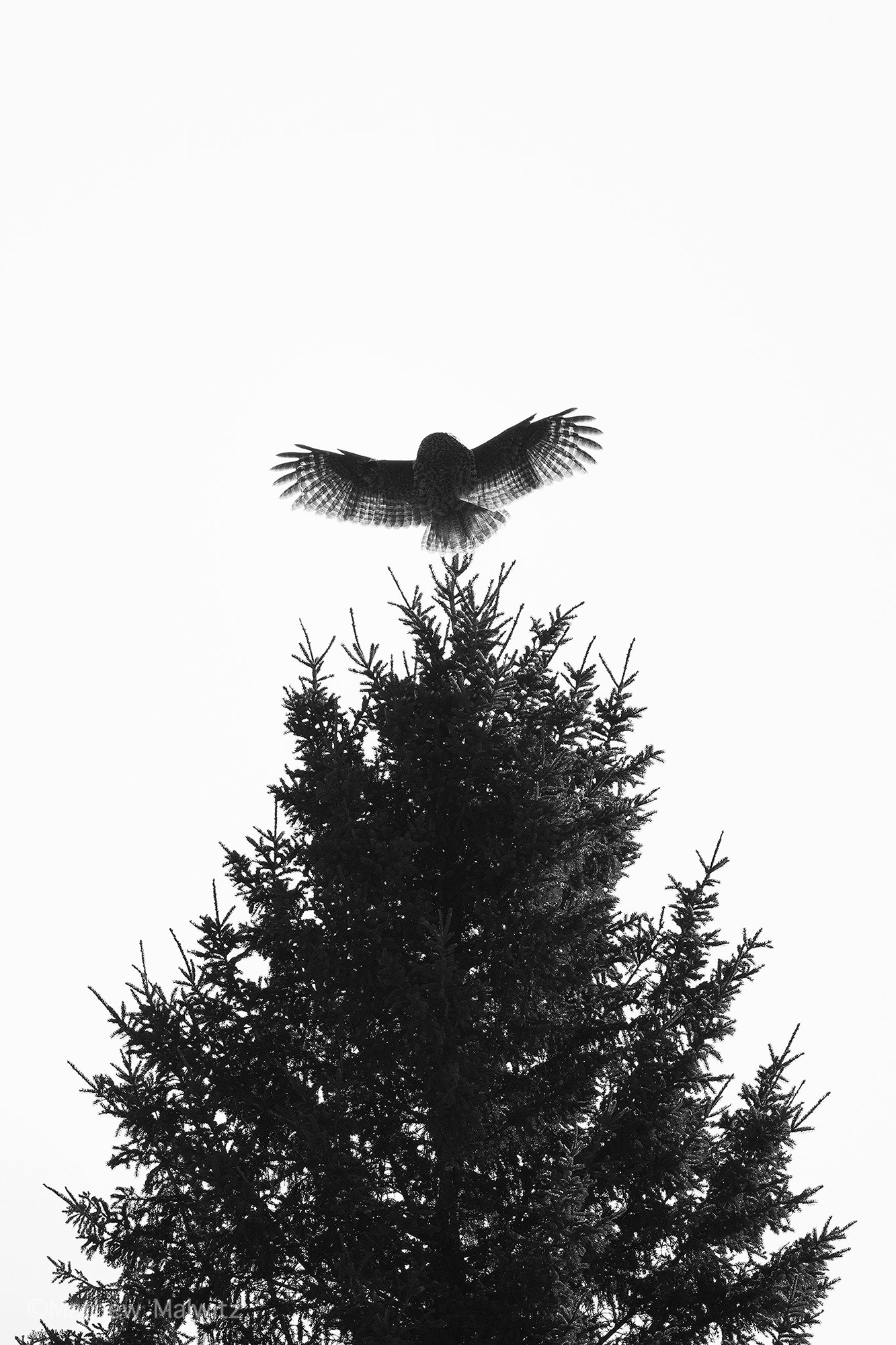
When composing an image, you may opt to put your subject closer to the edge of the frame. How close is too close? You may have heard the term "head room" used before. Essentially, you want to leave enough space between the head of your subject and the top of the frame.
While the head is chosen to define this rule, it actually refers to all appendages of your subject. Always leave room between your subject and the edge of the frame. Unless you're aiming to capture a tight portrait, all of the subject should fit within the frame and with space between it and the frame edge. You don't want to risk cutting off or clipping any tails or wings.

When we "clip" our subject, we are accidentally cutting off a portion of it by being too close or too zoomed in to fit the full animal. This is done often while photographing fast action such as a bird in flight as tracking such action leads to erratic movements. Cutting on the other hand, is when we cut off a subject but with intent.

Another situation where photographers often clip the subject is when the feet are not visible in the frame. A lankier bird like a heron or crane has long legs, and even when those legs are obscured, we should always leave room in the frame for them.
If you do accidentally clip your subject, don't panic. If the composition allows it, we can always cut in post via the crop tool. Cropping is an essential part of wildlife photography, whether it's used to fine tune our composition or to drastically zoom in on a small subject. Just be sure not to crop too much, as this will only degrade image quality. It's better to fill the frame purposefully.
To Fill the Frame or Not?
It's only a matter of time before you hear someone say that you need to fill the frame, so what better place to hear it first than here. This is often misconstrued as meaning that the subject itself needs to fill the frame. While that may be the technical meaning behind the phrase, we have our own understanding of the matter.
While there are instances where a subject filling the frame can work, such as in a portrait or detail shot, it's generally unnecessary and can actually harm creativity. As long as the frame is full of meaning, you have a filled frame. Let's take a look at some examples:


Filling the frame isn't specific to the subject, but the entire scene. Every aspect of a photograph is just as important as the last. As long as our subject is sharp, and there's nothing to distract away from it, you've got a good image. Look at the puffin in the grass above.
While the puffin is relatively small in the frame, the out of focus yellow flowers fill the foreground. This adds a pop of color that contrasts the primarily monochromatic birds (bill aside). Also note that there is more room in front of the bird than behind it. This gives the bird space to theoretically move into and can balance the composition.


Backgrounds and Foregrounds
We can't talk about balance without addressing backgrounds and of course, foreground. Our background is just as significant as the subject itself, as a distracting background can ruin an otherwise great shot. Foreground can add that aforementioned balance we've been talking about but also creates depth within our images.
Many photographers desire those smooth, blurry backgrounds but this is only part of the equation. As seen in the images used to showcase balance above, a smooth background can be too minimalistic. It can leave your audience wanting for more. This all depends on the context of the scene and the subject itself.


Depth can go a long way to making your image feel as if your audience can walk right into the scene. A unique behavior or striking pose can carry an image on its own, but for a standard portrait, we want to support the subject with complimentary colors, textures, or environmental features that we can use to frame the subject and guide our viewers' attention.
Framing is the use of environmental elements to surround or frame the subject. Framing can be done to enhance and otherwise bland composition, but it can also be used to hide distracting background elements. You can even shoot through foliage to add additional blurred elements to your image or to add texture to an otherwise bland background.

Once you've put the above rules into practice, you can start mixing and matching techniques to get the results you want. You can even begin to break the rules! Composition is fluid, and while there are rules, the way in which you choose to shoot an image will depend on how the elements within come together, and your creative vision.
Wildlife photography is continuously growing in popularity, and if you're looking to improve the quality of your work, composition is key. To continue reading about wildlife photography, check out our other guides and articles on the B&H Explora page.
