
Audio engineering is something of an arcane science. Unlike the more tangible fields of engineering, the success of an audio engineer—outside of material wealth—is subjective. When it comes to the work of an engineer, a collapsing bridge is a lot more palpable than a bad mix.
This subjectivity has led to the dissemination of some fantastical claims that defy the laws of physics, acoustics, and mathematics! We can measure nearly every aspect of audio in a tangible way—mathematician Joseph Fourier has proven that all sound can be recreated by or reduced to a combination of sine waves, the most measurable waveform. The Fourier Transform is used in almost every digital audio process.
Nevertheless, some individuals in the audio community continue to assert that they're able to hear things others can't, or that there is some interesting (and often expensive) solution to a problem that never existed to begin with.
In this entry, I'll be going over some common misconceptions and myths that continue to plague the audio industry, whether spread by unscrupulous confidence men or offered as "advice" from uninformed but well-meaning individuals.
Myth 1: Higher Sample Rate Means Better Sounding Audio
Sample rate is the number of times an analog audio signal is sampled when converted to a digital signal, measured in hertz—it's essentially the resolution of digital audio. Therefore, a higher sample rate will more accurately reproduce an analog signal digitally. So, that's intuitive right? The higher the rate the better the sound?
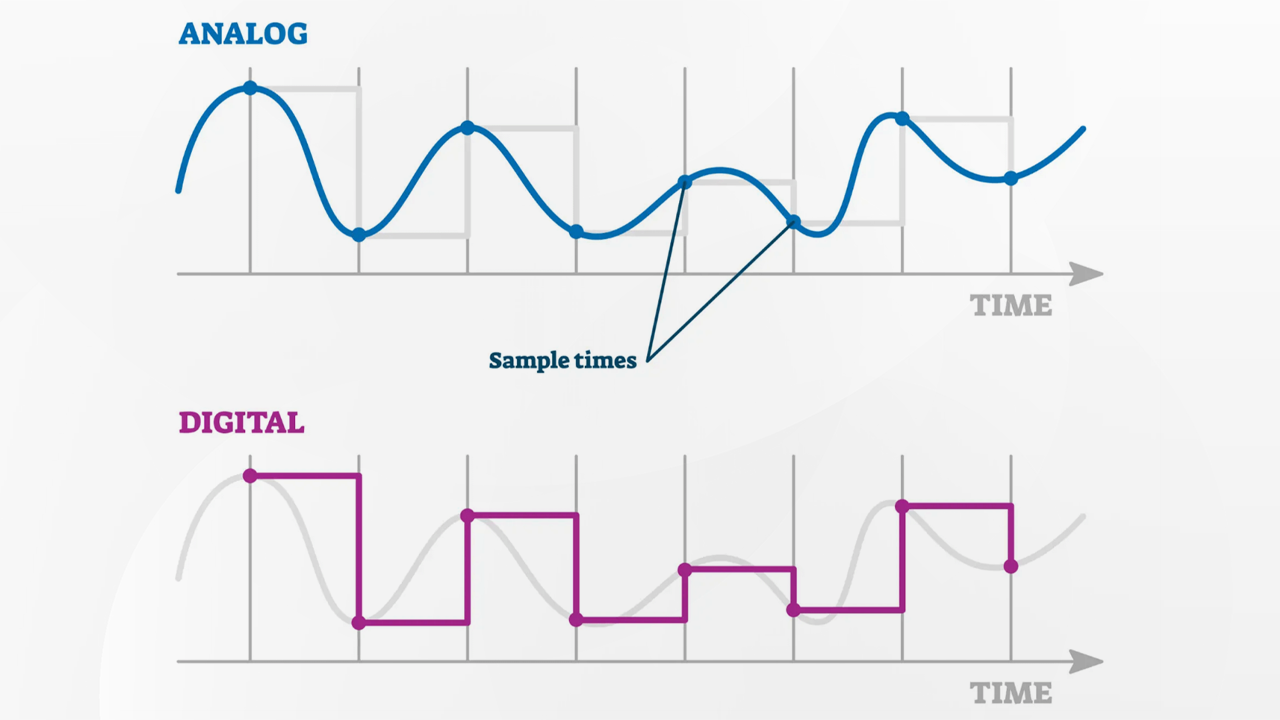
Not at the rates we're dealing with in pro audio. Most human beings can hear up to about 20 kHz. According to the Nyquist-Shannon Theorem, the minimum sampling rate required to accurately (and perceptibly perfectly) reproduce a signal is double the highest frequency present in the signal—any less and a distortion artifact called "aliasing" will occur.
Think about aliasing like this: If you look at a clock that reads 12:00, then look at it later and it reads 1:00, can you accurately determine how much time has passed? Notwithstanding your natural perception of time, it could have been one hour, or thirteen hours, or twenty-five! Aliasing is as if the sample rate interpreted twenty-five hours passing as one hour. Super high and ultrasonic frequencies (often introduced via distortion) are reproduced as unintended lower audible frequencies, creating an unpleasant hollow ringing sound. (Shout out to Dr. Brian McFee, DSP researcher and actual genius, for providing this analogy.)
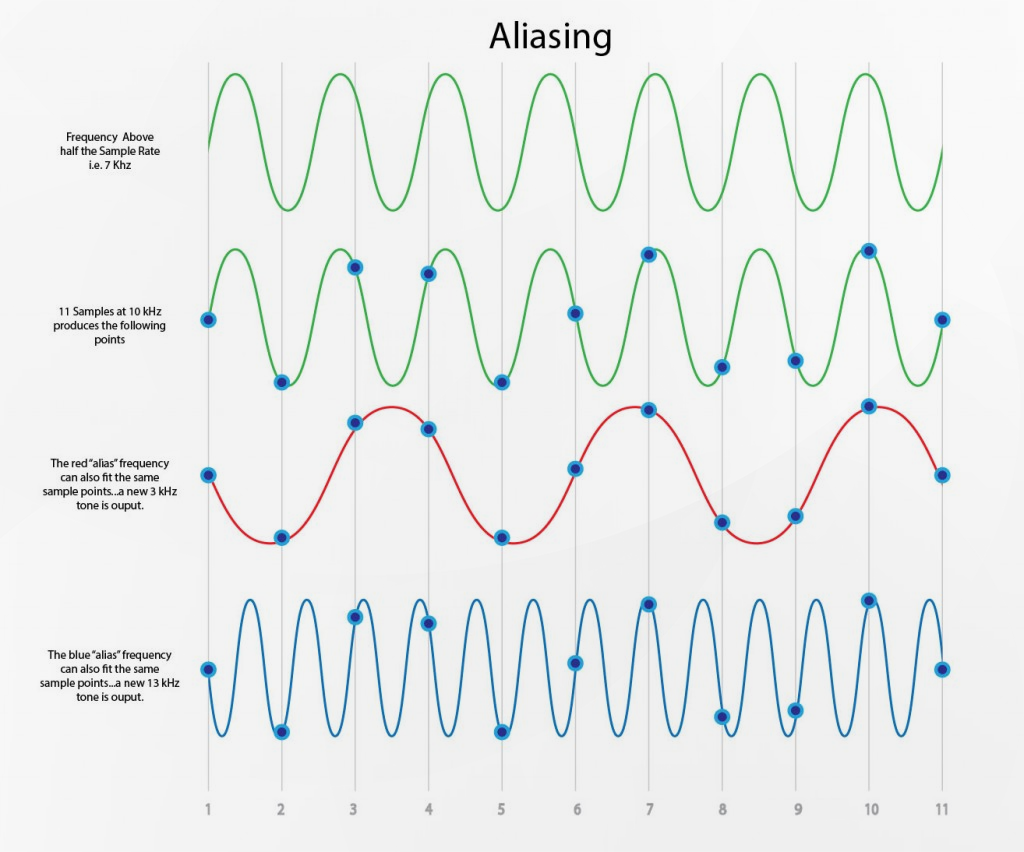
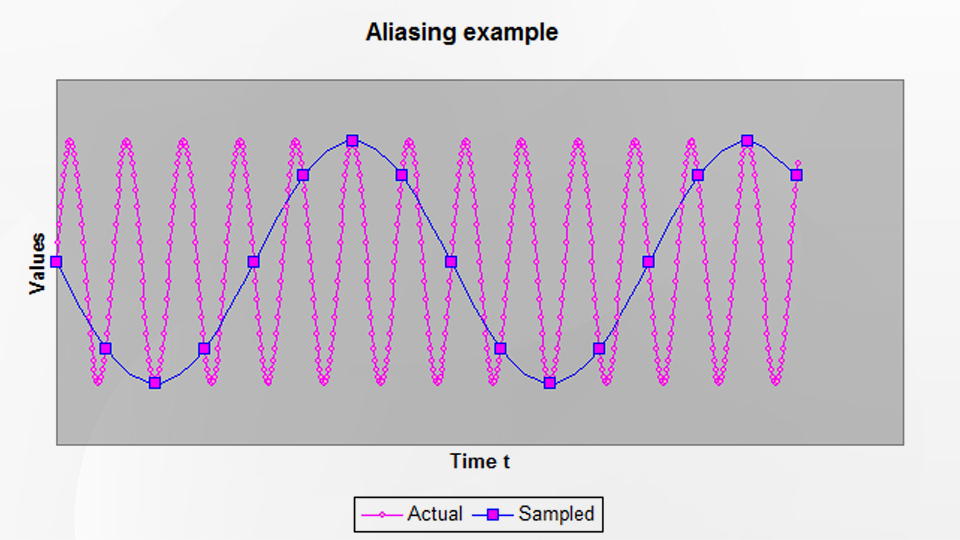
Outside of preventing aliasing (and a few other things), any sample rate at or above the standard CD sample rate of 44.1 kHz will offer no audible difference in quality. This is not to say that working with higher sample rates is useless—it's quite useful when dealing with certain audio plug-ins, for time/pitch manipulation, and for compatibility. Beware, however, that using sample rates as high as 192 kHz can occasionally become problematic (beyond its massive file size) as ultrasonic frequencies can become a liability depending on playback conditions. Working in 48 kHz or 44.1 kHz is perfectly adequate for any professional application—just make sure that your session is in the proper sample rate for your purposes.
Myth 2: The Dynamic Range of 16-Bit Recordings Is Inadequate
Just like sample rate, bitrate is often misunderstood with the notion that "higher equals better"—and just like sample rate, once you get to the threshold of 16 bits, any increase in bit depth results in diminishing returns and is rendered mostly inaudible.
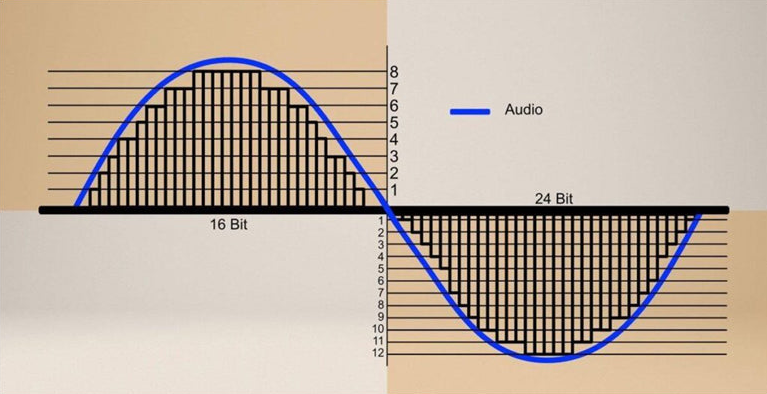
Bit depth is the number of bits used to represent each sample of audio, defining the dynamic range (the ratio of the loudest to quietest sound) that can be stored in a file. CD quality 16-bit audio recordings have a dynamic range of 96 dB, meaning it cuts off sound below -96 dBFS. 24-bit audio (typical for lossless audio and streaming files) has a range of 144 dB.
Dynamic range is a big deal in analog audio recording and playback. Background noise like tape hiss and vinyl noise are the tangible and audible noise floor of their respective mediums—consumer grade audio tape has a dynamic range of 50 to 75 dB, and vinyl sits around 60 to 70dB. But have you ever noticed background noise when listening to a CD or a streaming service? Any noise you may have heard would have been an artifact from your playback system or the recording itself!
Bit depth is a much more important factor to consider when recording audio, not when playing it back. 24- and 32-bit float recordings are ideal for recording audio with wide dynamic ranges, especially when sounds can be so loud the signal may clip or distort if at a lower bit depth.
When playing back audio, it's much less of a priority; the noise floor will be defined by the equipment used for that recording (circuit noise from microphones, preamps, and the like). The dynamic range is usually relegated to around -70 to -80 dBFS anyway, which is equivalent to 11 to 13 bits!
Use high bit depth when recording. When playing back, 16-bit recordings are plenty enough, but if you believe you hear a difference, then all power to you!
Myth 3: Lossless/Hi-Res Audio Streaming Sounds Noticeably Better
Knowing that I will inevitably get into hot water for this, let me first be clear that I am NOT stating that a lossy/compressed .mp3 file sounds as good as a lossless .wav file. It's clear as day that .mp3 files suffer from a noticeable drop-off in quality compared to an uncompressed audio file.
I am referring to high-quality lossy streaming formats such as Ogg Vorbis, which delivers audio at 16 bit/44.1 kHz—identical to CD quality, but at 320 kbps maximum (CDs are 1,411 kbps). The loss of data occurs due to the bandwidth of the streaming service, not as a result of file compression.
The much-ballyhooed rollout of lossless audio streaming in the recent months has been met with skepticism in the audio community, seen as an attempt to fool audio-agnostic listeners into thinking some sweeping revolution is about to change the way we stream music—at a premium, of course.
The notion that unrestricting the kbps max and increasing the resolution to 24bit/44.1 kHz would introduce a significant and noticeable increase in quality is dubious—even when considering streaming to some sort of million-dollar hi-fi. According to my research, even the most well-trained ears can't notice a difference at qualities at or above 16 bit/44.1 kHz at 320 kbps when put up in a double-blind A/B/X test, and performing a null test would likely result in a bunch of high frequency audio garbage (truly what we've been missing out on this whole time). If you have the knowledge and time, check it out yourself and see what you're left with—this is still a hotly debated topic!
Like anything else, it comes down to Occam's Razor: The simplest solution is usually the best. In other words, once the audio has enough fidelity to be perfectly reproduced, the best way to improve the quality of playback is to properly position your speakers and treat the room, not to spend more money and computation power on fatter data streams.
Myth 4: Burning In Audio Products Makes Them Sound Better
Of all the B.S. I've heard throughout my years in the industry, this one is among the most inexplicable and predatory. Some people (often without many scruples) will claim that in order to get the best performance out of your audio electronics (even cables!) you'll need to play some sort of wide spectrum audio through them—pink noise, frequency sweeps, etc.—for hundreds of hours or more! The idea is that the materials in brand new products are rigid and inflexible, so "burning them in" will make them more pliable, thus improving sound quality. This is demonstrably false in most cases, and any "improvement" is a result of the placebo effect, confirmation bias, or the inadequacy of human perception.
And guess what? The amount of time you've been told to burn in your new headphones just happens to be one day longer than the return policy. You're stuck with them now!
I must mention that there does exist a break-in period for loudspeakers, although it's usually only a few hours—no more than a day. Like any larger reciprocal mechanical device, the mechanical parts need to settle into their intended motion—headphone speakers and drivers are far too small to require breaking in.
Myth 5: Analog Sounds Better Than Digital
While there's no question that analog and digital sound different from each other, when it comes to the reproduction of audio—and arguably, "the artist's intention"—digital beats analog hands down, slam dunk, no doubt, case closed. Digital audio simply lacks the physical limitations that analog audio has and despite the best efforts to innovate ferrous tape formulations, magnetic audio tape will always introduce distortion—along with a high noise floor and less dynamic range (see myth 2).
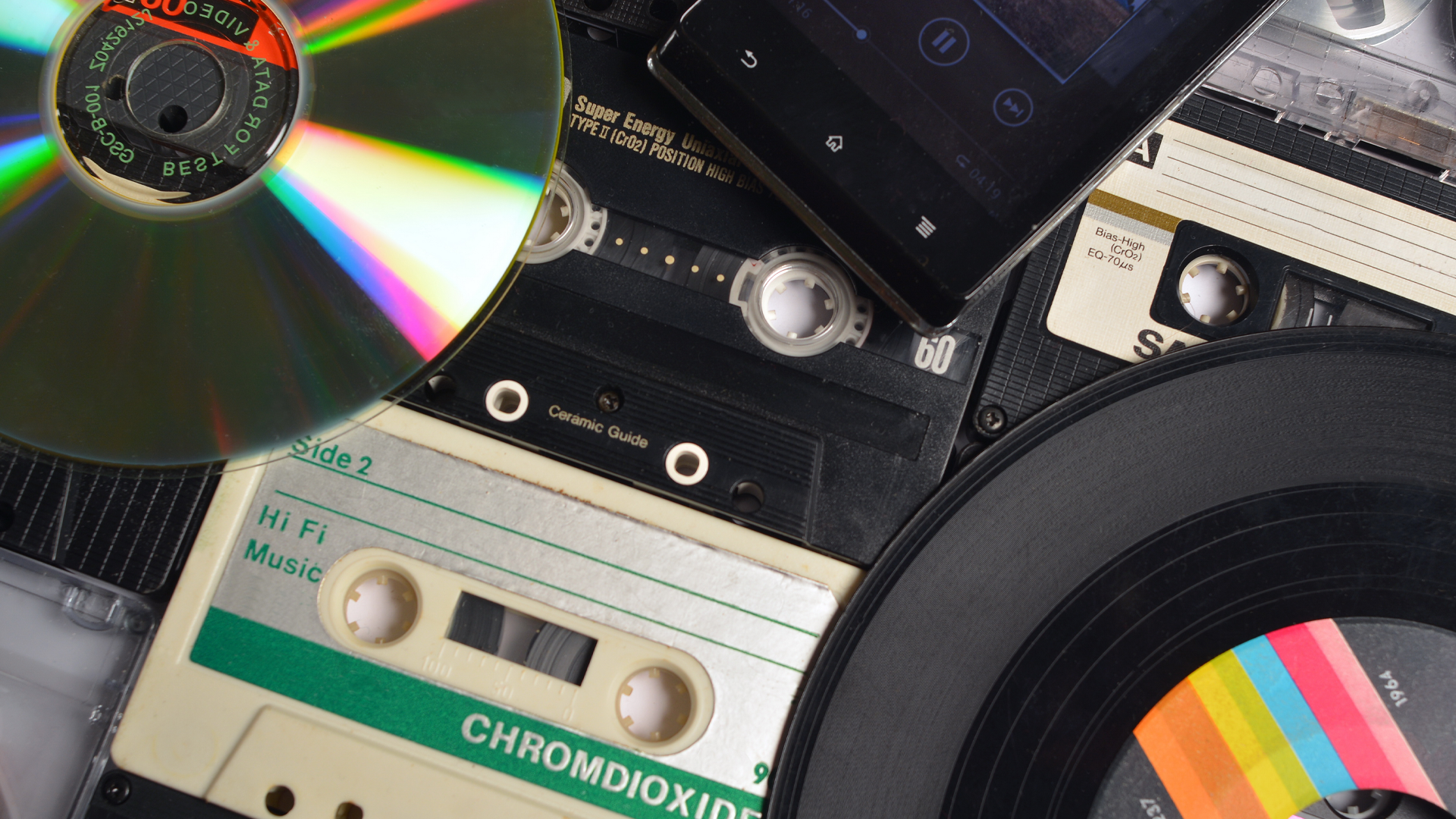
The debate comes down to personal taste. Many people (myself included) find the harmonic distortion produced from physical vacuum tubes and ferrous audio tape to be pleasing, adding warmth and depth that digital reproductions alone don't have. People may disagree, but there are many digital plug-ins that can accurately reproduce the effects of analog gear and tape indistinguishable from the real thing—and if you think you can hear the difference, I'd bet you'd be unable to pick out digital tape distortion from the real deal in a double-blind A/B/X test (and you'd need to do it sixteen times in a row, as per the scientific method!).
This goes for outboard analog gear as well. While you'll never get the individual eccentricities of that specific 1176 compressor you may have found at an estate sale, the algorithms used to recreate the sound of vintage gear digitally have gone through so much iteration and testing that an A/B/X test would show that the differences are indistinguishable. The preference comes down to the physical interaction of the gear and if you have access to it.
This principle also applies to synthesis: Analog synthesizers produce a desirable fatness that digital synthesizers cannot innately provide, but that's due to pushing their VCF and VCA circuits to their physical limit. A physical modeling or sample based digital synth would have no issue recreating the exact sounds perfectly if provided the proper signal.
Myth 6: Expensive Audiophile Cables Improve Sound
An expensive and all-too-common sham is audiophile cabling. Purveyors will claim they have cabling with the capability of sending signal into the MHz range, with individually insulated internal wiring that combats the "skin effect," where current tends to flow through the outside surface of the wire as frequency increases. The problem is that music doesn't even approach the MHz frequency range, and the skin effect only meaningfully affects frequencies far above the human range of hearing (and far above the Nyquist frequency!). When considering purchasing cables, remember that there are only three parameters they adhere to: resistance, inductance, and capacitance.
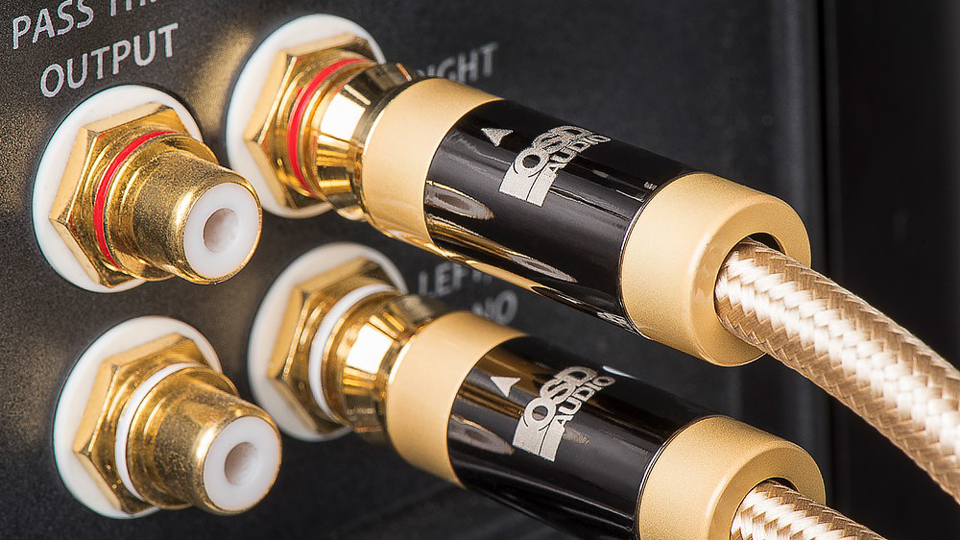
While it's true that these expensive cables are probably capable of what the seller claims, it simply does not matter in the application of high-fidelity audio (and it's certainly not worth the money). And while it is true that you should use the shortest cable appropriate for your application, you would need quite a long cable run to encounter issues with inductance or capacitance in the audible range. When it comes to dollar per foot, any decent heavy gauge speaker wire will perform identically if at a length used by most recording studios. Avoid snake oil salesmen who claim that their hundred-dollar wire will improve your sound. Just make sure you're using the appropriate cable for the job (and that it works).
Myth 7: Bi-Wiring Makes a Difference
Unfortunately, bi-wiring is still a debated topic in the industry. In my experience, it offered no audible change for any system—just more wires (an item with a conveniently high profit margin). Further still, the superimposition theorem shows that bi-wiring does absolutely nothing. I believe in the laws of physics—if you disagree, please publish your world-altering dissertation.
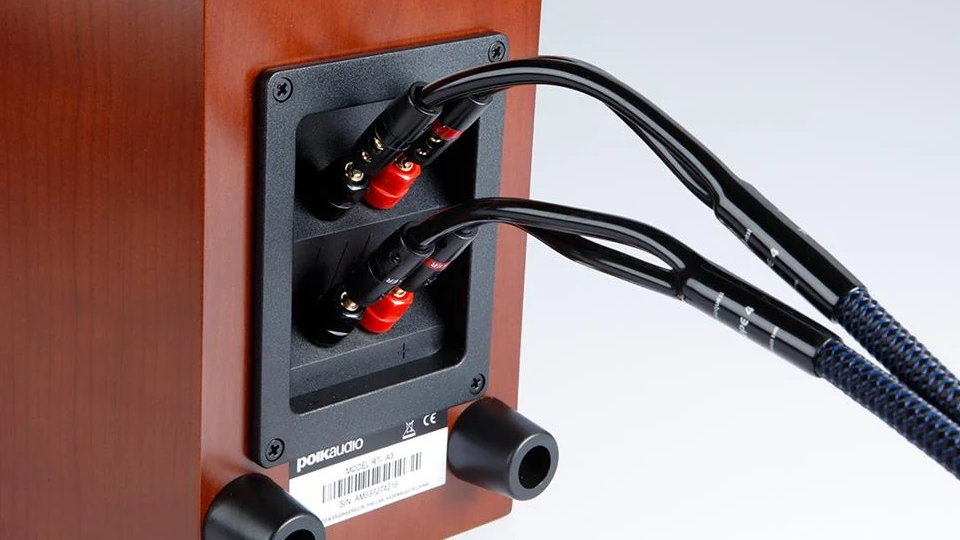
Bi-wiring can be understood through the legitimate practice of bi-amping. Because a single speaker driver is incapable of reproducing the full spectrum of audio frequencies, you'll find that on every loudspeaker or monitor are two or more speakers—woofers and tweeters. Bi-amping splits the signal in low and high ranges and sends those signals to separate amplifiers that power each speaker driver separately. Bi-wiring is the same idea, except the signal is from a single amplifier, rendering the practice moot.
Myth 8: "Clean Power" from a Power Conditioner Improves Sound Quality
When running a hi-fi or a music studio, it is extremely important to have proper power distribution. Correctly setting up your power will filter out electrical noise from EMI and RFI (electromagnetic interference and radio frequency interference), remove clicks and pops that can occur from the power draw of large appliances on the same circuit, and can protect against total failure of your gear if something were to happen like a lightning strike or power surge. It's prudent to have a power conditioner in any serious professional setup—but the idea that a power conditioner will somehow enhance the sound of your system is nonsense.

Power conditioners smooth out the voltage being sent to your system to a consistent level and can help put less wear and tear on your devices—it kind of exists as a physical insurance policy. While they can rectify some problems that previously existed in your system, they cannot "improve" its sound. And beware: Marketers will be happy to tell you the sonic benefits of expensive power conditioners—and boy do they get pricy.
Most modern electronics have a power supply designed to remove line noise built in, and power conditioners do not rectify hum from ground loops—that needs to be solved physically. There's no need to spend a fortune on this stuff—an $80 to $120 dollar purchase should suffice.
Conclusion
These are but a few myths and misconceptions present in the current state of the audio industry, and while some are still hotly debated, we must remember that while audio is a measurable medium, psychoacoustic phenomena are not. Everything comes down to you: Your ears, your mind, and your tastes are your own, and that is the most important thing to factor in when it comes to creating, recording, and enjoying music.
This guide is to help avoid the money pits and snake oils that pseudoscientists and scam artists peddle, as well as to better understand the psychological marketing many corporations engage in. Even if you disagree with my points of view, a healthy amount of skepticism is always beneficial when dealing with the esoteric beast that is the audio industry.
At B&H, we want to empower you with knowledge and understanding to make the best and most sensible purchases and decisions you can. Even if you don't plan on purchasing anything, please feel free to reach out to our experts if you'd like to hear their knowledge and opinions in their area of expertise!
