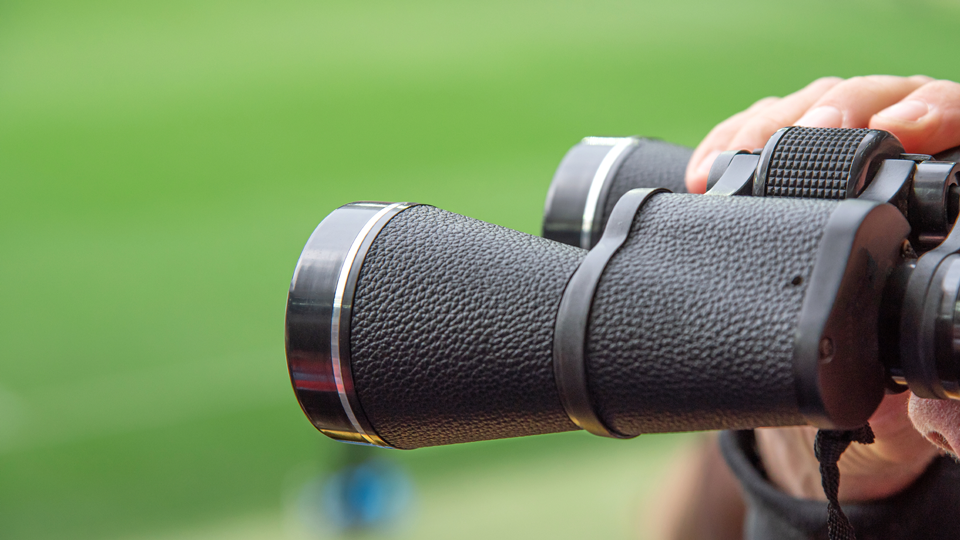
When choosing binoculars or scopes, a term that should be heavily considered is "exit pupil." What is exit pupil, and what does it do? In optics, we're often focused on magnification and light-gathering capabilities, and these are essential for understanding how optics works, but overall viewing experience shouldn't be discounted.
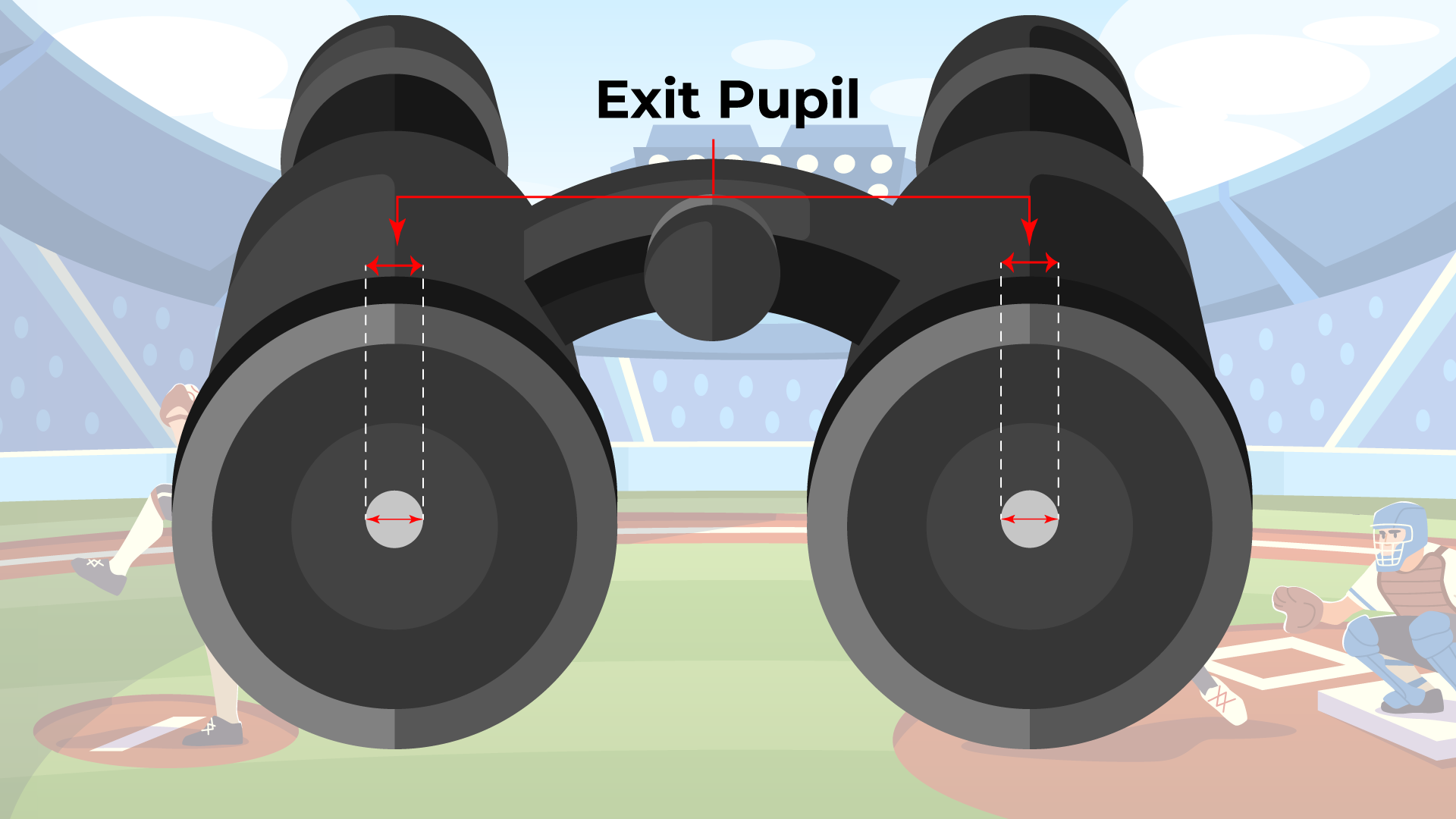
If you look at any optic at arm's length, you'll see the small pinpoint sized window of light in the center of the eyepiece. Try this with various magnifications, and you'll likely notice a difference in the size of these windows. This window of light determines how bright the image will appear, especially in challenging lighting conditions, and it's known as our exit pupil.
What Is Exit Pupil?
The exit pupil of a sport optic is the width of the focused beam of light leaving the eyepiece. The larger the exit pupil, the brighter the image will be, even in low-light conditions. To find out your optics' exit pupil we'll need to do a bit of math and divide the objective lens diameter (front element) by the magnification of our optic.
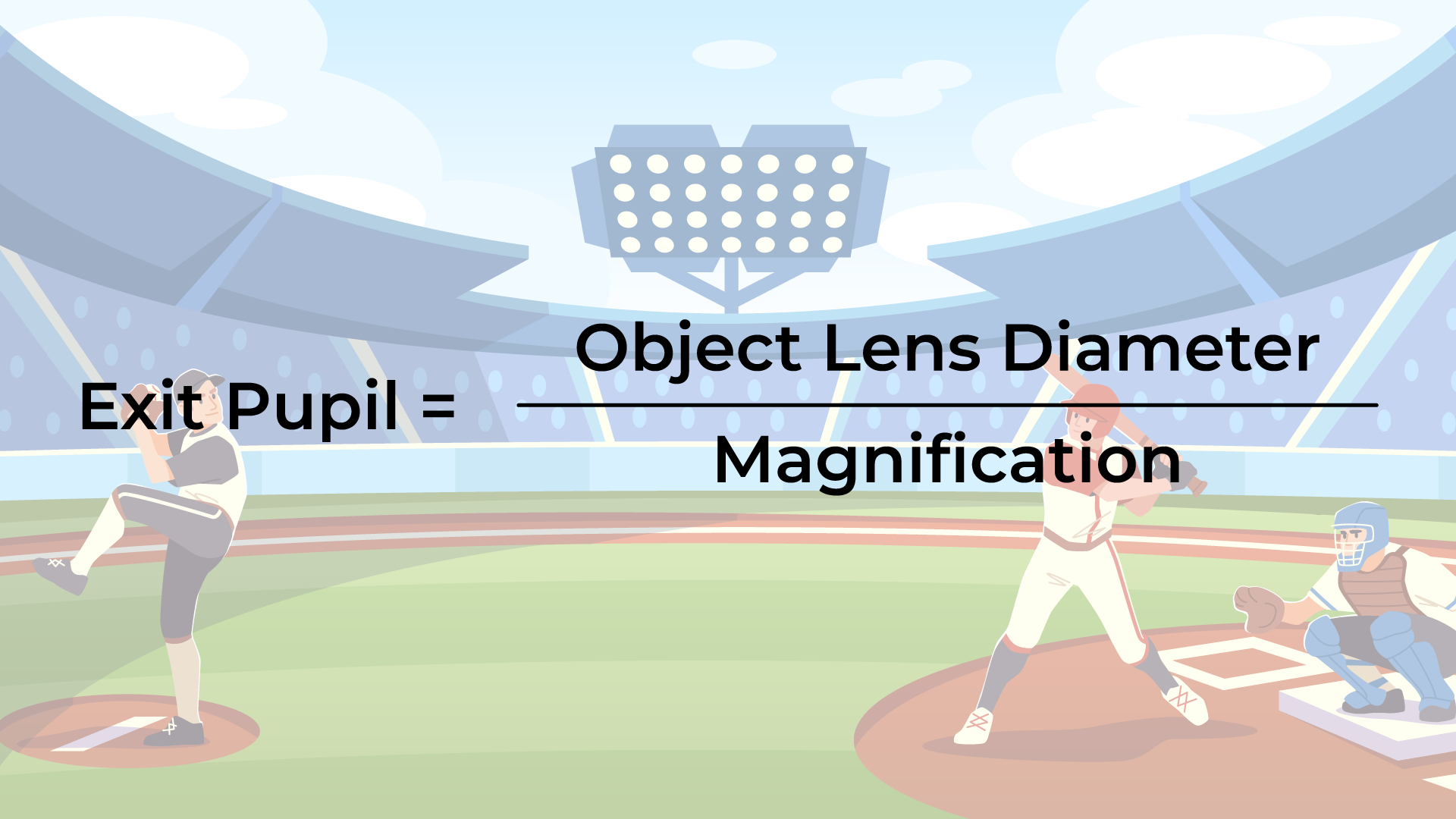
For example, with 8x42 binoculars, we'd divide 42 by 8, giving us an exit pupil of 5.3mm. If we pick up a smaller pair of binoculars with the same 8x magnification, but an objective lens diameter of just 25, our formula changes and we get a narrower exit pupil of just 3.1mm. This smaller binocular may seem appealing, but it comes at a cost to brightness. The larger our exit pupil, the brighter the image in view.
The diameter of an optics exit pupil should ideally be larger than the pupil of the user's eye. The average human pupil ranges in size from 1.5mm in brighter conditions to about 8mm in the dark. Taking that into account, we can safely presume that a large exit pupil is unnecessary for bright, midday outings whereas nighttime or dusk viewings would benefit from one.
Why It's Important
We keep mentioning viewing experience, but what exactly does that mean? It all has to do with the size of our exit pupil in relation to our own human pupil. Our eyes are constantly adjusting for ambient lighting, opening in darker conditions and closing down when things get brighter.
In bright daylight, our pupil diameter is relatively small, constricting to as little as 2mm. As light begins to fade, our pupil dilates to around 7mm, allowing more light to enter our eye. If we use an optic with an exit pupil of just 3.5mm when our own eyes are dilated to 5mm, it's going to appear as if you're staring through a peep hole.
For the best viewing experience and optimal brightness, the exit pupil of your optic should at least match the diameter of your own pupil. There's no real benefit to a larger one, as it's just casting extra light that our eye cannot take in. That said, no matter the lighting conditions, an equally sized or larger exit pupil will allow us to see the scene as bright as when viewed with the naked eye.
Eye Relief
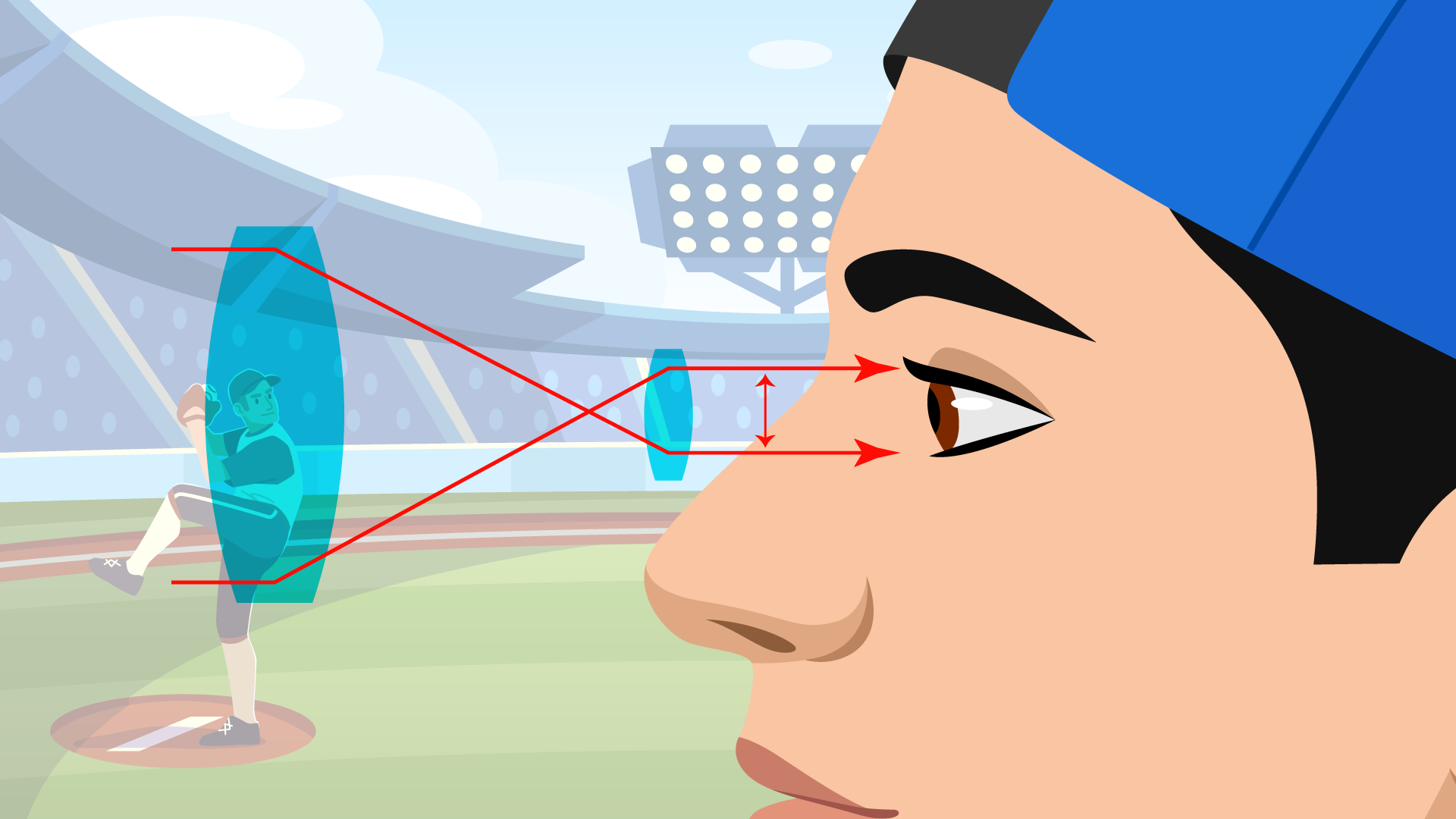
We can't talk about exit pupil without mentioning eye relief. This refers to the optimal distance from the eyepiece to your eye. When viewing a scene through any optic with incorrect eye relief distance, the image you see will appear distorted or blurred to some effect. It may even have a black ring harkening back to that peep hole look we just touched upon above.
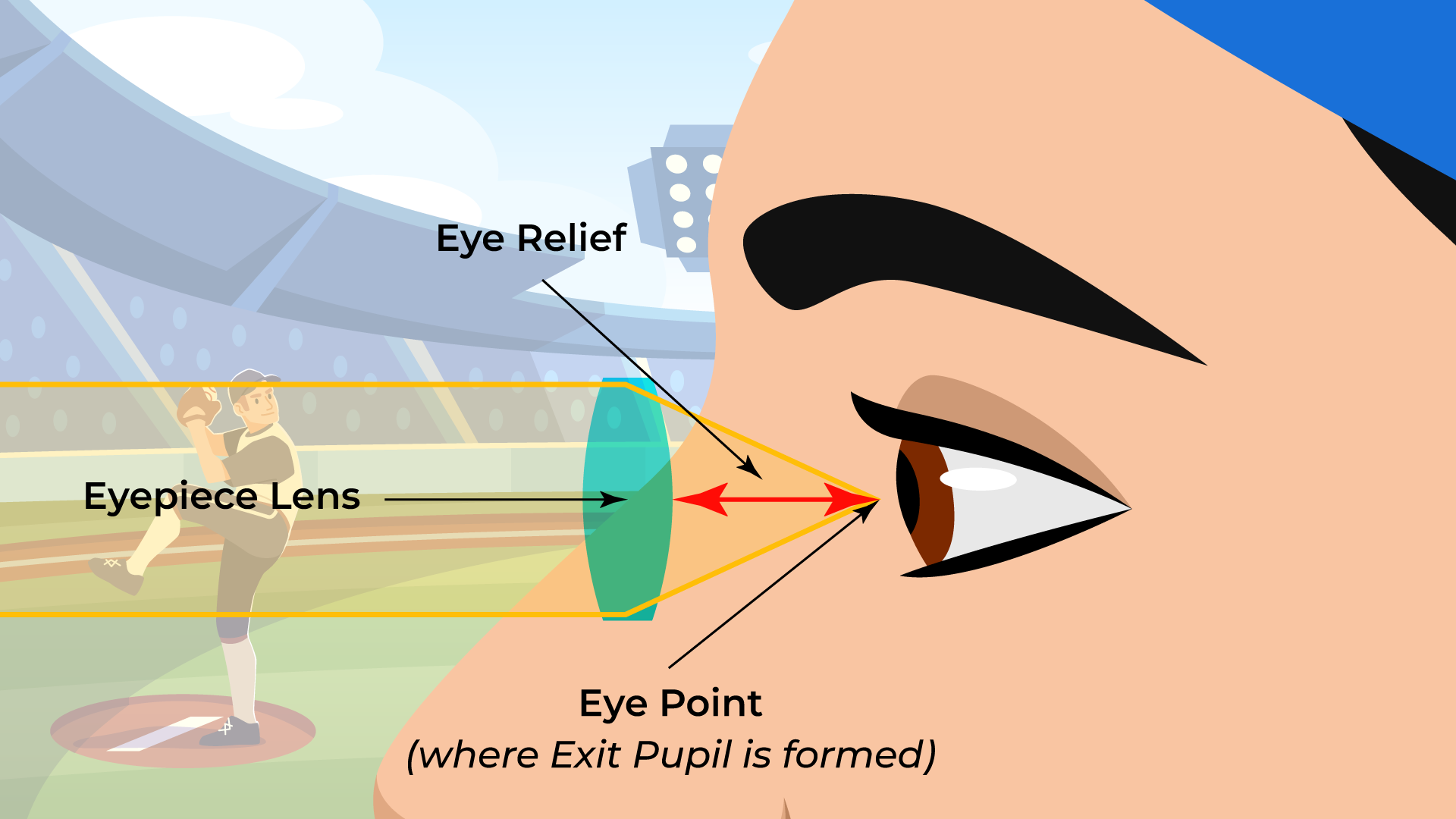
There are two types of eye relief, and each have their benefits. The shape of one's face and position of the eye play a large role as to which will be most comfortable, as are glasses, since they put an additional lens, and subsequently distance between the eye and the optic. This is a highly personal preference, but let's cover the basic considerations.
Short eye relief: Also known as standard eye relief, short eye relief is ideal for those looking for additional stability when viewing. The closer your eye, the better your field of view.
Long eye relief: Ideal for those unable to get their eye close to the rear element, or those who wear glasses. Bonus, this keeps the element clean!
Eye relief should sit somewhere between 10-15mm, with more needed if you wear eyeglasses. As mentioned above, this is highly dependent on comfort, so don't be afraid of trying optics out, or doing some more research before making the big purchase. Consider checking out our spotting scope and binocular guides for additional assistance.
The Optimal Exit Pupil
Taking everything we've learned into consideration, what is the optimal exit pupil? It may come as no surprise, but there unfortunately is no "optimal" exit pupil across the board. It all comes down to your specific needs, comfort, and intended uses.
As you age, your pupil size will inevitably decrease. This is a situation where aging works in our favor, as this means that older users may not benefit as much from larger exit pupils. As a result, they have more leeway when selecting an optic, whether it be a pair of binoculars or a spotting scope.
That leaves just one question: Do binoculars and spotting scopes function in the same way when it comes to exit pupil and eye relief? Yes, as they're optically similar with spotting scopes essentially being half of a pair of binoculars. That said, because spotting scopes and their objective lens diameters are larger, they generally produce larger exit pupils even at greater magnifications.
Both exit pupil and eye relief play major roles in your level of enjoyment in the field, from how bright your viewing experience is to strained your eyes feel after long periods of scanning distant quarry. If you've enjoyed this read, consider checking out our other articles and guides. To learn more about sport optics and how they work, check out the B&H Explora site!
