Whether you’re heading out on the open waters (like we did here), or hiking through the Adirondacks (like we did here), or going off the grid for a week-long camping trip, it’s hard to give up our technologies completely. Maybe you must snap and selfie with a brown bear (not recommended), need to keep your GPS charged to make sure you make it back to your car (definitely recommended), or maybe you’re out trying to photograph a ’squatch and have power-hungry camera gear—regardless of why your electronics are with you, all that tech requires power and when you’re miles from an outlet, you need to be prepared before you head out, to keep your gadgets juiced up and ready to go.
With this in mind, let’s look at all the different power options for an array of gear—from a smartphone, to a radio, to a camera, to a computer. Whatever you need to power and wherever you’re going, there is a solar or off-the-grid power solution.
Battery Cases/Power Banks
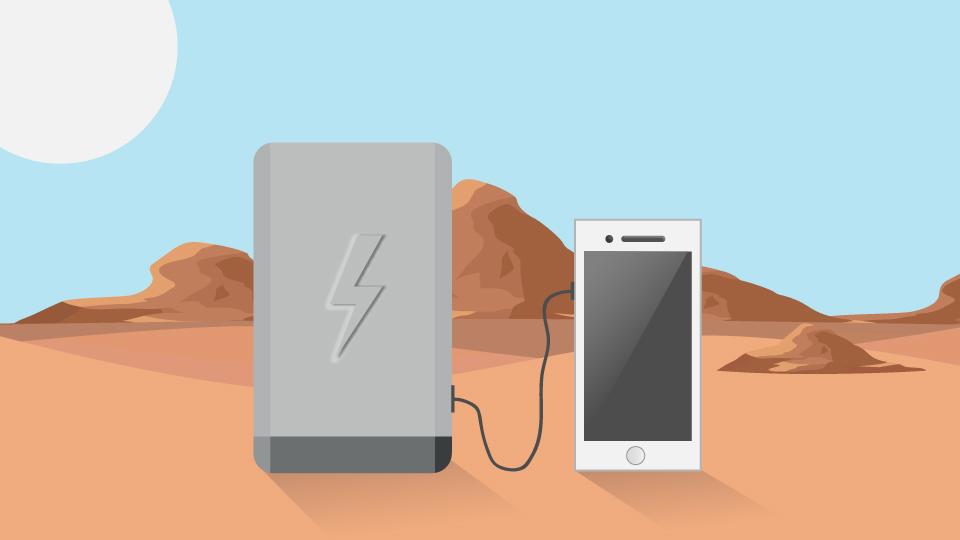
The first and easiest thing to grab would be a battery case for your cell phone. These range in capacities and levels of protection, but what they all do is give your smartphone, usually, at least one full charge. I have one from Mophie for my iPhone and it’s great if you’re hiking or camping, or just know you’re going to be using your phone around town and don’t know where to find an outlet (or if you’re in a foreign country and don’t have the right plug). My case will take me from about 10% power up to a full charge without a problem. They’re available for a slew of the most popular smartphones, so unless you haven’t upgraded since the first Obama administration, you’ll probably be able to find one to fit your specific phone.

If you can’t, you can always go a bit more generic for other small electronics like GameBoys, GPS units, cameras, or radios, and just get a power bank. These are essentially high-capacity rechargeable batteries with ports in to which you plug charging cables. They start as low as $4.00 for a one-shot disposable power boost and climb all the way up to $500 for units that will power a MacBook and two iPads simultaneously.

You can only count on most power banks for about one full recharge, on average, unless you go with the most expensive ones, in which case you’ll be able to keep everything charged for multiple days, but there’s a weight factor to consider if you’re carrying it on your back—not to mention the cost.
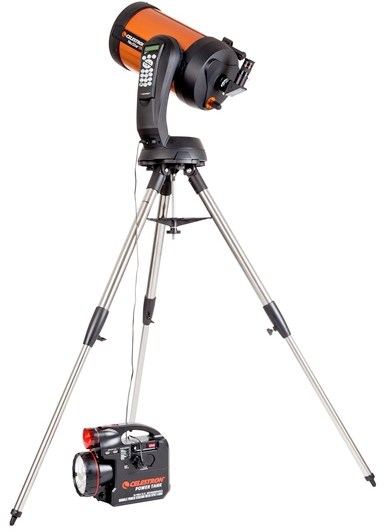
An honorable mention should definitely go out to Celestron (the telescope company) that manufactures power stations as accessories for its motorized telescopes. These power stations would be a great option for going off the grid because, not only do they offer USB and 12VDC car/vehicle ports, they also have white and red light lanterns. Certain models even offer built-in radios and booster cables for cars.
Power Stations
Larger than power banks, power stations use larger deep-cycle batteries to give you power for days, with capacities that allow you to charge multiple devices multiple times. Because of their size, these larger batteries are only practical for a cabin or base camp, since you’re not going to want to lug 10 pounds of battery on your back, on top of all your other gear. The heavy hitters in this category can run upwards of $3,000, but will give you all the power you need for your devices. The GOAL ZERO Yeti 3000, for example, has a 3075Wh capacity with two 110VAC outlets, four USB ports, and a 12VDC car/vehicle plug. A similar model from Growing Greener Innovations, the Grengine Ultra-Lite, has features similar to the GOAL ZERO, but weighs just 13 pounds—versus 75 pounds.

Charging
So, you’re out in the woods and you got lost and depleted your GPS trying to get to your next waypoint, or your kids just won’t turn Frozen off for ten minutes and they’ve run your power station down to zero. What are you going to do now? As we mentioned before, if you’re car camping you could plug your device into your car and charge from there, but that opens you up to all sorts of problems—like getting stuck with a dead car battery. As long as the weather cooperates, you have our solar system’s greatest power supply available: the Sun. Portable solar chargers are gaining in popularity, and manufacturers are making them more efficient and smaller than ever before.
Solar panels come in all shapes, sizes, and capacities; and there is probably one to fit any job or budget. Wagan, Goal Zero, and Secur all make a variety of panels, and offer kits with battery packs that will allow you to set up a solar array to charge your battery packs—or directly charge your electronics—so you can enjoy your devices when you get back to base camp or camper. Something like this GOAL ZERO Yeti 400 kit would be great if you have access to a few hours of unobstructed daylight.

When I cycled across the Utah desert a couple of years ago, I had a camera, GPS, satellite phone, plus some other gear. Not exactly knowing what I was getting myself into, I brought along an earlier version of this Nomad panel from Goal Zero, while this one from Wagan would’ve been a good choice, as well. I opened mine up and strapped it across my pannier to charge my power bank while I rode. For trail camping, weight is a major concern, and if you’re moving every day you won’t be able to set up an array, so having a smaller panel like the these two that can hang down the back of your pack and charge your devices without throwing you off balance or weighing you down is a great convenience.
Last year, for the Great North American Eclipse, I was out in the high desert of Eastern Oregon, in the path of Totality, completely off the grid. The B&H crew had camera gear and telescopes of all sorts with a loud generator for most of our power—but running it all day really got on our nerves, so we fell back on solar power, since we were camped in a large field with the sun blazing overhead and we weren’t moving far from our tent/gear. We set up four of these solar panels on this tripod to make a powerful solar array that kept all our smaller electronics running without having to burn any gasoline.
Multi-Taskers
So far, the products I’ve been discussing have been sort of one-trick ponies. They charge stuff. But what if you want to do more than that? As batteries are getting smaller and more efficient, chargers are popping up in strange places, and multi-task devices are rolling out that do more than just one job.
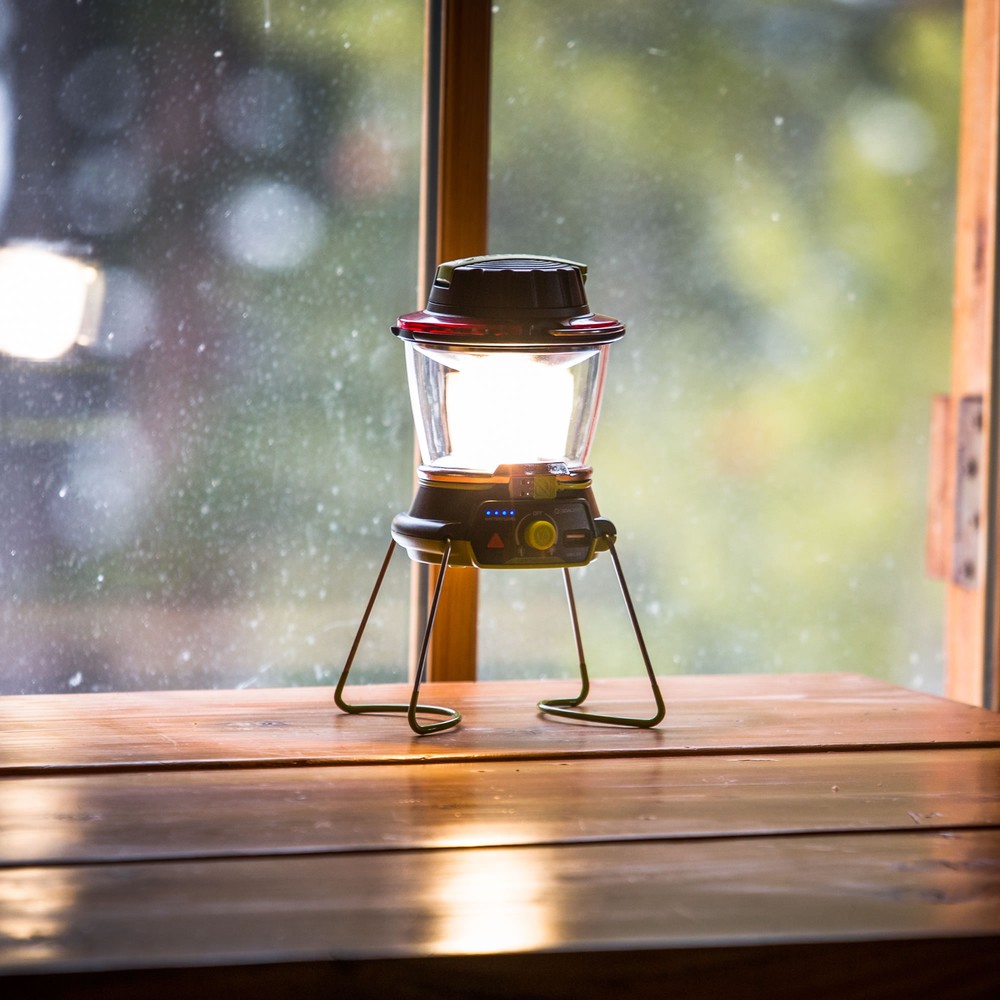
Take this 400-lumen output lantern. Please. It has an internal rechargeable battery to run the lantern or to charge a small device. It can be charged from a solar panel, 12VDC or 110VAC power sources, or by using its integrated hand crank. Midland’s E+Ready Emergency Crank Weather Radio gives you a flashlight and weather radio, plus a USB charging port for phones and other devices. Secur’s Four-in-One Light has a magnetic base and a hang hook, plus a USB port. If you’re going to be out for a day or two, taking a multi-tasker with you can save you space by doing the work of several devices all in one unit.
The Wrap-Up
There are lots of reasons for portable power of all sizes—from a weekend camping trip, to a day on the water, to a landscape photo expedition; and since technology has evolved to a point of being so small and compact, not bringing certain electronic devices with you on any trip boarders on the irresponsible. Before you head out, figure out what your essential electronics are, get an idea for their run times and how long/often you’ll be using them, and choose a charging method that works for them so they can keep working for you.
Do you have your favorite way to keep your gear going when you’re off the grid, that I missed? Is there a tip or trick to extend battery life that you’d like to share? Comment below and we’ll discuss, and read more about gear and B&H Adventure Week.