
Food photography is an undeniably popular artistic medium, involving all kinds of people and gear to make those mouthwatering shots possible. If you’re an aspiring food photographer or someone looking to take their existing work to the next level, we’ve put together a special, themed gift guide that’s perfect for any skill level.
1. A 50mm Lens
Whether you are far into your photography career or just starting out, whenever you complete a dish in your kitchen or have a plate placed in front of you at a restaurant, there’s no better starting point than a 50mm lens. 50mm is one of the most versatile focal lengths and has a field of view that is close to that of our own eyes. These lenses are often compact, and have great light gathering abilities, making them perfect for dimly lit spaces It’s these features that make the 50mm lens a staple in many photographer’s bags.

2. A Macro Lens
Advanced shooters who want to take their next food photos up a notch should look to invest in a macro lens. The reason is you’ll likely want to get your lens in a bit closer than your regular ol’ lenses can do. It’s simply by design that average lenses don’t focus all that close, which can quickly become limiting if you are trying to create compositions of relatively small things.

Another point is that regular lenses optimize performance for mid-range focusing points and sharpness, while macro lenses are designed to focus close and give their best performance at that setting.
For food, in particular, you might be shooting small objects or want to get a beautiful close-up image for variety. Just make sure you find a lens that works for your or your friend’s camera system.


Read: Macro Lens Buying Guide
3. A Reflector
Lighting is obviously an important aspect of photography in general, but not everyone has a crew and tons of lights available to them. Everyone does have access to natural light, however, and it can easily look great. Shooting next to a window is a good start—the light flows in quite beautifully. For better control over the light in the shadows, you’ll want a reflector.
Whether you are using a smartphone or the latest medium format camera, you’ll benefit from a reflector. Even when you decide to use a real light, the reflector will give you a lot more control over the tonal range and allow you to bring out the detail in post.

4. Portable Lighting
In the fall and winter, waking up before the sun rises and getting home after it sets are common occurrences. The consequence for food photography is that you can no longer rely on natural lighting setups and will have to turn to my artificial options. A great stocking stuffer is an on-camera flash, also known as a speedlight. These small lights are effective, fit into your bag, and pop right on top of the camera when the moment comes. They can even be augmented with plenty of modifiers and be taken off camera with the right tools. If on-camera flash is new to you, feel free to go over the basics with our comprehensive guide.

The other way you can go is with ultra-portable LED lights. These are nice, small panels that run on internal batteries—you can bring them with you wherever without weighing yourself down. Also, newer ones have full color control so it can be used as a secondary light that adds a splash of color without carrying around a pack of gels. If you want a recommendation, there is the Godox M1 Mini Creative RGB LED Light.
5. Food Photography Book
Those just dipping their toes into food or photography in general will benefit from some educational resources. Personally, going into the winter months I prefer to have a couple of photography books on hand.We offer books on food photography that cover topics such as lighting, styling, and more.

6. Gaffer and Double-Sided Tape
If you or someone you know is new to photography and haven’t heard of gaffer tape, it is an absolute must-buy. Compared to general-purpose tapes, gaffer tape is designed not to leave adhesive residue when removed, making it more useful for securing various accessories or random tools. Plus, if you need to cover wires for safety, it won’t leave residue on the floor.
Gaffer tape is universally loved by all photographers, but something that can be useful to food photographers is double-sided tape. It’s useful for holding props in place, such as a napkin where you want to get perfect folds.

7. Props: Plates, Dishes, Cups, and Glasses
A good collection of props is absolutely necessary for food photography over time. You want a variety of colors and shapes because different food looks better on different plates, and it helps you create unique compositions. A variety of props like plates, dishes, cups, glasses, and cutting boards and make a food photographer very happy. Heading to thrift shops or tag sales is a good way to get a collection without spending a lot of money, and it goes a long way.


8. Backgrounds
While you won’t be toting a full mobile studio around to restaurants, you can diversify the images you can capture in your home studio dramatically with various backgrounds. The V-Flat World Duo-Board Double Sided Backgrounds are incredibly versatile and provide a variety of colors, patterns, and textures like tile and wood. These can match more natural kitchen backgrounds like tables and countertops and have the portability to be used almost anywhere. Collapsible backgrounds are also available in both solid colors and patterns, but they have the added ability to be folded up and packed away in a relatively small package, though these backgrounds do need a stand or some method of holding them up.

9. Tweezers
When the food is on the plate and in front of the camera, you might find that one tiny piece is just a little bit out of place. For the more meticulous food photographers, a pair of tweezers is invaluable. It’ll let you reach in carefully and make that tiny adjustment.

10. Tripod
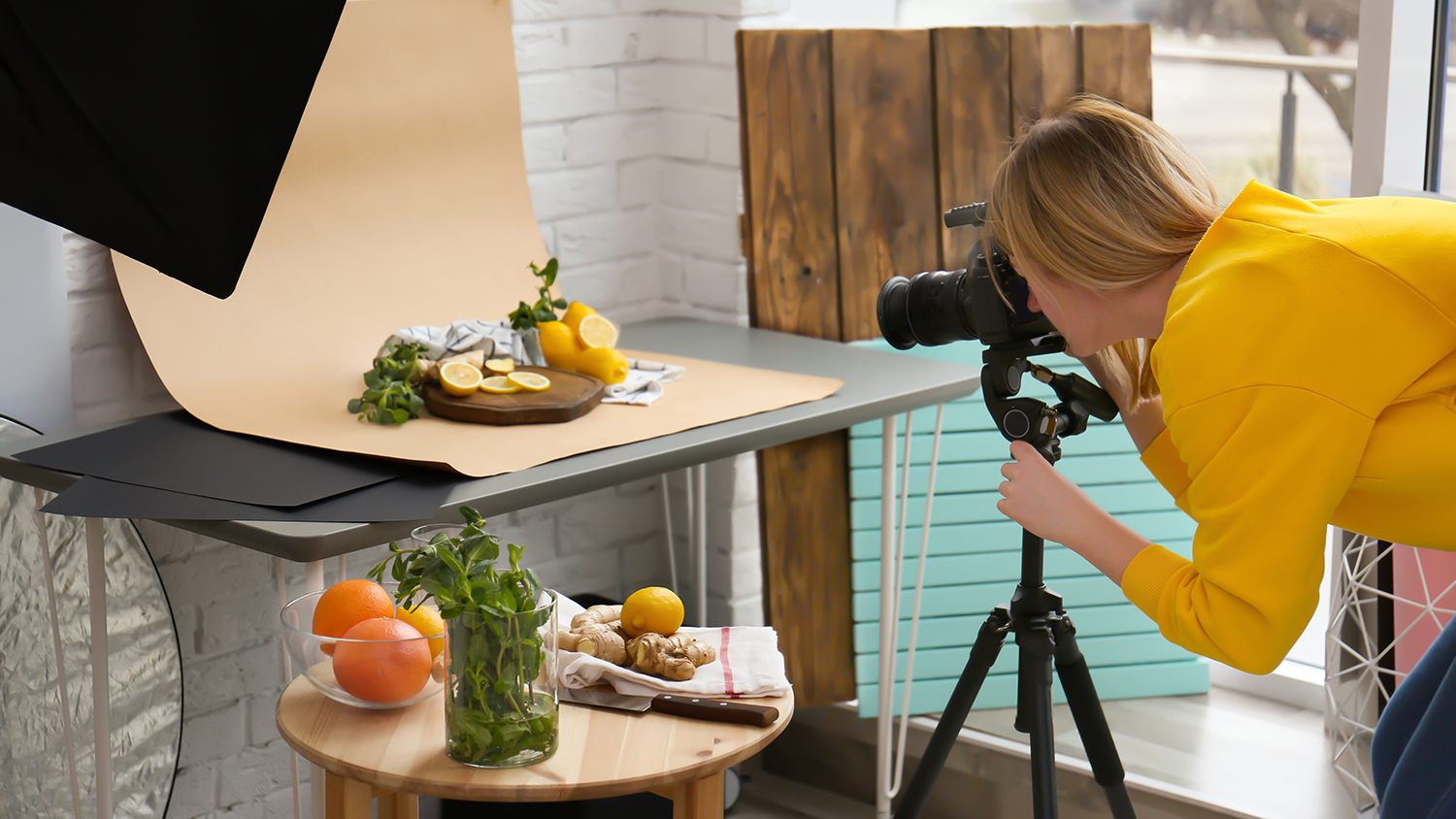
A tripod is an invaluable tool for stabilizing your camera and freeing your hands to pretty up and manipulate your stage. Some tripods have telescoping center columns that allow you to hang your camera above your subject without getting the tripod legs in the frame. Just be sure to weigh your tripod down as this process throughs it off balance.
11. Remote
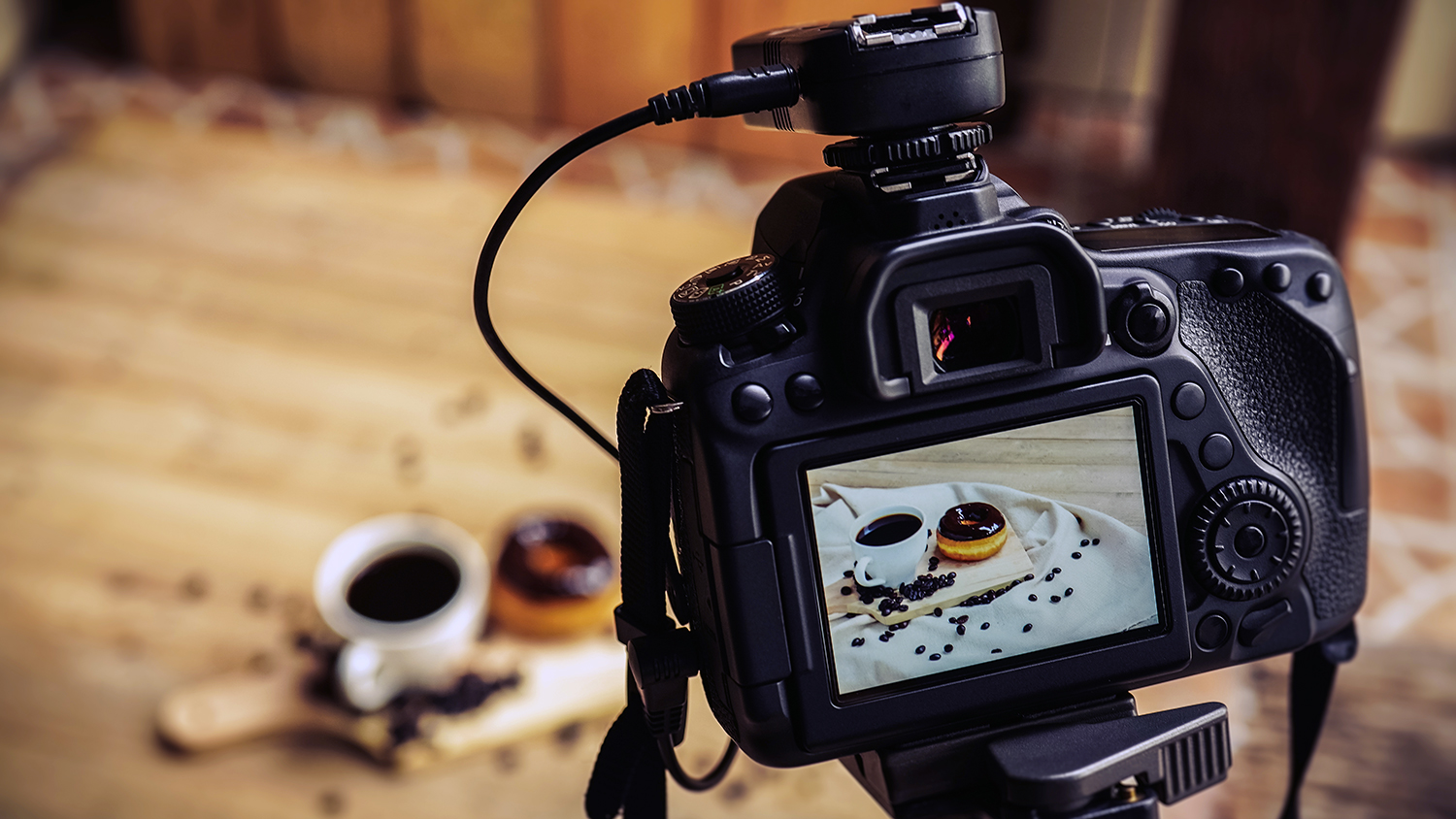
A remote is a must-have tool to use in tandem with your tripod. In a controlled environment like your own kitchen, a remote shutter release will allow you to style your food, adjust your lighting, and take the shot without running back and forth to the camera. This will also let you shoot at slower shutter speeds and narrower apertures without worrying about camera shake.
12. B&H Gift Card
You can never go wrong with a B&H Gift Card. Buying a gift for photographers is tough, especially if you aren’t one. There are compatibility concerns, wondering what they already have, and more. A gift card leaves the decision up to the receiver.

Want to learn more? Take a look at our other guides and articles on the B&H Explora page! There are a number of articles on food photography available to help you on your path to mastering your craft.
