What is it about the 2000s look that is so compelling right now? One could chalk it up to the eternal recurrence of 20-year nostalgia cycles, of which the retro digicam revival would be yet another instance. But this kind of historicism elides the character of what is missed, and why its retrieval is attempted in the first place.
Smartphone bad; we know this. Rejecting the smartphone, however, does not immediately lead one to retro digicams. One could just as easily move toward the nostalgia of film as toward the competent excellence of today's mirrorless cameras. This makes the embrace of the 2000s look an aesthetic decision in its own right beyond mere reaction, and one worthy of consideration. After all, like the smartphone, digicams are digital—and, by contemporary standards, inferior.
Why We Return to the 2000s Look
The mass adoption of consumer compact cameras in the mid-2000s opened the possibility of digital imaging abundance in a moment when nobody knew what digital life could and would become. As marvelous as these little machines were, improving rapidly from one generation to the next, they were still difficult to take seriously as professional or artistic tools. Instead, these immature devices producing uneven images were a perfect fit for an immature digital culture producing uneven public selves.
The original digicam user had comparatively little pressure to demonstrate taste, skill, or consistency in their images. Point, shoot, see what comes out. If it was no good, delete it, or maybe save it because it was silly. The unburdened spontaneity of early digicam photography is downstream from the low-stakes environment created by the digicam, both behind and in front of the camera.
Part of why "smartphone bad" resonates is that the smartphone (and the smartphone camera) is a node in a larger apparatus of social presentation, documentation, and surveillance. Even the concept of a "personal brand" imposes a mannered aesthetic unity on the self to be deployed across all platforms, including real life. Mature digital imaging devices reinforce this consistency by eliminating many of the photographic "failures" that were constitutive of the 2000s look.
The retro digicam revival, then, is an attempt to retrieve the liberatory, low-stakes feeling of early digital life and photography. Its technical imperfections are the material leftovers we now ask to carry that meaning.
What Is the 2000s Look?
So what exactly are those leftovers, imperfections, and artifacts?
The 2000s look starts with a small sensor. Some of these sensors are even smaller than the ones inside a smartphone, a fraction of the size of APS-C and full-frame sensors on the market today. The upshot of these small sensors is broad depth of field with little subject separation, yielding legible backgrounds with lots of visible detail.
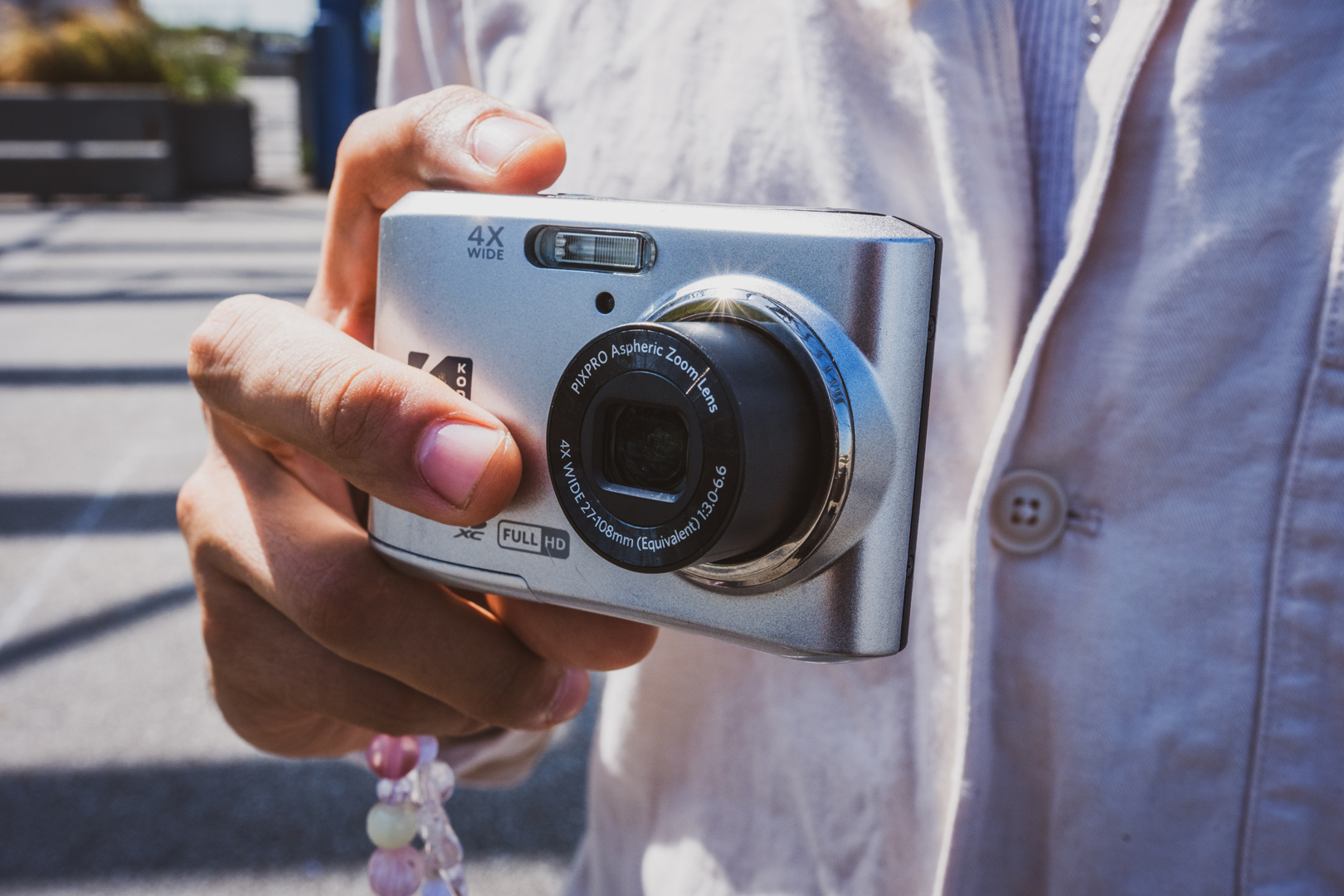
Add the tiny compact zoom with its wide-to-tele focal range. The wide ends encourage proximity to subjects, making the camera more of a participant in a scene than an observer. The tele ends make for embarrassing closeups and uncanny spatial compressions. The engineering required to create a compact optical zoom mechanism also led to some inevitable distortions, aberrations, and other ordinary imperfections that too became characteristic of the look.
Perhaps the most memorable component of the 2000s look is the direct, hard, frontal light of the built-in xenon flash. It freezes subjects, introduces abrupt, contrasting falloff between subject and background, blows out highlights, deepens shadows, clashes with the ambient light, and does all sorts of things, good and bad, to skin tones.
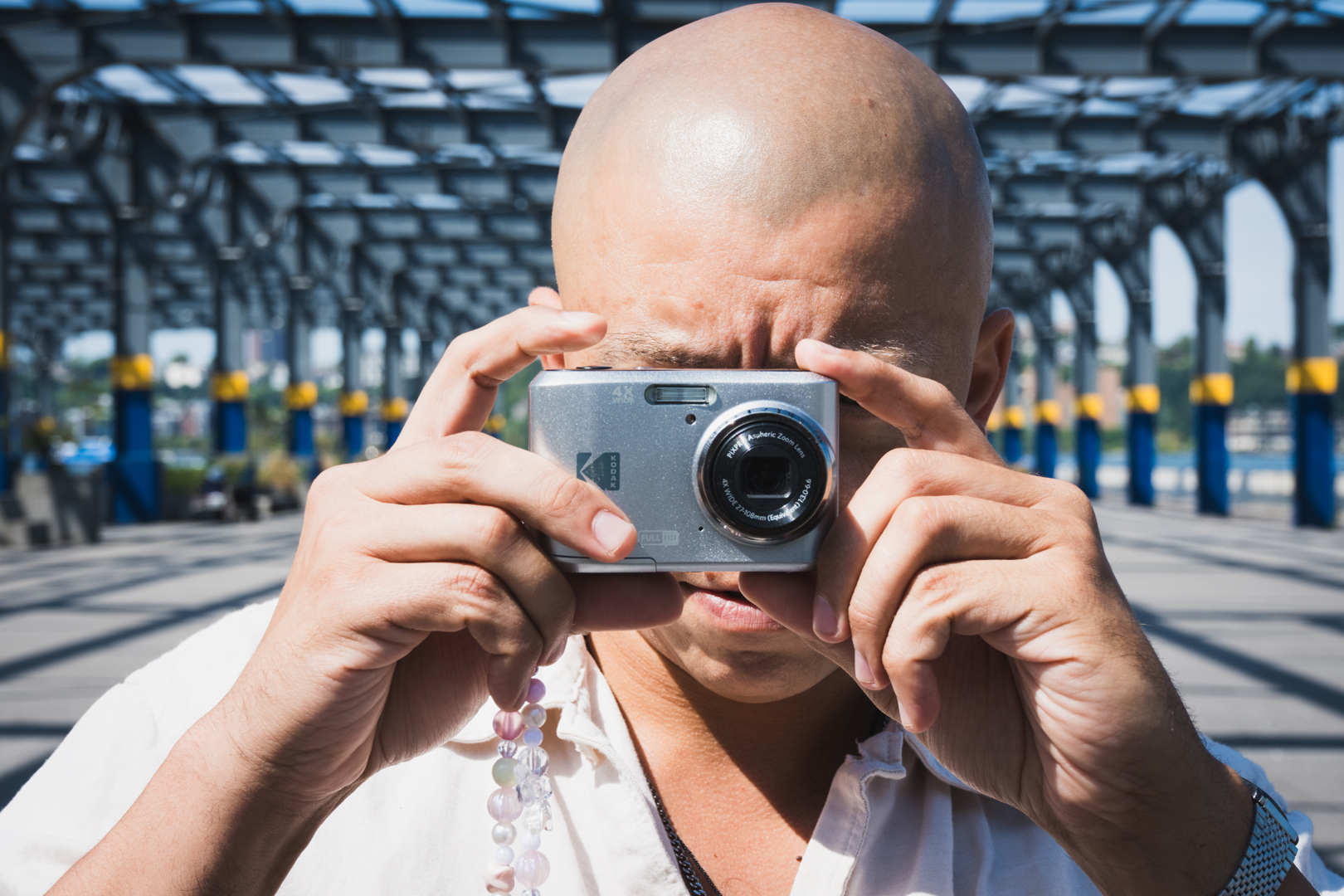
Other hallmarks of early digicams and the 2000s look include limited dynamic range that loses information at both ends and turns portions of the image into featureless blobs of tone, imperfect automatic white balance exacerbating differences in scenes with mixed lighting, modest resolution sensors that preserve less forensic surface detail, with weak high-ISO performance and noisy, smeared results, and aggressive JPEG processing introducing uneven blends of sharpening, saturation, noise reduction, compression, and other image-final decisions.
Then there are the behavioral effects downstream of the technology. Slow or inaccurate autofocus and shutter lag meant the "peak moment" was often missed, often to strange or comic effect. Slow flash recycle times imposed their own irregular rhythm on shooting, making the lighting in follow-up pictures hit or miss. The rear LCD and reusable memory card encouraged users to show the immediate results, eliciting an emotional reaction both in the subjects and the group at large. The "shoot, look, show, pass, repeat" cycle becomes aesthetically generative.
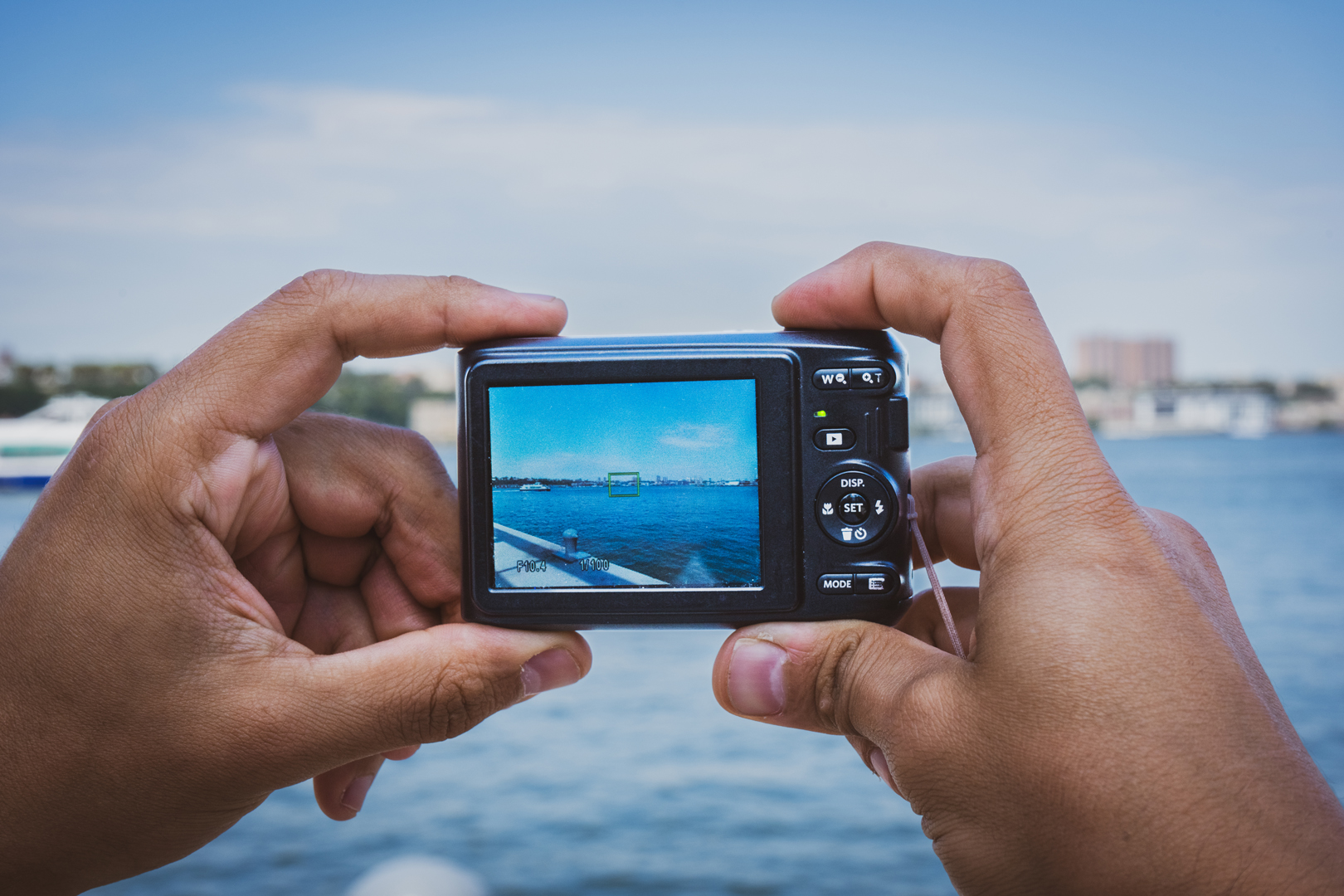
Finally, the fact that these cameras were self-contained, immediate but unnetworked, contributed to their intimate social effects: closeness, direct eye contact, mugging and other exaggerated poses, and a general lack of anxiety around being in front of the camera.
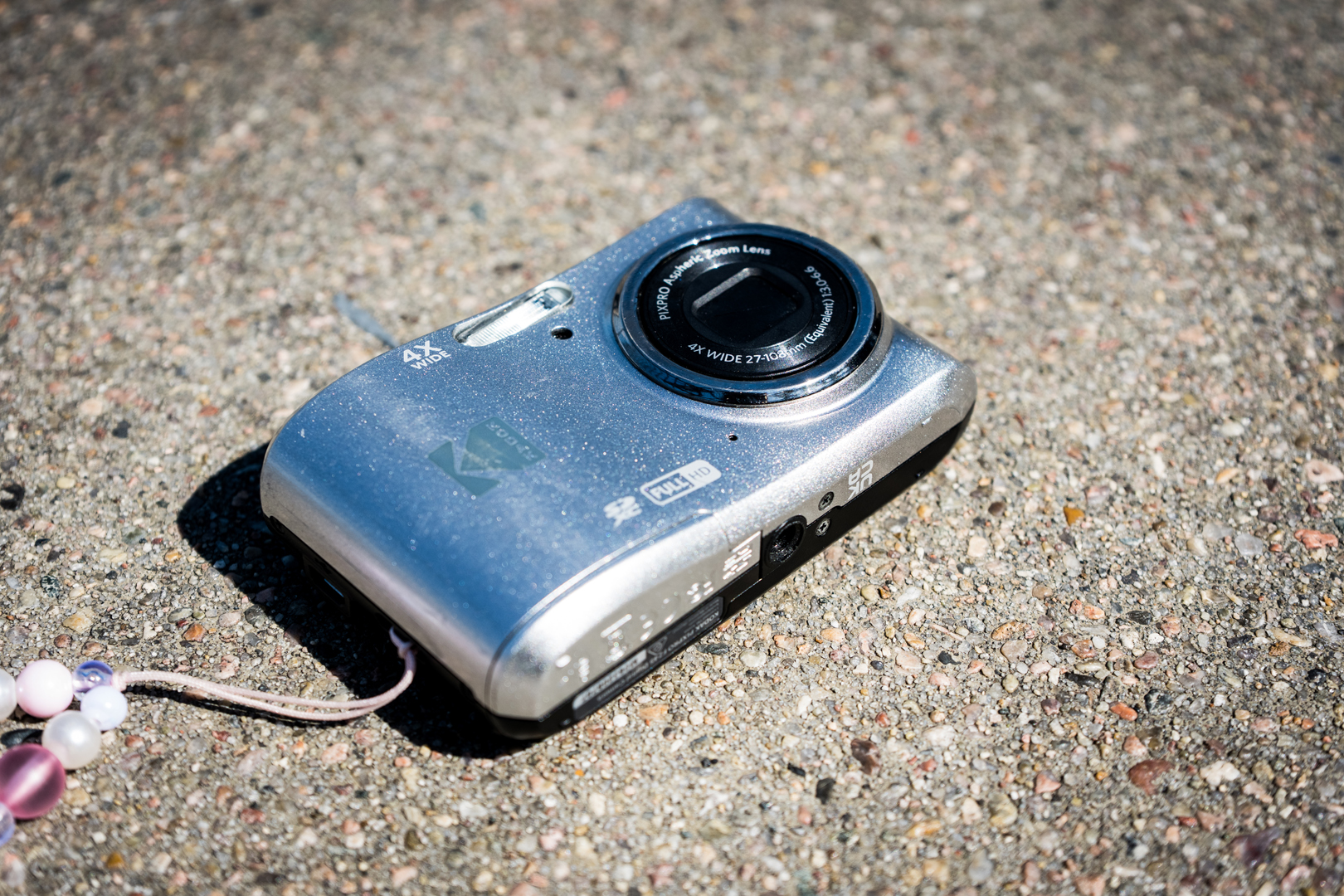
So the real "2000s look" isn't slapping some filters, date stamps, or fake film effects on a contemporary digital camera. It's the look that arises from the interplay of a set of specific technical limitations and a carefree, unself-conscious approach to photography—an approach that feels, increasingly, as if it belonged to a particular moment in history.
Seven Cameras for Capturing the 2000s Look
With that in mind, the best contemporary cameras for achieving the 2000s look aren't necessarily those that advertise themselves as retro or lo-fi, but those whose native behavior preserves some combination of the technical limitations and possibilities that defined the era.
Kodak PIXPRO FZ45
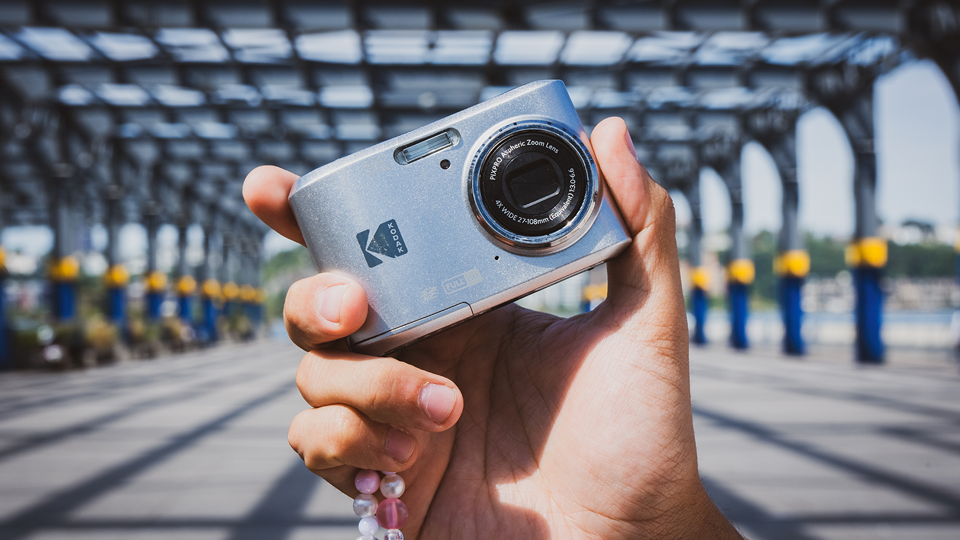
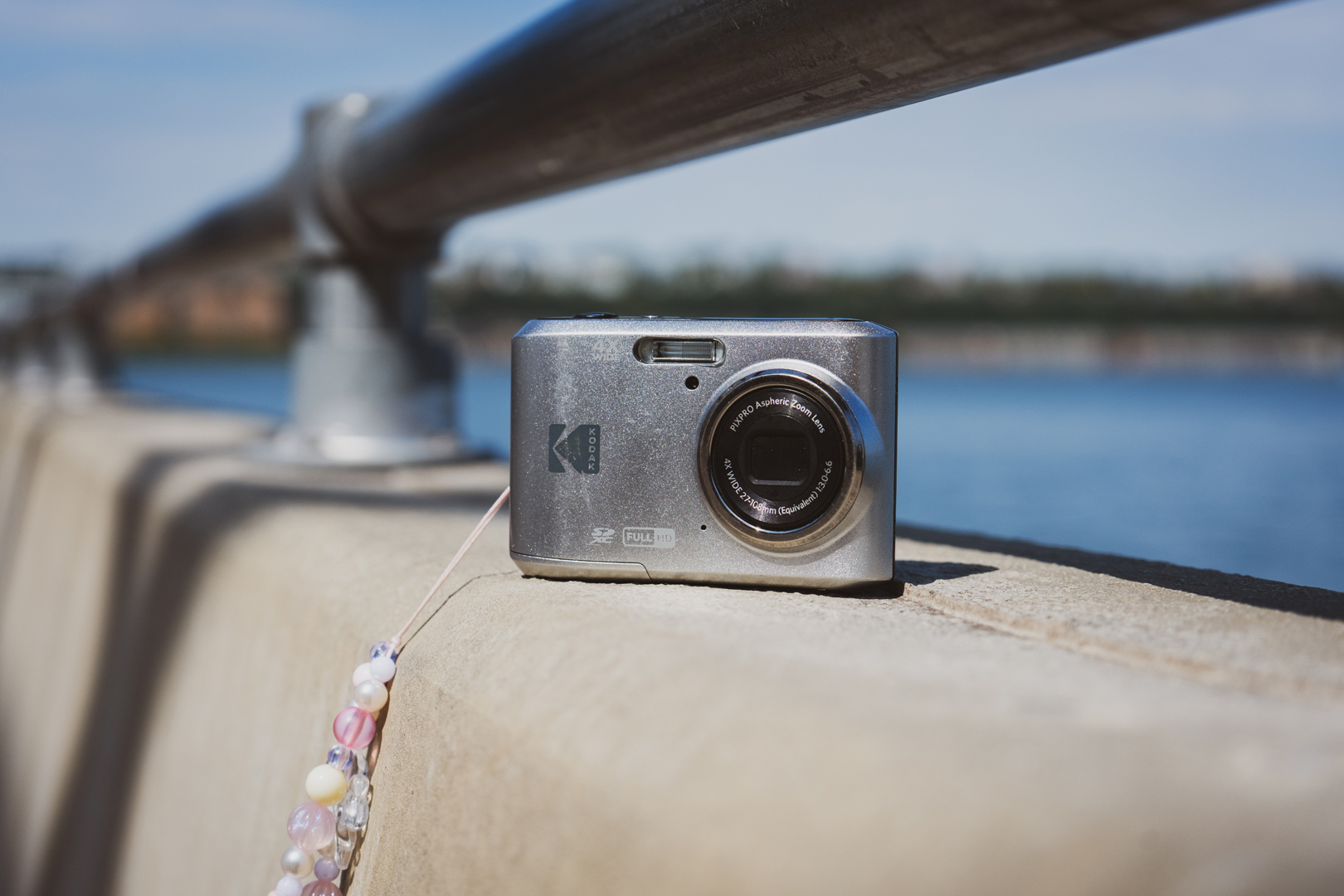
At the top of our list is the Kodak PIXPRO FZ45. At first glance, it's more digicam than retro. It doesn't announce itself as a throwback, either through design or marketing. In fact, if you put all the cameras on this list into a lineup, it might be the one you're most likely to overlook.
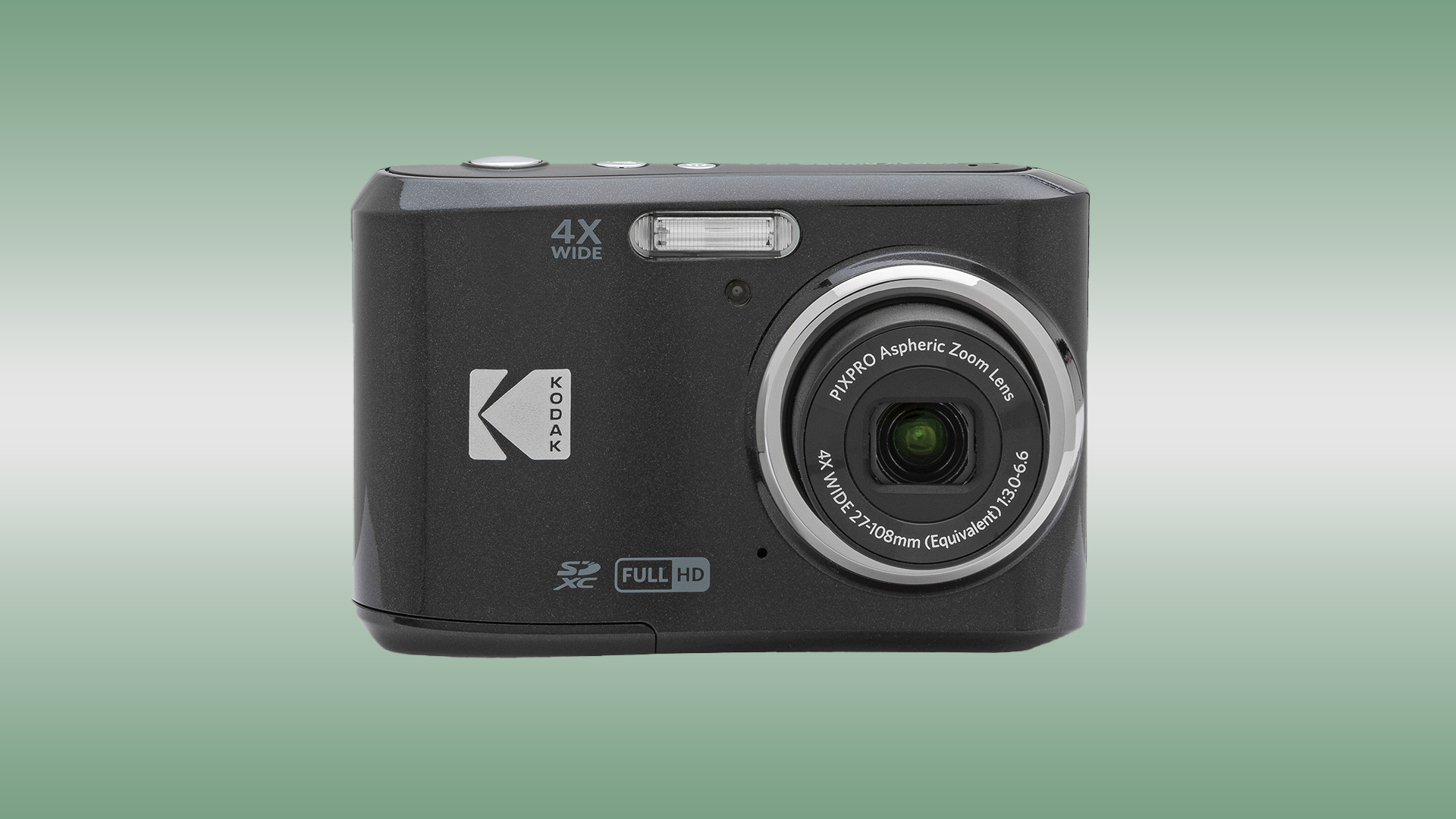
However, if we look at the full suite of technological constraints outlined above, you'd be hard-pressed to find a camera better suited to the task. It has a 1/2.3"-type 16MP CMOS sensor, a 27-108mm-equivalent 4x optical zoom, a 2.7" fixed rear LCD screen, JPEG capture, and a built-in xenon flash—all in a little plastic camera running on two AA batteries.
Suddenly, when you look at it again, it seems as if it were imported directly from 2009.
The small sensor gives you the broad depth of field and environmental information. The 27mm-equivalent wide end puts you right in the middle of the scene. You've got the zoom. The xenon flash gives you that bright blast of light that freezes subjects and separates bright foregrounds from dark, hard-shadowed backgrounds. JPEG-only still photography means the camera's processing is making image-final decisions for you. Even the two-AA battery power source gives it that vintage consumer-electronics-appliance feel.
In a way, aside from the larger megapixel count, it's as if a 2000s digicam were frozen in time.
Canon PowerShot ELPH 360 HS A
The Canon PowerShot ELPH 360 HS A is a re-release of a camera originally introduced in 2016, the ELPH 360 HS. And even though the original arrived at the tail end of the digicam era, its spec sheet and form factor preserve the 2000s digicam philosophy with a few technological upgrades: a small 1/2.3"-type 20.2MP CMOS sensor, DIGIC 4+ processor, a 12x optical zoom spanning an equivalent 25-300mm, JPEG-only capture, and, again, a built-in flash.

The re-release doesn't interfere with that formula at all. It even has a 640 x 480 output option, a resolution straight out of the earliest digicam era. It is essentially the same decade-old digicam Canon has put back into contemporary circulation, with the principal change being a switch from an SD to a microSD memory-card slot.
More importantly, the original 360—and, by extension, the 360 HS A—belongs to a direct lineage reaching back to the earliest Digital ELPH cameras and the formative digicam era, of which Canon was one of the principal shapers. In that sense, the ELPH 360 HS A is less a contemporary camera imitating the 2000s than a surviving descendant of the cameras that helped define the look in the first place.
Kodak PIXPRO FZ55
The Kodak PIXPRO FZ55 is the FZ45's svelter, swankier relative. They both have the same small sensor, with the FZ55 getting a little more reach on the zoom lens along with a rechargeable battery. More importantly, it has a smaller, lighter, and boxier design, which in its own right harkens back to the design variety of the digicam era, when manufacturers were more likely to experiment with the camera as a fashion accessory.

Yes, the FZ45 is small, but the FZ55 is smaller and feels more pocketable given its streamlined shape. That pocketability is important, because the easier a camera is to carry, the more likely you are to use it to make pictures.
From the standpoint of image quality, the FZ55 and FZ45 are nearly identical. But the difference between them is one that is still period-accurate: What do you look like carrying this camera? And how does its look change the way you use it?
Kodak PIXPRO WPZ2
The third and final Kodak on our list is the Kodak PIXPRO WPZ2. While technically sold as a rugged camera—a digicam niche in its own right—the WPZ2 has a nearly identical internal configuration to the FZ45.

Ironically, where recent hands-on reviews have criticized the WPZ2 for flat JPEGs, oversharpening, limited dynamic range, weak low-light performance, and a poor rear LCD display, these are precisely the kinds of limitations we've already identified as characteristic of the 2000s look.
The rugged design also reinforces some of the behavioral qualities that made digicams so compelling in the first place. The WPZ2 isn't precious and is meant to endure the beach, the water, vacations, and anywhere else you might be hesitant to bring something more expensive. That reduced anxiety can yield the same carefree, low-stakes attitude that defined so much of early digital photography.
If you're looking to combine that aesthetic with a camera that can endure water, adventure, and a little rough handling, the WPZ2 is an ideal choice, not just for reproducing the look, but as a continuation of an era-authentic function.
Dijie Shooter
Given the as-yet unabating appetite for the 2000s look and compact cameras in general, it seems inevitable that someone would reconstruct a vintage point-and-shoot camera from first principles: identifying, as we have, the exact technological constraints that produced that look, putting them into a new camera, and then selling it as the modern vintage camera.
Enter the Dijie Shooter.

While its internals are mostly period-accurate, the camera also offers 4K video, a front-facing ring light for selfies, a full touchscreen display, and instant Wi-Fi downloads. What will immediately meet the eye, however, is the Shooter's unique square-shaped build, paired with the candy-colored translucent plastic that was a hallmark of Y2K-era consumer electronics.
Additional contemporary features include 64GB of internal storage, USB-C recharging, advanced autofocus, and image stabilization. If the name and marketing rub you as a cash-grab gimmick, rest assured that when it comes to creating the 2000s look through the camera's underlying tech specs, the Dijie Shooter understands the assignment. Where it has been modernized is largely in accommodating the contemporary ways we share and experience images.
The Camp Snap CS-PRO
The Camp Snap CS-PRO seems to be reaching for an even earlier kind of point-and-shoot camera, one that isn't even digital at all: the disposable film camera. It is one of several new cameras to completely omit the rear-facing screen, which, as we've mentioned, was an integral part of the larger experience of the digicam era.

However, the CS-PRO has an even smaller 1/3.06"-type 16MP CMOS sensor, a 22.5mm-equivalent f/2.2 fixed lens, and a genuine in-camera xenon flash. It's important to remember that the digicam era still overlapped with film, and that images made with digicams and disposable film cameras circulated and intermingled throughout the period. As small JPEG scans, those film photographs appeared side by side with digicam images on our early digital screens.
Again, the tiny sensor gives you tremendous depth of field. The wide lens encourages you to be part of the action. The xenon flash gives you that stark lighting and dramatic separation between foreground and background.
So while the camera's marketing and screenless design are bent toward a somewhat different kind of nostalgia, the image results can be strikingly digicam-accurate. The proposition of delayed gratification—viewing the images later after transfer—adds a contemporary digital twist to the camera's social dynamics, particularly in the close-quarters, hard-flash environments where this aesthetic thrives: parties, nightlife, and friends crowded together in the frame.
Fujifilm X half
The last camera on this list, the Fujifilm X half, is less of a time warp or modern reconstruction than a modern interpretation. Rather than approaching the digicam aesthetic through either affordability or technological fidelity, the X half attempts to reach the same territory—that of technological constraints encouraging carefree, unselfconscious photography—primarily through design and limitation as ingenuity.

On paper, its hardware is considerably more contemporary than the other cameras on this list. It has a comparatively large 1" sensor, a modern autofocus system, and an LED flash rather than the xenon units characteristic of the digicam era. But Fujifilm deliberately reintroduces constraint elsewhere: date stamping, baked JPEG aesthetics, Film Simulations, deliberately imperfect effects such as light leaks and expired-film treatments, and even an insistence on vertical framing.
The X half takes a fascination with retro photographic aesthetics from across photography history and makes them the site of casual play—which, as we've established, was a necessary part of the 2000s-look equation. So while it may not be the most authentic 2000s digicam on paper, it arrives at much the same shooting philosophy through distinctly contemporary technological means.
For more information about the cameras, including additional features, specs, and highlights, be sure to check out the detailed product pages for the above cameras. To learn more about digicams and other photo topics, check out B&H Explora.
