
Throughout the history of photography, few aspects have remained the same. Famous names have come and gone, but few have remained strong in their place as pillars of the industry. Among those names sits Olympus, better known today as OM Digital Solutions.
Founded in 1919 as Takachiho Seisakusho, the future Olympus aimed to domestically produce microscopes. It wasn’t until well into the 20s that the moniker “Olympus” came to be, and it wasn’t a camera that bared the name either—it was one of their microscopes. In fact, their first camera wouldn’t come to market until 1936.
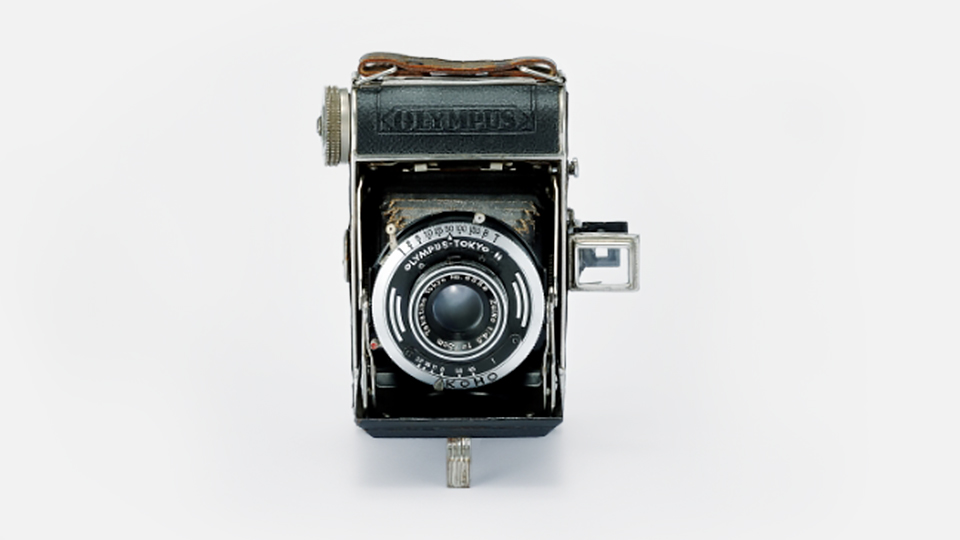
The Semi-Olympus was the brands first foray into photography, and was aptly named, as it was essentially an Olympus lens mounted on a camera body designed by a different Japanese manufacturer. Still, it served to make photography more accessible to the Japanese audience, who previously relied on expensive imported offerings.
Olympus would continue to dabble in the world of photography over the next few decades with various cameras coming to production, from newer Semi-Olympus models to their first real hit, the Olympus Six, and subsequent cameras like the Olympus 35. These cameras would put Olympus on the map as a solid camera manufacturer, though it wasn’t until a little camera known as the PEN came to be that Olympus would transform into the industry titan we know it as.
Origins of the PEN
In 1959, Olympus launched the small, affordable PEN. This remains their most significant project, and a big undertaking for a company that only had dipped their toes into Japan’s fledgling camera industry in recent decades. Designed by Yoshihisa Maitani, this half-frame compact camera would be revolutionary, not only as it was the first in the company’s history to shoot such a small format, but also because of its unrivaled popularity.

Due to the high price of film in Japan at the time, a half-frame camera was the perfect solution to keep photography affordable. This vertical imaging format allowed for 48 images to be taken on a standard roll of 24-exposure film, and 72 images to be taken on a 36-exposure roll. For Maitani, this was ideal as he had blown his allocated budget entirely on the D-Zuiko 28mm f/3.5 lens, feeling that optics were the priority.
This worked in Maitani’s favor as Olympus gave him the go-ahead to complete his project—under strict guidelines that the final product sells for no more than ¥6000 (just under $150 when adjusted for today’s prices). Maitani did just that and the rest is history. Olympus, who had previously measured camera sales in the thousands, now has sold millions of PENs.
Expanding the PEN Series
The success of the PEN wasn’t lost on Olympus. Shortly after the original PEN’s launch, Yoshihisa Maitani was given the chance to design his dream camera, a fully realized interchangeable camera system. In 1963, this dream came to fruition with the launch of the PEN-F, the world’s first 35mm half frame SLR camera.
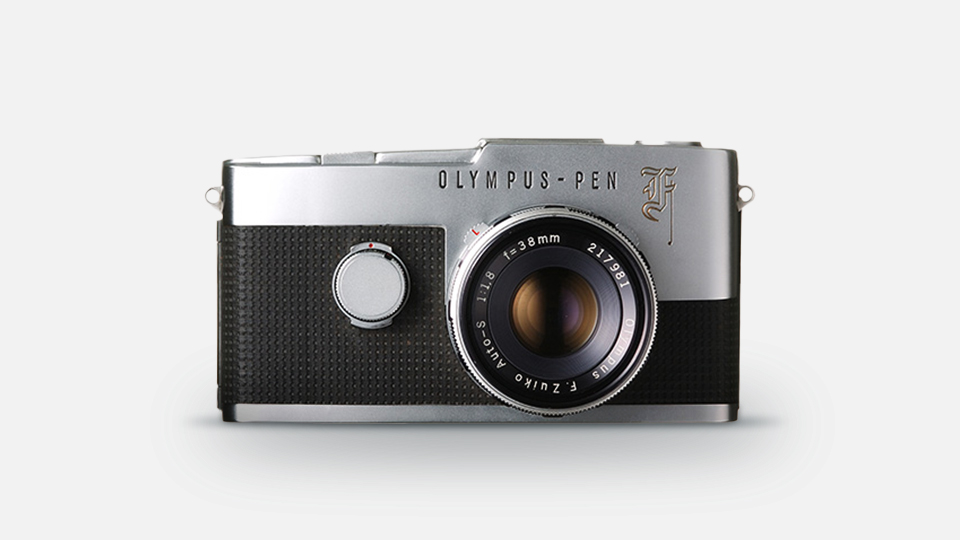
The PEN-F’s shutter dial was front-mounted, which cleaned up the top plate, but also harkened to the position of the slow speed dial on the Leica IIIf. After all, Maitani was greatly inspired by incredible build an optical quality of the German manufacturer, and this inspiration is what lead to the many innovations he continuously delivered with Olympus.
Over the next few years, Maitani would continue to develop new and exciting features and implement them into the PEN. Shortly after the F came to fruition, Olympus released the PEN FT in 1966, which now featured a built-in light meter for even greater ease of use.
The PEN Goes on Hiatus
In the late 1960s, Maitani and Olympus shifted gears into the world of interchangeable lens SLR cameras in response to the success found by contemporaries like Nikon and Pentax. Once again, Maitani would go back to the drawing board, melding inspiration and innovation to deliver the OM-1 (not to be confused with the modern mirrorless camera bearing the same name)—a trend Olympus would repeat now and again.
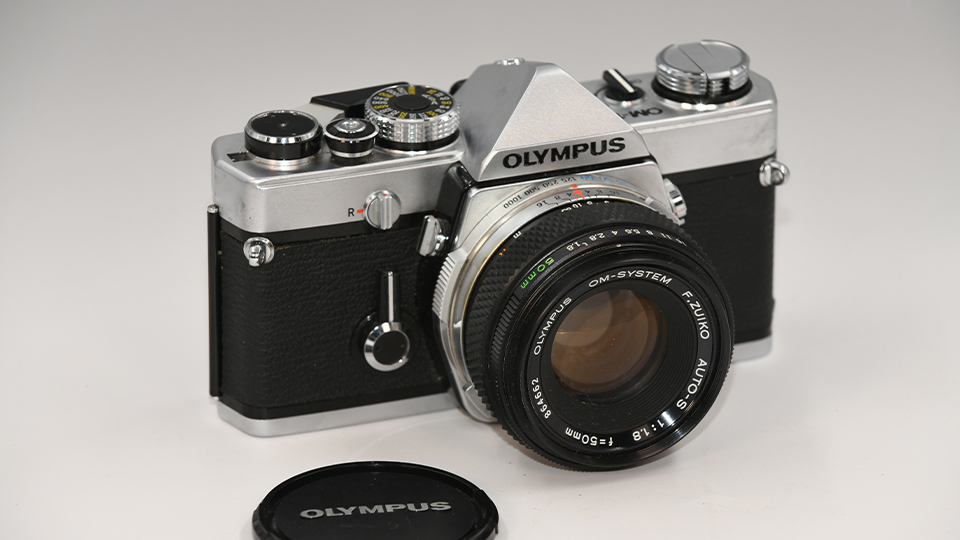
The OM-1, named after the manufacturer and chief designer (Olympus-Maitani), was arguably the most portable 35mm SLR camera in the world upon its release in 1972. It weighed just half of what Nikon’s F and F2 weighed and was capable of anything a photographer asked of it. For 25 years, the OM line would evolve and remain lightweight throughout its run.
Even after the success of the OM SYSTEM, Maitani’s work with Olympus was far from over, and some of his most ambitious projects were yet to come. While the PEN solidified his status as one of the most innovative camera designers of the late 20th century, it would be his work on the OM line and future compacts like the Olympus XA which would define the latter years of his career.
In 1996, Yoshihasi Maitani would retire from Olympus, though his legacy would remain. Even his breakout project, the Pen was yet to see its final curtain, although its name would sit on ice for the time being, with many new innovations taking the spotlight in the interim. Namely, with the early 20’s came the digital revolution.
The PEN Returns in the Digital Era
Olympus was no stranger to taking on new and unproven formats, and none would prove so revolutionary in the digital era as the Four Thirds sensor. This small imaging sensor was unique compared to other brands, which opted for an APS-C sized sensor in the early days. It provided a 2.0x crop factor, meaning images shot on Four Thirds would appear as if they were shot using double the focal length.
As full-frame sensors arrived on the scene, Olympus doubled down, sticking with their small format sensor and delivered the Micro Four Thirds system in 2008. This removed the optical viewfinder, delivering some of the first mirrorless interchangeable lens cameras to the market. To make this move even bolder, the brand’s first mirrorless cameras would come with a familiar name.
In July of 2009, Olympus would announce the new PEN E-P1. This camera was similar in size and form factor to the original PEN, and like its predecessor, the small camera would go on to become one of their most popular sellers in the digital age. However, the same cannot be said for its retro-styled sibling, the PEN-F.
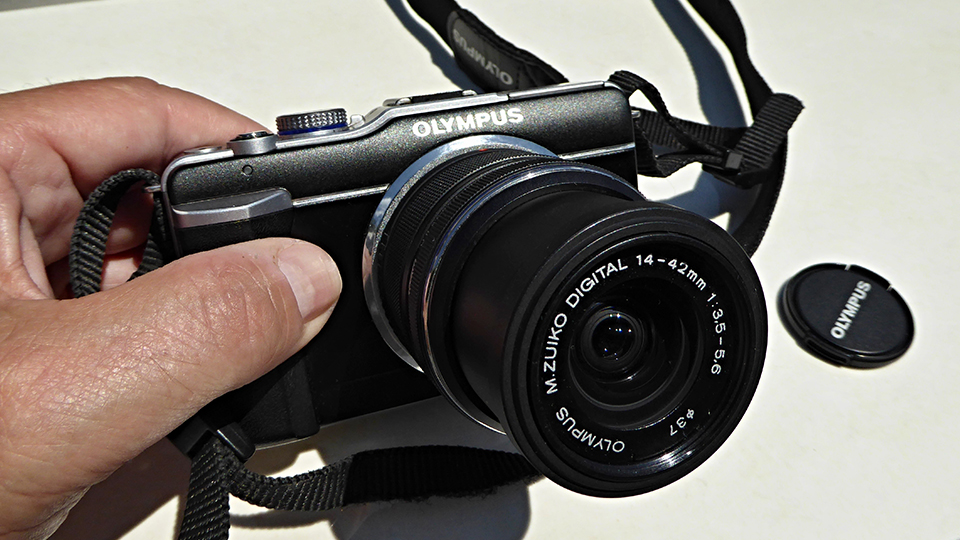
While the 2016 digital reimagining of the PEN-F didn’t sell as well, it found success through its 60s-era styling and mechanical controls, a feature that would soon become more popular than early digital shooters could ever imagine.
A Change of Hands: Olympus Becomes OM SYSTEM
Come 2020, and Olympus fans were in for a big change with a restructuring of the brand they had come to love. While cameras going forward would no longer carry the Olympus name, they would carry on the same tech and designs under a new moniker, OM Digital Solutions Corporation, or OM SYSTEM as its photo division would be known.
Immediately, the effects of this change of hands were felt with a series of stellar product launches beginning with another returning title, the OM-1. This time, the camera would be a mirrorless powerhouse, delivering class leading speed and precision, especially when paired with the new M. Zuiko 150-400mm f/4.5 TC 1.25 IS PRO. With that said, these were not the first products to be launched under new management.

Under this new banner, the first camera launched would once again be a new iteration of, you guessed it, the PEN, with the PEN EP-7. Heavily influenced by the F, this new PEN featured many of the same internal specifications while sporting some new ergonomic upgrades. That said, there was one small dilemma for those of us in North America. That dilemma was that the camera would never be released onto our market. It would be another five years before a PEN would see the light of day in the U.S.
While OM Systems would reignite the brand’s fire, they would do so with their existing fans in mind, focusing on birding and wildlife. Hence why so many high speed cameras and long, fast-apertured lenses have come out in recent years. Luckily, those who dreamed of a new PEN would not have to wait too long.
A New Dawn: The OM SYSTEM PEN
And that brings us to today, as we prepare for the return of the PEN once again. OM Systems latest take on this classic is like looking at a blend of the E-P1 and the PEN-F, taking the best of both worlds and creating a solid camera for any casual situation.
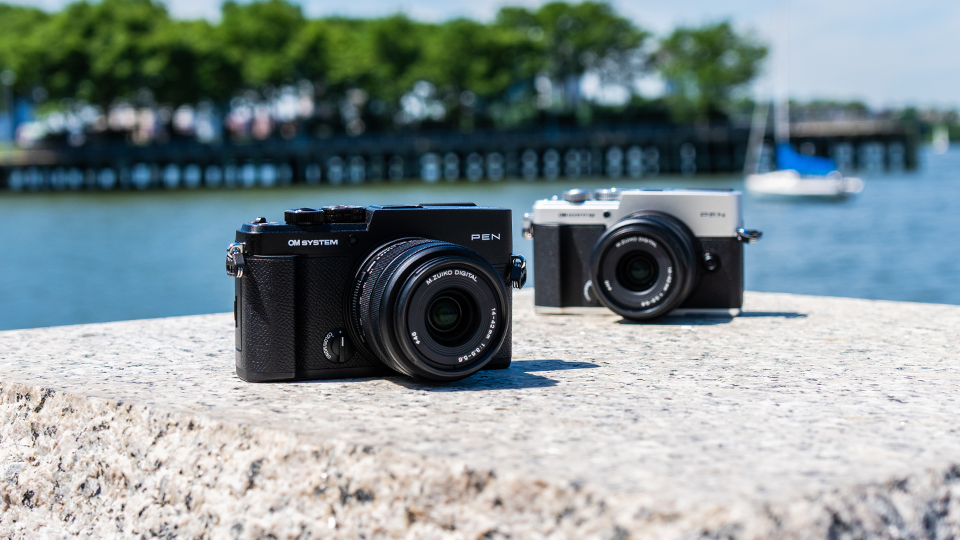
Although OM Systems have invested heavily in the popularity of Micro Four Thirds in other areas, the PEN series isn’t going anywhere. The PEN has been a staple of the everyday photographer’s kit since 1959, and it appears that it will be for years to come. The OM System PEN comes as the perfect blend of everything the series has represented throughout its nearly 70-year run.
OM SYSTEM: Past, Present, and Future
We hope you’ve enjoyed this trip through the history of the PEN, from its early development and refinement under the late Yoshihisa Maitani to its modern renditions. Though much has changed in the industry and within the company, the OM name remains and continues to thrive, even as the photo industry as a whole faces new and ever-present challenges.
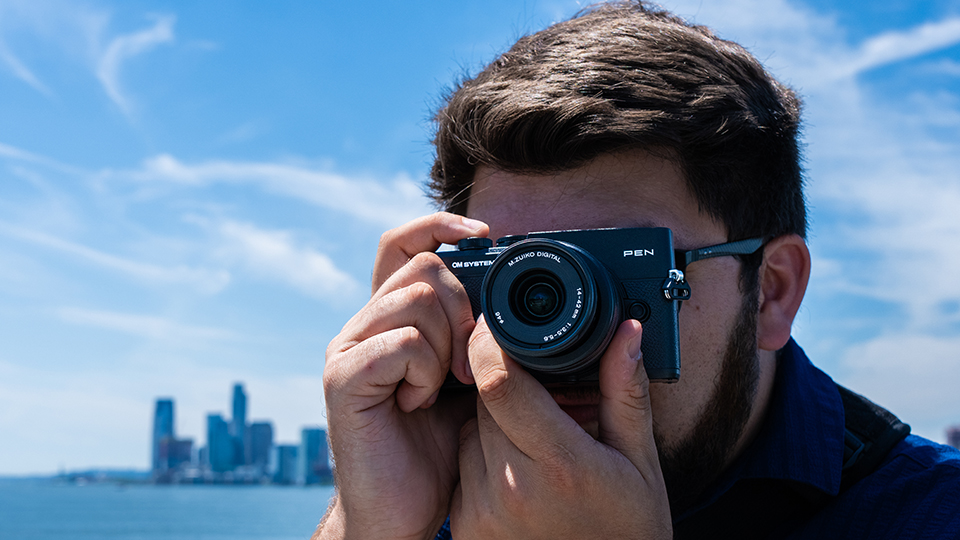
To learn more about photography, both old and new, be sure to check out our other guides and articles on the B&H Explora site. For those curious about older models, keep an eye out on the used departments page, as we see the occasional E-PL1 and even the 2016 PEN-F come through now and again. If you’re interested in the OM System PEN, be sure to check out the detailed product page.
