
Equalizers affect the fundamental character and quality of sound more than any other tool in audio engineering and sound design, making it perhaps the most common and useful tool in the industry. Like compressors, equalizers were originally meant to be a corrective tool, developed to increase the range of transmission for telecommunications by AT&T engineer George Ashley Campbell in the early 1900s—a few decades before John Volkman first used the technology in the method we use today while working for RCA, equalizing the audio of early motion picture "talkies." Since then, EQ has evolved into the precise and sophisticated studio tool engineers rely on today.
In this guide, we'll go over some of the most famous and iconic equalizers used in the history of recording, their individual character and quirks, and why they're so often imitated and emulated. The information we'll share here should help you choose and use EQs for any situation, especially when paired with our guide to EQ concepts.
Pulse Techniques Pul-Tec EQP-1A
The legendary passive and tube-and-inductor-based Pul-Tec EQP-1A has been one of the most famous and sought after equalizers on the market for more than sixty years, held in high regard for its warm, rich, and harmonically saturated sound. The EQP-1A was the equalizer that helped define the iconic sound of Motown and was used on nearly every track recorded at Record Plant Studios in Los Angeles, whose list of credentials has populated the Top 40 since the 1960s.
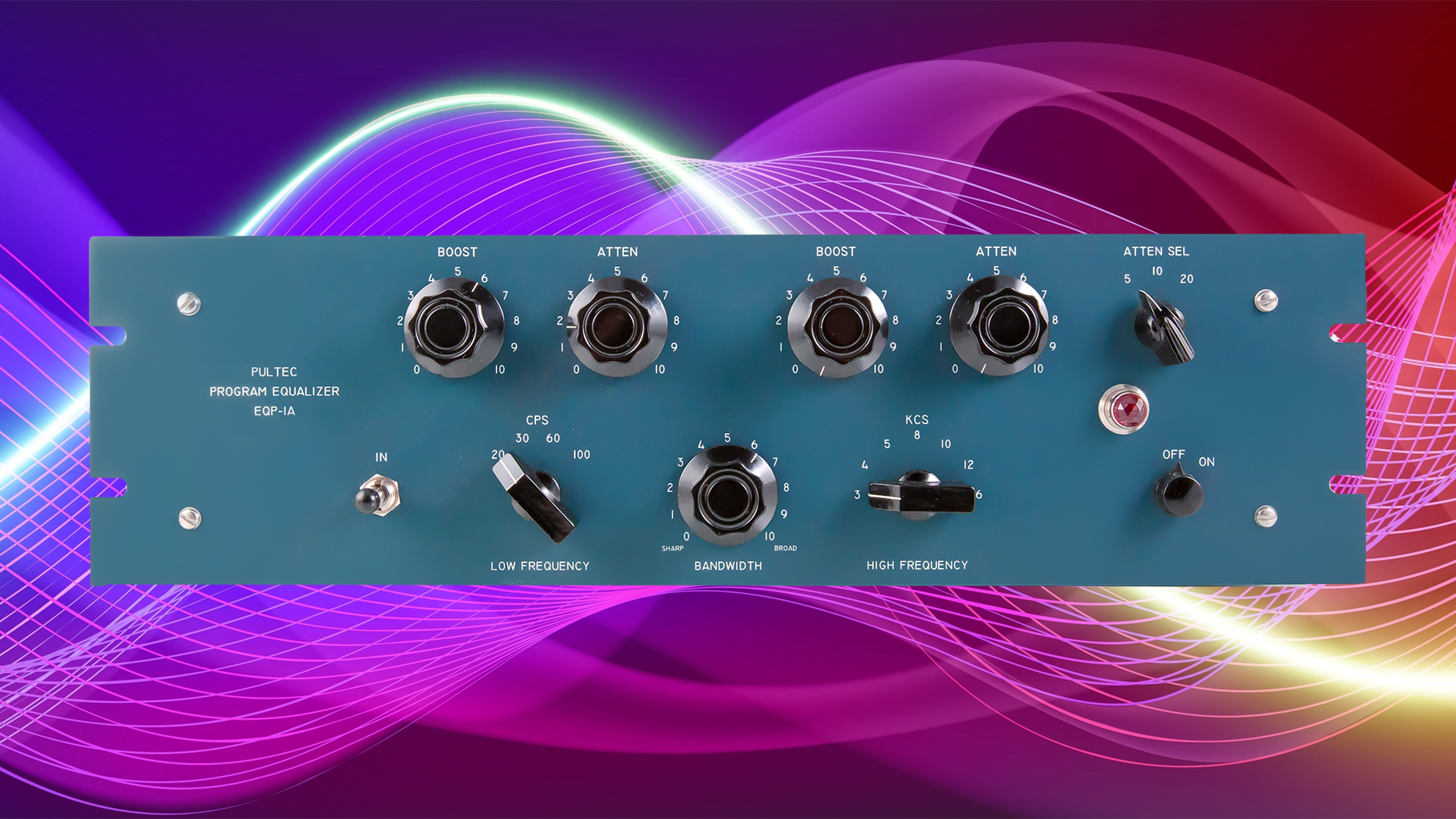
Perfect for both individual tracks and for the mix bus, the Pul-tec's simple and sparce layout lends itself to broad and gentle adjustment, forcing you to "EQ with your ears" with its selectable bandwidth, frequency, and attenuation positions preventing destructive equalization or harsh processing. Audio sent through the EQP-1A is enhanced and enriched even if the EQ is set flat, thanks to its tube amplification and transformers.
The famous and curiously counterintuitive "Pul-Tec Trick" is an unintentional consequence of its unique circuitry, a happy accident that has since enabled an iconic technique that's defined the sound of low frequencies in many famous recordings. Because the low-frequency shelving controls for boost and attenuation operate separately with different bandwidths, cutting and boosting the same frequency range creates a distinctive and narrow scoop right above the boosted bass frequency, defining the low-end weight, punch, and clarity the Pul-Tec is known for.
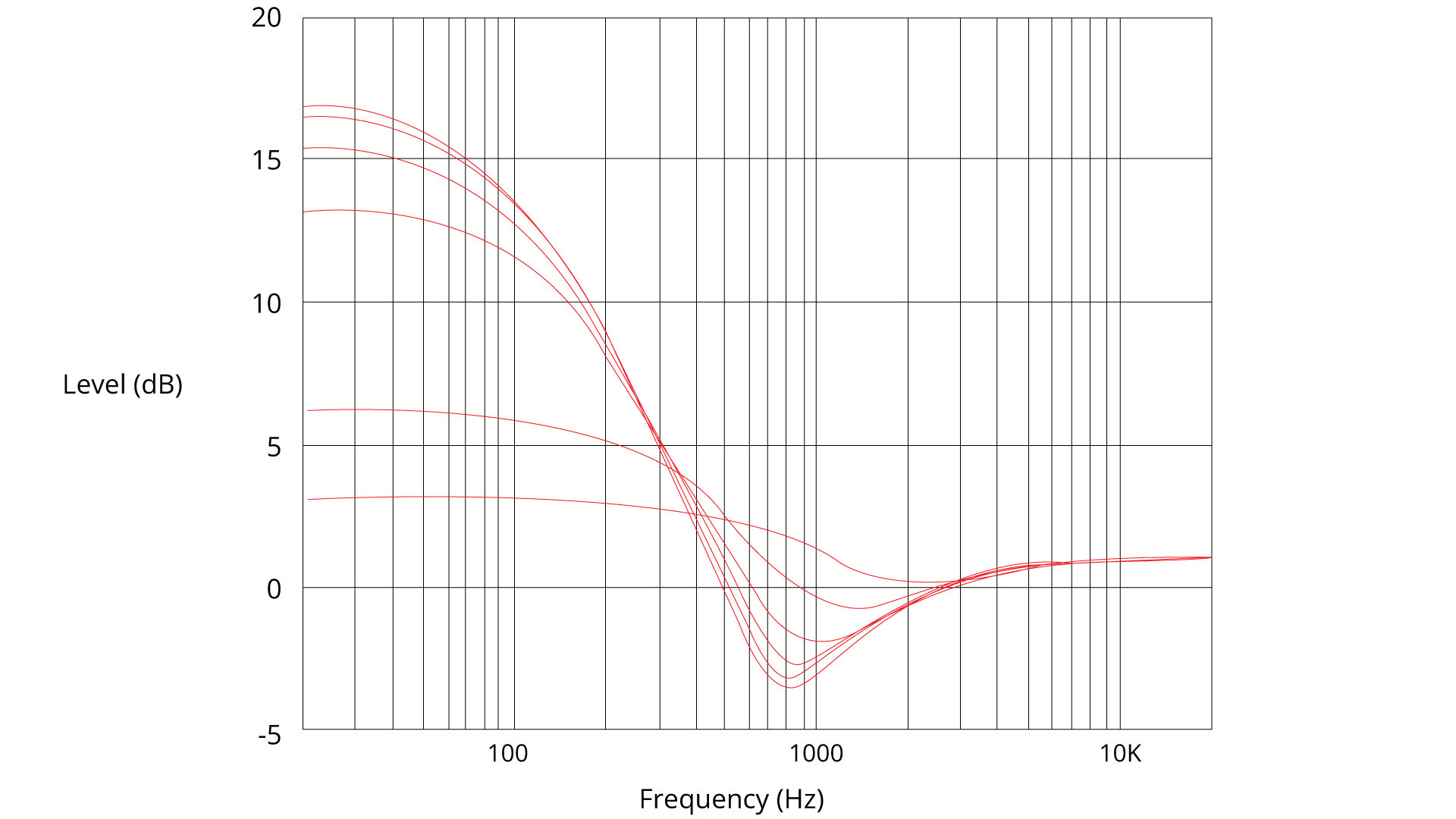
The Pul-Tec EQP-1A can be used to EQ just about anything—used conventionally, it's a beast on the master chain for end-stage mixing and mastering with its powerful-yet-subtle processing (although you'd want two separate units for stereo mixing—Manley Labs makes a clone that's a standalone stereo version). It has found a home in nearly every sub-mixing situation from Dr. Dre's drum bus to Joe Chiccarelli's vocal chain for Jack White's work with The White Strips. It's excellent for individual tracks as well, particularly when using the Pul-Tec trick for shaping bass guitars, keyboards, pianos, and synthesizers.

At nearly $4,500 MSRP, the EQP-1A is a luxury item—but there are many clones that claim to do fairly well in recreating its sound at a fraction of the price, such as the Warm Audio EQP-WA as well as software emulations that are quite capable of adding that desirable analog warmth and presence tube EQs introduce, such as Apogee Electronics' EQP-1A FX Rack Pultec Program Equalizer Plug-In. While these won't be perfect recreations, you can still get great sound with the same workflow and design philosophy as the Pul-Tec without maxing out your credit or emptying your savings.

Rupert Neve Designs 1073 Microphone Pre-Amp and EQ
Another member of prestigious EQs, the solid-state inductor-based and hand-wired Neve 1073 pre-amp and 3-band semi-parametric EQ has defined the rich and transparent "British sound" of the 1970s—used to capture and enhance the sonic ferocity of the likes of Led Zepplin, Pink Floyd, Queen, The Clash, King Crimson, and many more.
The 1073 can affect a wide range with a 12.5kHz fixed-frequency high shelf filter with +/-18dB range, a selectable-frequency fixed-Q (fixed bandwidth) midband bell filter with +/-16dB range, and a selectable-frequency low shelf with +/-18dB range, along with a high pass filter—all with fixed Q.
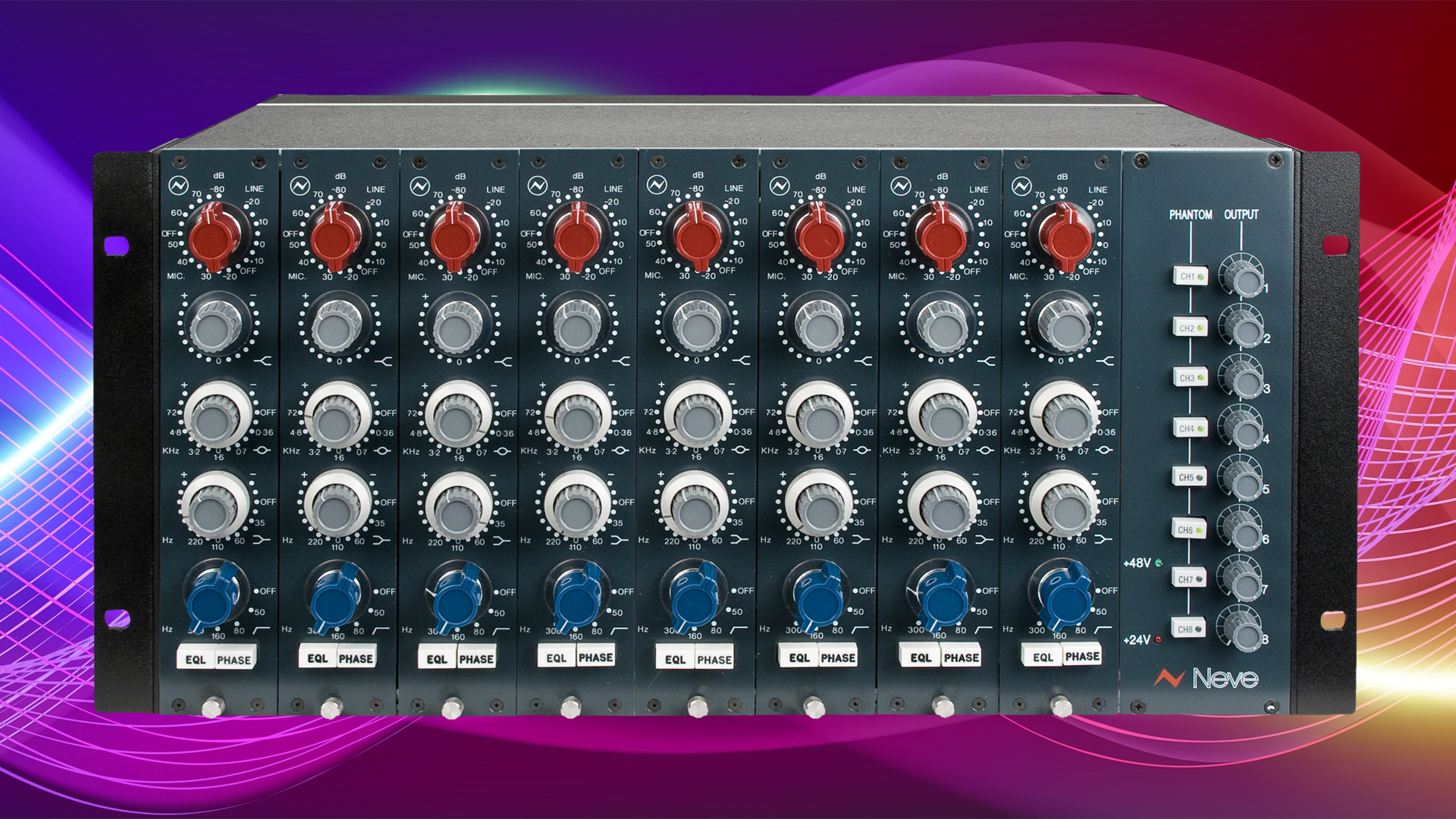
Adding smoothness, presence, and character through both its pre-amp and EQ, the Neve 1073 delivers incredible saturation to vocals and guitars but can be used to sweeten and emphasize just about anything on a mix. If you check out our vocal chains guide, you can learn why the 1073 has been a mainstay for vocal processing since its introduction and why it is still used extensively today.
A true vintage Neve 1073 goes for about $4,000 apiece for just one input and EQ, so justifying a purchase is difficult. They were included modules in the ultra-rare vintage Neve 80-series consoles—to use one, you would need to have an 80-series console (which you don't), buy an expensive 80-series housing frame, or get a boutique professional audio repair shop to build a custom rack with the specific and necessary power and connections.

For the rest of us, the Neve 1073SPX and 1073DPX are (comparatively) less expensive single and dual channel rackmount reissues of the vintage 1073, coming with a few modern features like DI, phantom power, inserts, level meters, and a headphone out. The 500 series reissue has had its mic and EQ components split into two modules, the 1073LB and 1073LBEQ, but it has different internals than the original and offers less headroom.
The Neve 1073N is the true modern standalone reissue of the vintage 1073, updated with standalone functionality and universal compatibility, coming with an integrated power supply and modern I/O connectors but still outfitted with the 18-pin connection used for the original 80-series consoles.
Automated Processes Inc. 500 Series – 550A/B and 560
Co-founder of API Saul Walker designed and invented the 500 series module style in 1969, a format that allows engineers to easily swap out different modules like EQs, preamps, and compressors for portability, maintenance, and customization. This form factor is incredibly useful and convenient especially when used in combination with API's Lunchbox—a self-powered chassis specifically designed for 500 series modules, allowing for custom and swappable chains to be carried between studios. Since then, the 500 series format has become an industry standard, with other manufacturers producing 500-series compatible gear like the Neve 1073LB and LBEQ.
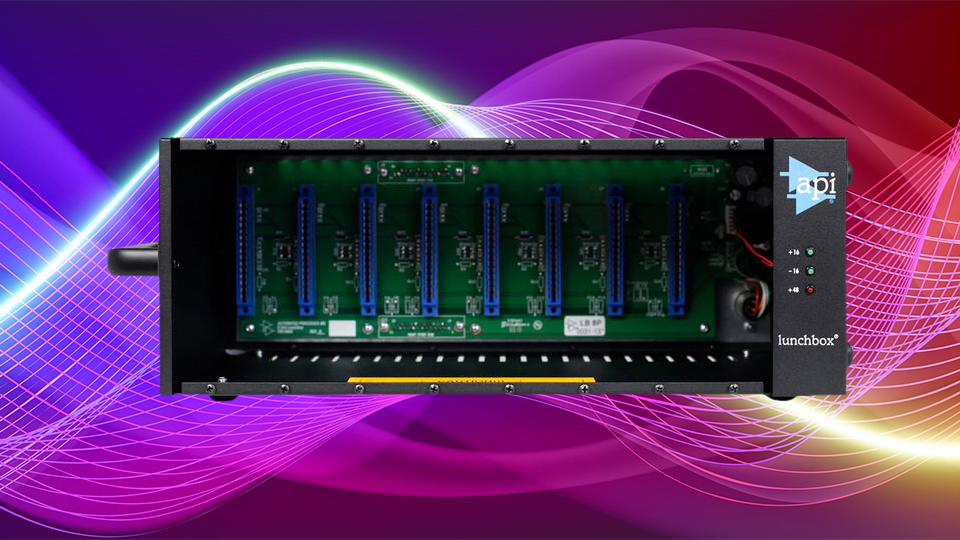
First manufactured in 1971, the vintage API 550A is a solid-state 3-band semi-parametric EQ that helped define the "American sound"—characterized by a more powerful, forward, and punchy tone compared to the cleaner and more transparent "British sound" associated with Neve. These vintage 550s have unbalanced inputs (the new ones use balanced inputs) and use early versions of API's 2520 discrete operational amplifier (op-amp) that engineers claim offers more harmonic distortion and a darker "worn-in" sound than the modern factory-fresh ones—making them quite rare and sought-after EQs. However, API has made sure the quality and characteristics of the modern 550A remain quite faithful to the original, so paying an extra couple thousand dollars for a vintage unit—let alone even finding one for sale—is not necessary.
The 550A has a bit less room to work with having +/-12dB range on all three bands, but it offers more granular control than the Neve 1073: the high and low bands have selectable shelf and bell filter settings, and both have selectable frequency, offering more flexibility. It's considered a semi-parametric EQ due to API's proprietary "proportional Q" feature, which narrows the Q (filter bandwidth) as you increase the boost or cut and widens it as it returns to unity gain, giving adjustments a very natural and musical EQ curve.


The API 550B is a 4-band semi-parametric EQ and offers much of the same design and specs, featuring the same circuitry, proportional Q, boost and cut range (in dB and frequency) per band, and switchable bell/shelf filters for the high and low bands. With the extra low-mid band, the 550B offers more precision and band overlap, making it more appropriate for sub-mixes, mastering, or mixing complex material where space is at a premium.
The API 560 is a 10-band graphic equalizer, sharing the same proportional Q and op-amp as its 550 brothers. Because of its visual layout and zero-center detents (the little notches that catch a fader or pot so you can position it perfectly center, pronounced "day-tont"), the 560 is ideal for quick or aggressive large-scale adjustments in combination with parametric EQs, often used with drum sub-mixes and snares. The API 560's ten bands are divided into one-octave increments from 31Hz to 16kHz and have a range of +/-12dB.
Manley Labs Manley Massive Passive Stereo Tube EQ
Built in California, The Manley Massive Passive is a 2-channel, 4-band quasi-parametric passive tube-based equalizer that improves upon the design and versatility of the classic Pul-Tec EQs. The Massive Passive offers the greatest level of control (but not precision—we'll get to that) of all the EQs discussed on this list with five bypassable high and low pass filters with variable filter slopes and forty-four overlapping parametric frequency selections—eleven per band at roughly ¼ octave spacing. Each band can be bypassed and has selectable bell and shelf filters, which is one of the ways the Massive Passive earns its magical reputation.
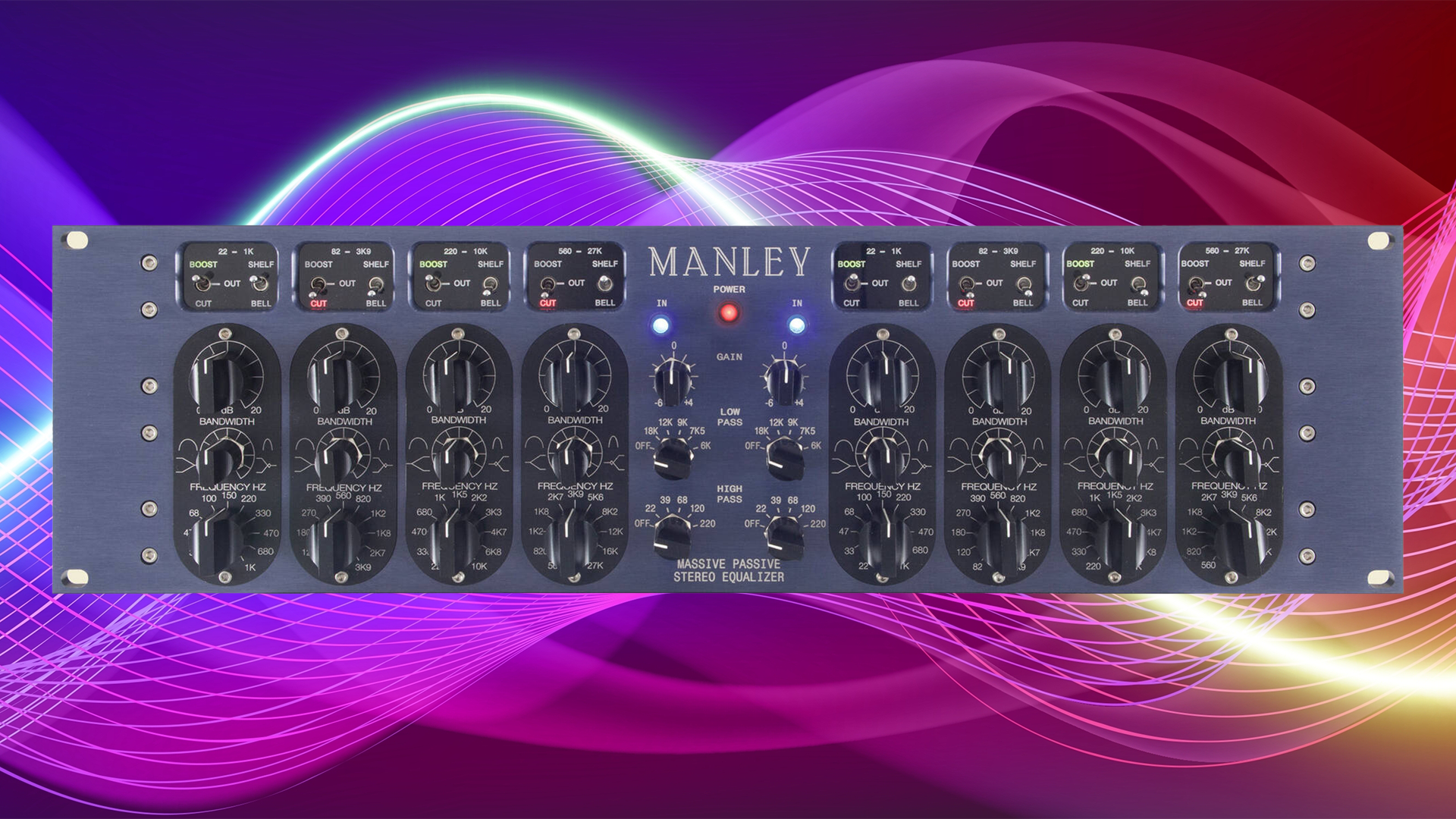
The adjustable bandwidth parameter of the Massive Passive is an intentional nod to its Pul-Tec like design—gain and bandwidth are intrinsically interactive with each other on any passive EQ, so while the bandwidth knob affects the Q, it's not a true Q parameter—which is why Manley Labs has labeled it quasi-parametric. While the maximum boost/cut range is +/-20dB on a Manley Passive, wider bandwidths reduce the available range to low as +/-6dB, thus affecting the shape of the EQ curve in a natural and musical way. This is how the Massive Passive can achieve the Pul-Tec like dip or bump before the edge of a shelf filter, along with some other interesting EQ curves.
Each of the Massive Passive's four bands are wired in parallel and all of them allow for both shelf and bell filters, as opposed to a typical EQ's wiring in series and only offering shelving on the high and low bands. This means when using bands in similar or overlapping frequency ranges, the effects interact with each other rather than simply adding up—for example, boosting two bands both at 2.7kHz by +20dB doesn't result in +40dB, but something more interactive and unpredictable. This allows for more interesting, unique, and natural curves such as a staircase EQ.
The Massive Passive has a mastering version, which offers a few changes. The normal version is meant for recording and music creation, offering a wider and more flexible range of control parameters. The mastering version is meant to fix issues and problems (or could be used as the EQ in an audiophile hi-fi system), so the rotary controls are changed to fixed steps as opposed to continuous for stereo linking and exact recall, the channel and band gain range is reduced for more accurate and subtle dialing in, and there are higher and lower filter values for the high and low pass filters, which is where mastering engineers often find the most trouble.

Despite all the technicals, the Manley Massive Passive is fundamentally designed to mix with your ears, not your eyes—knob settings often function in ways beyond what they're labeled, as the machine interacts with itself in unique and novel ways. This EQ is remarkably bizarre and quirky – its design philosophy centers around the trust the user's taste, not benchmarks or qualifications. Don't think that its results are random, the Manley Passive was used as a main EQ for engineer Mick Guzauski's work with Daft Punk and Prince—some of the best sounding music recorded.
These are just four of the many legendary equalizers that exist—there are many more classic examples of all types of classic and modern outboard EQs offered by manufacturers like SPL, Chandler, SSL, or GML, but just not enough space to talk about them. We hope this article gave you a better understanding of some of the most iconic popular high-end classics on the market and how different they can be from each other. Check out the selection of EQs and other great pro audio gear we have at B&H, our pro audio team is always ready to help you with any questions you may have!
