Search results for: video tips solutions how to light your video interviews
About 10 filtered results
by Steven Gladstone · Posted
Whether you’re a student or a seasoned veteran, selecting the right camera can make your head spin with questions. Does sensor size matter? What’s the difference between 4:2:0 and 4:2:2? Do I really need a camera that can record 8K? What about raw? We’ll explain the key components that help a camera produce cinematic images, and in doing so, hopefully help you make that all-important decision.
Evaluate Your Needs and Your Budget
Before considering certain cameras, you must know your needs and your budget. And be realistic. If you are a student

by Darrell Holdaway · Posted
There is a first time for everything, and if you have your mind set on producing a wedding video, you will encounter plenty of “firsts” during that initial wedding weekend. There is a first kiss, a first dance, and a first slice of cake. Where will you have your cameras set up for each of these memorable moments? Will you need lights for every shot? How will you manage the audio? When the bride says “I do,” you will want everything in place to ensure that you capture every word and angle. This guide will address equipment needs, event

by Jennifer Hahn · Posted
I can picture the eyerolls after reading that headline, and I totally understand. Will the cinematography departments of digital films now utilize autofocus in their carefully planned, meticulously lit, and choreographed productions? No, and for many reasons other than to keep focus pullers employed. But, using AF technology in smaller films, documentaries, reality shows, sporting events, and streaming productions can benefit greatly by the use of autofocus for their shots, so the camera won’t lose focus when a compact crew is busy juggling

by Mary Latvis · Posted
No matter what your faith, today’s worship isn’t limited to rote liturgical responses—it’s about personal connections between you and a higher power and among fellow believers. Sharing that passion shouldn’t be limited to using static, fixed camera positions for your broadcasts, social media, website, or in-house displays. See how Canon’s array of digital cinema cameras can help you dynamically capture not just traditional house-of-worship services, but also field

by Jennifer Hahn · Posted
If you’ve gotten this far without having to use Zoom, Teams, Facebook, Skype, or another video conferencing platform, you are one of the few these days. But if you have been using the popular video conferencing platform (or one of them) for meetings, performances, or education, how good do you feel about your presentation? Are you happy with your look online, or do you feel the webcam is not representing how you really want to present yourself? Can the other participants hear you clearly? Let’s go over a few ways you can improve the look and
by Steven Gladstone · Posted
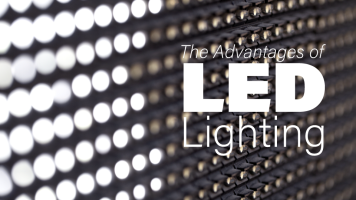
If you look on the B&H website under Lighting, you will notice the category Continuous lighting, which is separate from strobe or flash lighting, which is most commonly used with still photography. Continuous here refers to lighting units that are not strobe units, and these are mostly used in film and video, as well as theater. Once, this type of lighting was

by Jill Waterman · Posted
Ami Vitale has a remarkable affinity for life-changing events. A native of South Florida, Vitale was a self-described shy, gawky child who, like many young girls, possessed little confidence. The assessment of a grade school teacher, who told her she was not very good at English, stuck with her for years. “I just thought that I had no ability as a writer, or as a creative person,” she says. “I remember thinking I was going to become an engineer because I had almost perfect math scores on my SAT.”
Photographs © Ami Vitale
by Shawn C. Steiner · Posted
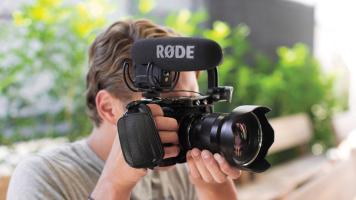
While you can definitely get by with the same kit you use for your still photography, video adds some additional concerns that require extra equipment. Now that you know a few basics about shooting video, or you should if you read the first part of this series, Getting Started, you will definitely want some of these helpful tools to step up your game.
The essentials
An

by Steven Gladstone · Posted
In the world of film production, a Digital Imaging Technician (DIT) can be many things. Depending on the scope of the production, the scope of their job is constantly evolving. Taking advantage of the wonders of email, I checked in with a few working DITs to get a better understanding of their complex and ever-changing job. What became apparent quickly was that although most people in the industry start off as beginners, taking on the role of DIT requires a healthy balance of experience, people skills, technical knowledge, and an almost
by Steven Gladstone · Posted
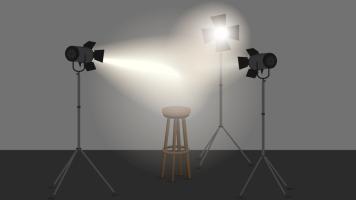
If you look back to the first days of television, you will find that it was an incredibly crude system that bears little resemblance to what we know today as video. I have seen images created with this early technology, and my initial response was, “I can't tell what I'm looking at.” This is because the original TV systems had very little image tonal range and resolution, so to make out an image it had to be extremely contrasty, resulting in heavy use of makeup on actors and using lighting sources that cast hard shadows to define a