ID Card Printers Explained
Looking for the best ID card printer for your organization? Whether you are printing employee badges, access cards, or government IDs, understanding the difference between Direct-to-Card (DTC) and Retransfer printers – along with lamination and encoding options – will help you choose the right solution for your needs.
What is a Direct-to-Card (DTC) Printer?
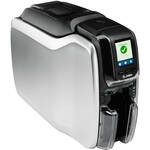
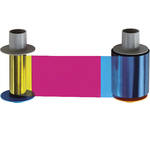
Direct-to-Card (DTC) printers print directly onto the card using a thermal printhead. They are fast, cost-effective, and ideal for standard PVC cards.
Best for:
• Schools, libraries, small businesses.
Limitations:
• Leaves a small border around the card edge.
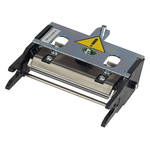
• DTC Printheads wears faster due to direct contact with the card surface.
What is a Retransfer ID Card Printer?
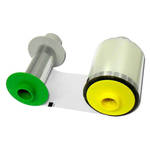
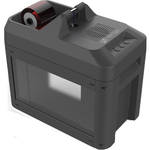
Retransfer printers use a two-step process: first printing the image onto a clear film, then transferring it onto the card with heat. This allows for edge-to-edge printing and works well with smart cards.
Note: Retransfer film does not replace lamination. for higher durability or added security, a separte lamination module is recommended.
Benefits:
• High-resolution print quality
• Full bleed (edge-to-edge) coverage
• Prints on uneven surfaces (smart cards)
• More durable and long-lasting prints
Best for:
• Corporate ID programs
• Government or secure credentials
• Healthcare
Considerations:
• Higher initial investment
DTC vs. Retransfer: Which Should You Choose?
| ||
|---|---|---|
Print Quality | Good | Excellent |
Edge-to-edge print | No | Yes |
Printhead Wear | High wear | Longer lasting |
Lamination | Optional | Optional |
Encoding | Optional | Optional |
Cost | Lower upfront cost | Higher upfront investment |
Choose DTC for quick, basic card printing needs.
Choose Retransfer when quality, durability, and versatility matter most.
Printer Options
Lamination: Protect your cards.
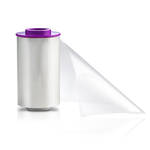
Lamination adds a clear or holographic layer over your printed cards to protect them from wear, fading, and tampering.
Clear Laminate
• Transparent overlay
• Protects from scratches, UV damage, and everyday use.
• Extends card lifespan.
Holographic Laminate
• Includes visible security features (like seals, logos, or text)
• Makes card more difficult to counterfeit.
• Ideal for high-security environments
Best for:
• Employee access cards
• Government or Healthcare IDs
• Long-term use cards
Encoding Options:.
Magnetic Stripe: Stores data on a magnetic band. Common hotel keys, loyalty, and older systems.
Contact Smart Card: Require insertion into a reader. often used for secure authentication or financial transactions.
Contactless Proximity cards: Basic RFID, read-only, not secure.
Contactless smart cards (MIFARE, DESFire, iClass): Read/write with encryption. Used in access control, public transit, secure ID, cashless systems.
Use Cases: Which Features Do You Need?
Corporate Retransfer, lamination, smart card encoding.
Education DTC, lamination, smart card encoding.
Government Retransfer, holographic lamination, secure encoding
Healthcare Retransfer, clear laminate, contactless encoding
Hospitality DTC, contactless encoding
Concluding thoughts
Whether you need fast, affordable printing or high-security, durable ID cards, there is an ID card printer to match.
Direct-to-Card printers are great for basic needs, while Retransfer printers offer top-tier quality and security. Be sure to consider lamination for card durability and encoding for added card functionality.