Search results for: audio tips solutions professional audio recording techniques
About 19 filtered results
by Freddy Gerngross · Posted
As the democratization of music production continues to propagate, many people have been innovating new production techniques, creating entirely new genres of music, and recording literal chart-topping hits—all from the comfort of their bedrooms. But if you’re just getting started, you might soon realize that the vocal recordings you capture in your bedroom are … less than ideal.
Getting a tight and professional sound from a small bedroom is possible—but it takes planning, preparation, constant rearrangements, and maybe a few bucks here and

by Freddy Gerngross · Posted
Like anything worth creating, solidifying the process of a project is key to success. Often, the ambitious work of aspiring music producers can get bogged down from a lack of organization. Projects can bloat into dozens of unnamed tracks processed with reckless abandon, and audio and MIDI clips get chopped and sliced into a charcuturie board of chaotic (un)organization.
For the fever-pitched producer in a flow state, this chaos can be managed during the session (to an extent). But what if they were to step away from the project and come back

by Freddy Gerngross · Posted
Since its founding in 1992, DPA Microphones has gained a prestigious reputation in the audio industry for their mics' exceptional quality, crystalline transparency, and rugged and reliable build quality. And while DPA's microphones have found their way onto the stage with Beyonce, onto the sets of Game of Thrones, and into the concert halls of the world's greatest orchestras, what's perhaps most impactful to our world is the contributions they've made to the scientific community: DPA's microphones have enabled advancements in medicine,

by Freddy Gerngross · Posted
Mixing audio is not an exact science—there are many ways to achieve similar results, and what works for one project may not for another. In my ten-plus years of mixing, I’ve had the privilege and opportunity to learn both common and lesser-known techniques from some of the best engineers in the world, as well as the time and practice to discover my own tricks and techniques through experimentation and a few happy accidents. We don’t gatekeep at B&H—here are ten helpful techniques you can use to bring the best out of your mix.
1. Use

by Freddy Gerngross · Posted
Equalizers affect the fundamental character and quality of sound more than any other tool in audio engineering and sound design, making it perhaps the most common and useful tool in the industry. Like compressors, equalizers were originally meant to be a corrective tool, developed to increase the range of transmission for telecommunications by AT&T engineer George Ashley Campbell in the early 1900s—a few decades before John Volkman first used the technology in the method we use today while working for RCA, equalizing the audio of early

by Trevor Collins · Posted
These days it often seems like everyone has a podcast. With so much competition and so many options for podcasting-centric equipment, it can be daunting to dive in headfirst without knowing the ropes. That’s where B&H comes in, with another all-encompassing guide to set you up for success and help you get your content off the ground as painlessly as possible. Let’s begin.
Why Make a Podcast?
The first topic couldn’t be simpler: Why even start a podcast? The answer is simple−because it’s the best way to get your content to the masses.

by Gabby Bloch · Posted
Here at B&H, we’ve written countless articles on podcasting, including guides on editing, mixing, and mastering your podcast. But if you’re still having trouble getting the sound you want, we recommend simplifying your production process. Let’s discuss how to separate and streamline your production tasks to get a better final product with hopefully less effort.
Separate the Recording and Mixing Processes
Many people feel the

by Gabby Bloch · Posted
Right off the bat, we should tell you that this article is intended for podcasters who are just starting out. In this article, we’re going to stick with fundamental approaches and tips to getting a professional sounding podcast. We will also suggest great options for those with time constraints or limited audio production skills. Of course, research and practice will still be required after reading this article. But we’ll at least show you all the available tools to help you

by Gabby Bloch · Posted
If you’re relatively new to the studio and are trying to figure out ways to elevate the quality of your recordings, it’s essential to learn a little about audio compression. The term may sound daunting, but the basics of this technology are not too difficult to learn. In fact, after reading this simple and brief guide, you should be able to start implementing compressors into your tracks right away.
What is an Audio Compressor?
In its simplest terms, a compressor is used to “smooth out” the dynamics of a track. It does this by reducing the

by Gabby Bloch · Posted
Although they typically don't get as much attention as conventional dynamic and condenser microphones, ribbon mics can do a lot for your sound—especially when used wisely and for the right application. In this article, we'll be discussing the unique design and sound characteristics of this oft-forgotten mic, as well as suitable applications for its use and product recommendations.
What Is a Ribbon Microphone?
Although a ribbon mic is technically categorized as a type

by Trevor Collins · Posted
So, you’ve recorded a killer podcasting session but aren’t sure how to take it from raw to ready? We get it—there is a lot to take in. But editing is undoubtedly one of the most crucial aspects of the production process when making a podcast. We know editing a podcast can be intimidating and overwhelming at first, and that’s why B&H is here to run through some of the basics and get you producing polished, engaging, professional-sounding content.
In this article, we’ll walk through the essential techniques of trimming, adding effects

by Trevor Collins · Posted
From news and entertainment to educational and informative topics, podcasting has become an increasingly popular medium for delivering captivating content. But no matter how interesting your podcasting content is, it is always vital to ensure that the audio quality is top-notch if you want to maintain your listener’s interest and engagement.
That’s where proper microphone technique comes into play. Whether you’re a seasoned podcaster or a beginner, understanding effective mic techniques will make a huge difference in the overall quality of

by Trevor Collins · Posted
Highly regarded as one of the most popular dynamic microphones available today, the Shure SM7B has become legendary for its versatility and the rich sound it produces when used for the human voice. Although originally designed for professional broadcast and voice-over work, the SM7B has found a place among modern musicians, podcasters, and content creators alike. However, despite its ease of use and forgiving nature, there are
by Jason T · Posted
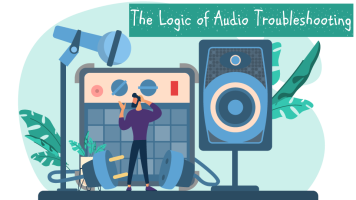
Troubleshooting doesn’t have to drive you insane. It can and will if you let it. We’ve all been there. Maybe the setup took more time than you thought it would, things got a little rushed, and now you’re not getting signal from the singer’s mic. Or, maybe you’re watching a movie with your family, and all of a sudden there’s no sound. Whether you’re troubleshooting in a professional live sound or recording studio setting, or in your home theater, the same general rules apply.
The first rule, and the most important one, is “don’t panic.” When
by Steven Gladstone · Posted
Since the Canon 5D MarkII (since supplanted by the Mark III and Mark IV) started shooting video and consumer camcorders started capturing 4K, the lines of differentiation between cameras, and for what purpose, have been blurred. What follows is my take on how to navigate your choices, and make the selection which will be the most appropriate for you