
With its mirrorless RF system beginning to mature, Canon spent 2022 adding some more distinct optics to the lineup, as well as beginning to lay the foundation for an APS-C-specific series of lenses. The brand has reached a unique place with its mirrorless portfolio this year, and has hit the thirty-lens milestone, where the lineup feels well-rounded enough for most professional and hobbyist demands, although there are still some missing pieces for more specialized applications.
RF 800mm f/5.6 L IS USM and RF 1200mm f/8 L IS USM
At the beginning of 2022, Canon addressed professional sports and wildlife photographers’ needs with a pair of super telephoto primes: the RF 800mm f/5.6 L IS USM and RF 1200mm f/8 L IS USM lenses. Unquestionably long and sporting some of the most advanced optics around, these two lenses really show off what Canon is capable of when there are few to no restrictions set on price and design. Considering they’re on the extreme end of the focal-length range, these aren’t going to be the most popular lenses in the Canon RF stable, but they are aspirational options that give Canon a unique edge for photographing significant sporting events or other important occasions from great distances, as well as enabling wildlife photography in more dynamic ways.

|

|
RF-S 18-45mm f/4.5-6.3 IS STM and RF-S 18-150mm f/3.5-6.3 IS STM
Coinciding with the release of the EOS R7 and EOS R10 cameras, the RF-S 18-45mm f/4.5-6.3 IS STM and RF-S 18-150mm f/3.5-6.3 IS STM are Canon’s first two RF-S lenses and the start of APS-C-specific lenses for the RF mirrorless system, in general. Looking beyond the fact that these are just two kit lenses—giving you the option of a smaller lens with a tighter zoom range or a larger lens with a longer zoom range—these zooms signal Canon’s intention to make RF mirrorless more accessible to photographers outside of advanced amateurs and professionals. These lenses prioritize compactness and versatility; they’re great single-lens solutions for travel shooters and are perfectly positioned for casual photo and video shooting in a variety of situations. Even if these specific lenses are not the most exciting, the precedent for Canon to move into APS-C-specific designs that are smaller purpose-built is noteworthy and signals there will likely be more unique options to which we can look forward.

|

|
RF 24mm f/1.8 Macro IS STM
For those who wanted a compact ultrawide, like last year’s RF 16mm f/2.8 STM, but with image stabilization and close-focusing capabilities, like the RF 35mm f/1.8 Macro IS STM, Canon released the enticing RF 24mm f/1.8 Macro IS STM. It’s a wonderfully versatile lens that checks off numerous boxes for different kinds of shooters: it’s wide enough for landscapes, architecture, and astrophotography, as well as perfect for vlogging; it’s fast enough for shallow depth-of-field control but is still lightweight and compact enough for handheld shooting; it’s a 1:2 macro lens, meaning close-up shooting is one of this lens’s strengths; and its image stabilization feels like the cherry on top, helping to alleviate camera shake and blurry shots when shooting in low light. Considering its ultra-wide focal length, this 24mm f/1.8 is surprisingly one of the most well-rounded primes in Canon’s RF lineup.

RF 15-30mm f/4.5-6.3 IS STM
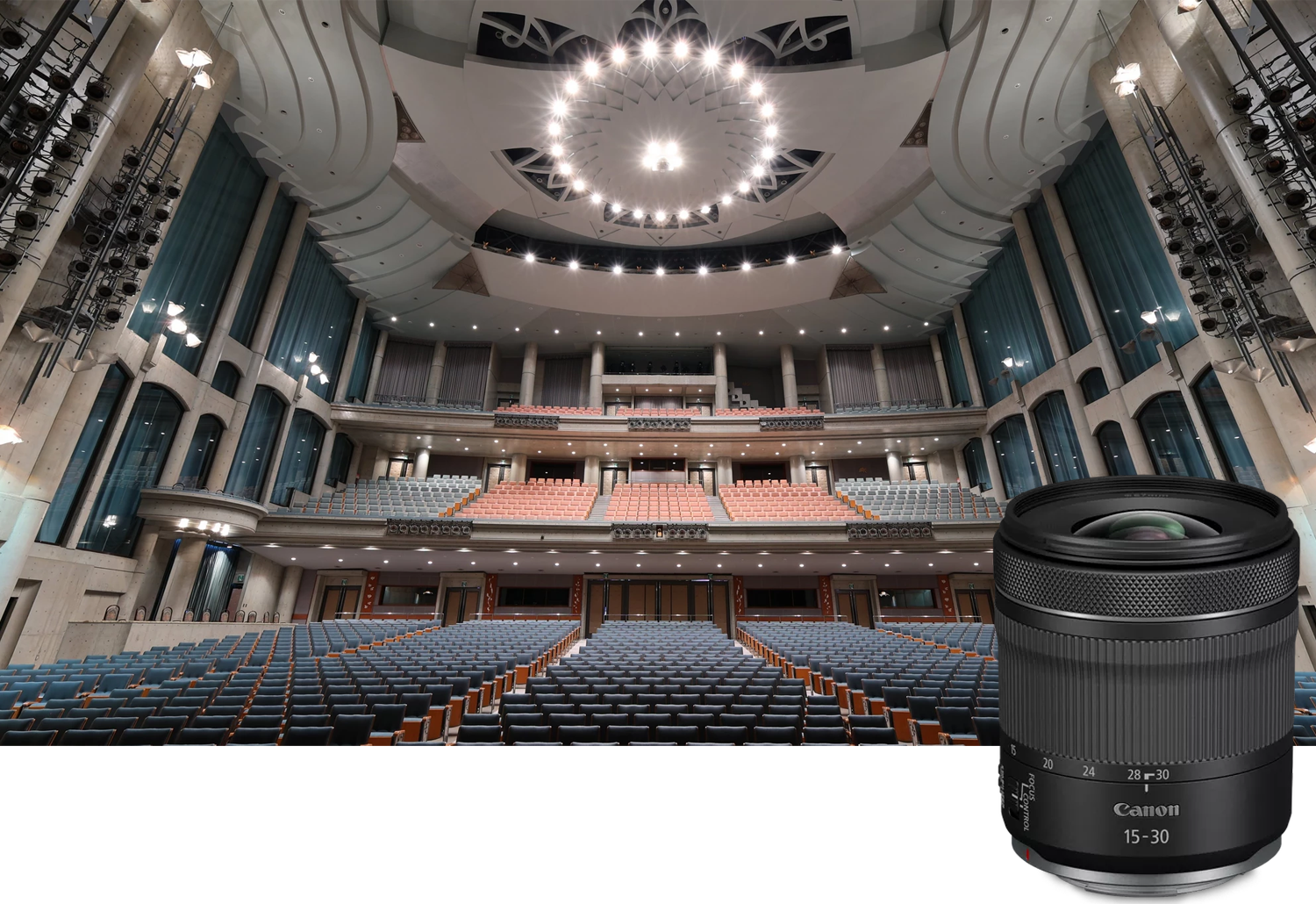
Announced alongside the 24mm f/1.8, the RF 15-30mm f/4.5-6.3 IS STM feels sort of like Canon traded in the speed of a prime for the flexibility of a zoom. Covering a range of ultra-wide focal lengths, this lens is a great option for architectural and interior photographers who are photographing different-sized buildings or spaces on the same day—in practical terms, it could be the go-to option for travelers on a sightseeing tour who may encounter anything from the exterior of a grand monument to the interior of a quaint and historic home on the same day. It, too, has image stabilization to help steady your shots and the STM autofocus is great for those working in photo and video mediums.
Overall, for 2022, this year felt like a preparatory time in which Canon set the stage for future camera and lens developments. This year’s lens releases have been great and welcomed, but not overly surprising. In some ways, it feels like Canon has been crossing off the lenses the company needed to make, which is a welcomed strategy, considering the cameras Canon has also been releasing. On the other hand, it makes it that much more interesting to see what Canon has up its sleeve for the upcoming few years.
What are your thoughts on Canon’s 2022 lens releases? And what are you hoping to see from this brand next? Discuss it in the Comments section, below.
