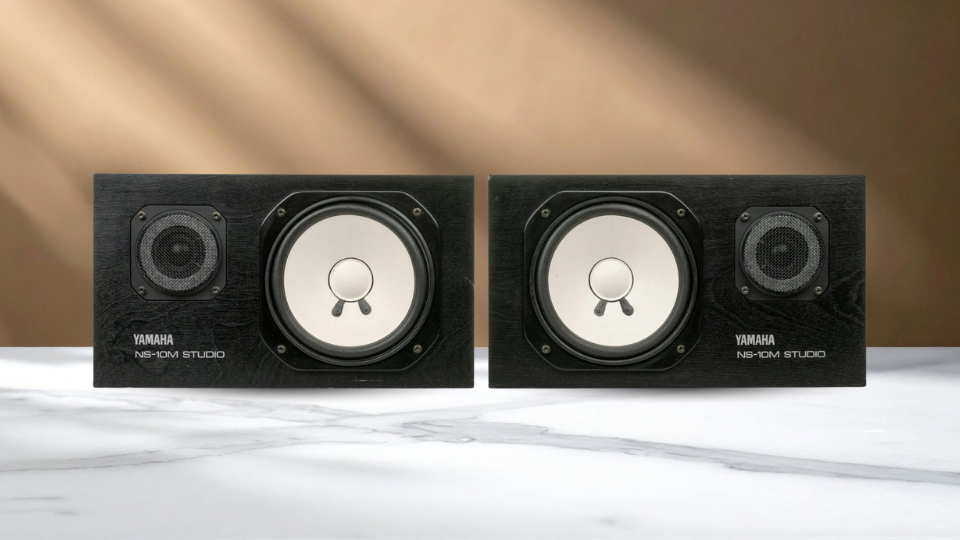
The Yamaha NS-10 is the divisive and decidedly drab nearfield studio monitor whose story serves as testament to the world-altering power that can be deracinated from the troughs of mundanity. NS-10s aren’t sexy, nor are they rare or expensive—they don’t even sound good. So, what made these humble noisemakers such a mainstay in the audio community for nearly fifty years?
Honest and transparency are two of the most desirable traits in a relationship—and it seems that the Yamaha NS-10s have proved that this also holds true beyond just the interpersonal. What makes the NS-10s so special is their ability to reveal the truth. If your music sounds good on these speakers, you can be confident that it will sound good on just about anything.
But how did the NS-10s achieve their storied verisimilitude? In this entry, I will tell the story of the NS-10s and break down the science and design philosophy behind their iconic sound. You’ll learn why these monitors were (and may still be) the greatest studio reference monitors ever created.
The Origin
The Yamaha NS-10s were released in 1978, designed as bookshelf speakers for home hi-fi systems; they failed miserably both critically and commercially. Their eventual resurrection as a nearfield studio monitor is a point of contention, its story lost in translation and subject to fading memory. Most attribute the popularization of the NS-10s to mix engineer and record producer Greg Ladyani and later Bob Clearmountain along with their association with a number of other engineers who adopted the standard early on. Through various degrees of separation, the discovery of the NS-10’s proclivity as studio reference monitors probably traces back to an unknown engineer in Tokyo who first decided to use them in a mixing environment.
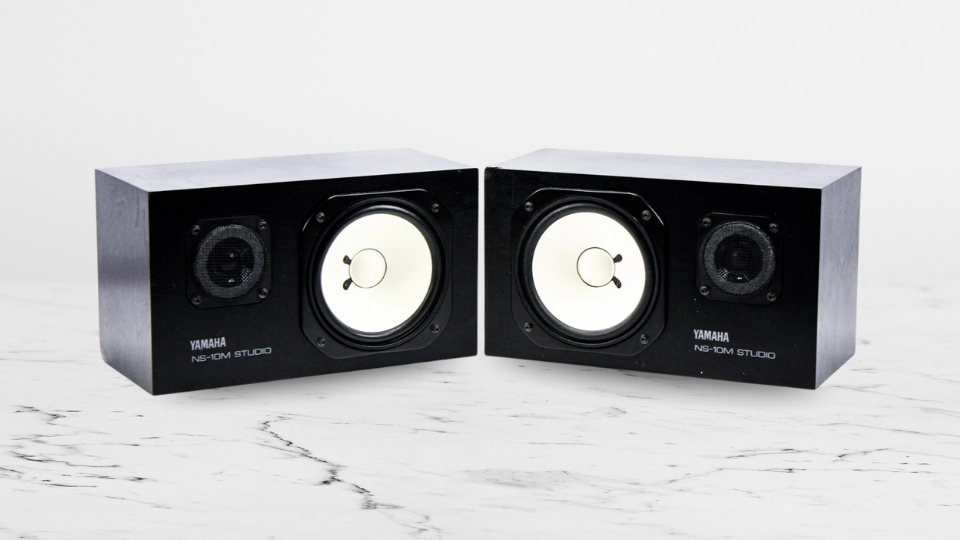
By the mid-1980s, Yamaha had caught wind that the NS-10s were being used in studios rather than in homes and updated the design with the NS-10M Studio, PRO, and NS-10MC models—versions with more power, reduced high frequency response, and extended bass response (engineers famously put tissue paper in front of the tweeters on the originals to taper highs). The new NS-10M models were perhaps the first industry standard studio monitors for mixing, their iconic white cones seen in countless photos of famous recording engineers sitting proudly in front of their consoles. The NS-10MX and NS-10MT were released in the mid 90s and featured magnetic shielding for use near computers; the MT model is the only model to have a rear-facing bass reflex port (all other models were unported—an interesting and important aspect of their design).
The NS-10s were discontinued in 2001 and were awarded a Technical Grammy in 2007.
Design – Time and Frequency Response
There are a number of aspects that make the Yamaha NS-10s unique, but perhaps the most important is its incredible time-domain response—i.e., how accurate the timing of the speakers playback is. The faster your speakers can stop and start, the better the accuracy of sound reproduction.
The NS-10 has a 10.4-liter sealed enclosure, meaning there are no bass reflex ports in the back of the unit. This specific design aspect is one of the main reasons why the NS-10 has a vaunted time-domain performance, especially with low frequencies.
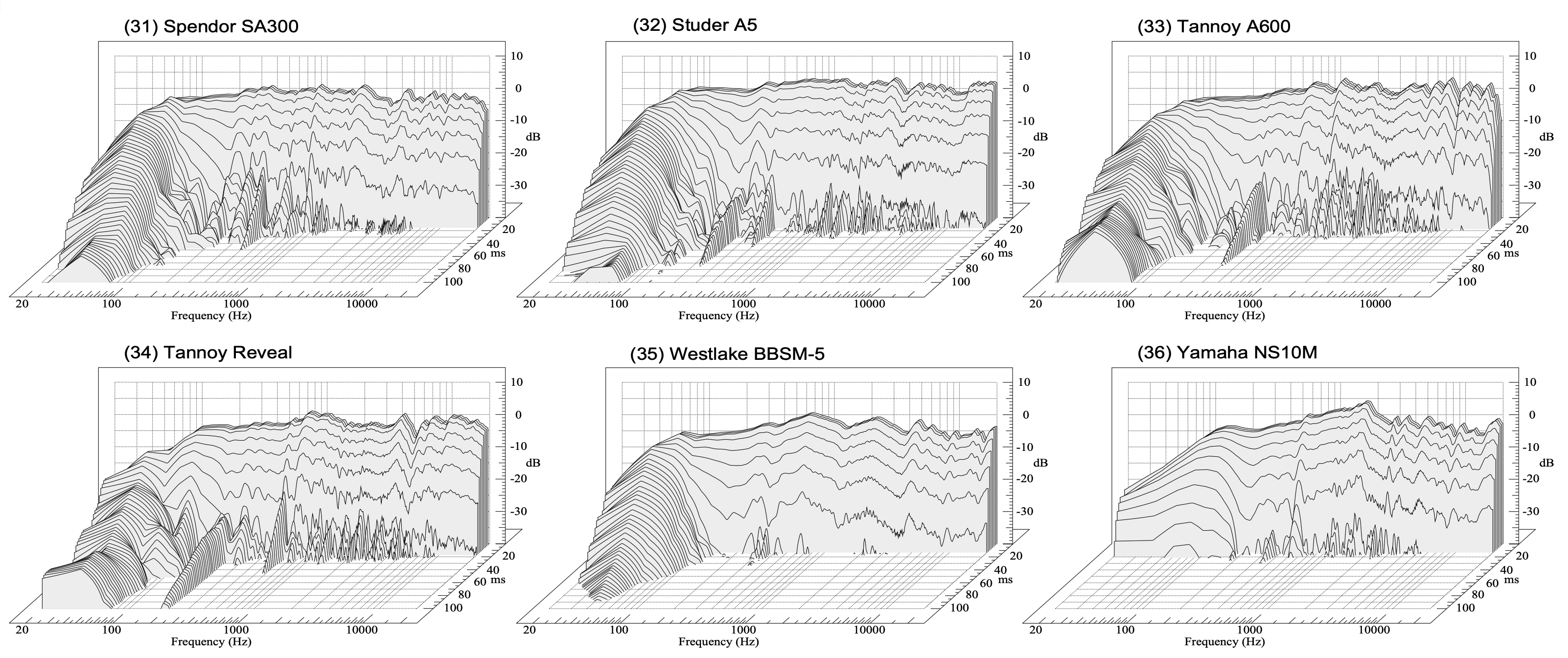
As you can see on this chart, NS-10s have by far the best time-domain response out of any of these samples. And indeed, according to the research of Newell et al. done on the frequency and time domain response of various nearfield monitors, the NS-10s performed better than thirty-five other similar competing products in time-domain accuracy.
This is extremely important when it comes to mixing rock and pop music, as bass that tight gives you the punch and pop that you’d want to achieve, producing sharper and more accurate transients.
The frequency range is a bit lacking by modern standards, with a range from 60 Hz to 20 kHz with a crossover frequency (the frequency where both the woofer and tweeter play the same signal, which can cause peaks) at around 2 kHz. The crossover is second order design, and the drivers are connected in phase, so in theory, there should be no phase issues around 2 kHz—although in practice, there will always be some kind of distortion or signal delay, which is normal.
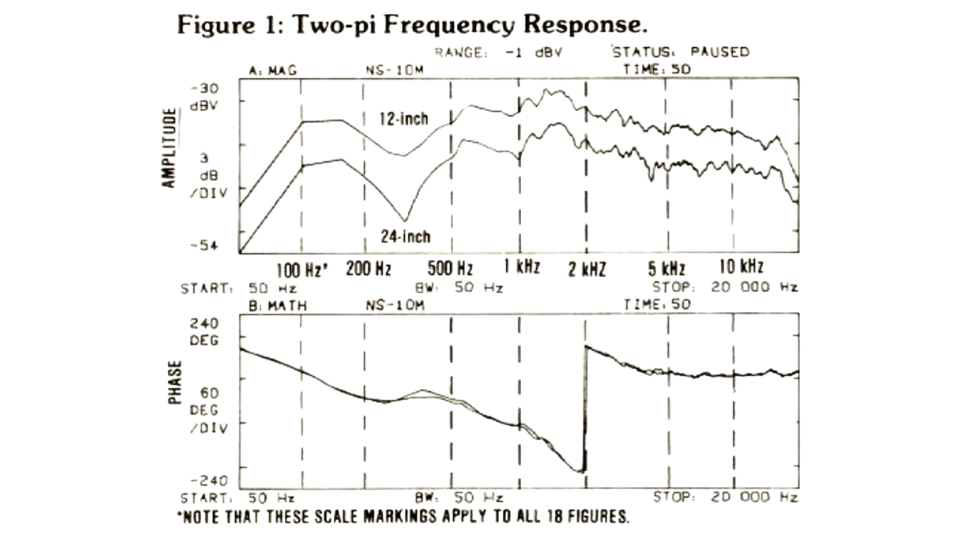
Looking at the frequency response chart, we see that +5 dB boost at around 2 kHz with a-12 dB/octave roll off at 200 Hz. This is because of its crossover frequency and sealed enclosure—both important reasons why the NS-10s are so well regarded.
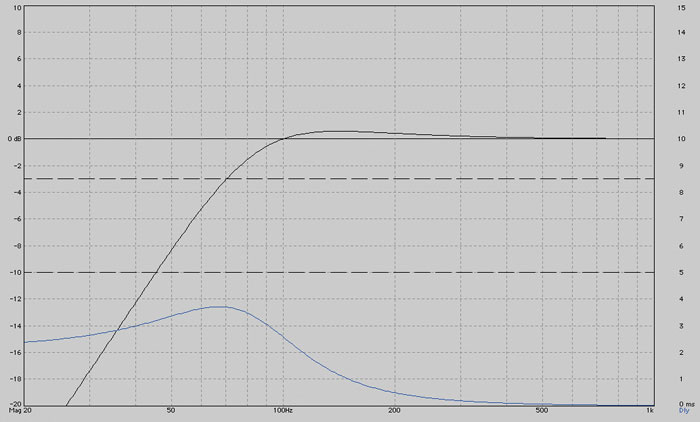
This band of low-mid to midrange frequencies in the 200 Hz - 2 kHz is just about the range that any music played on a low-quality or portable speaker would be comprised mostly of. Most people aren’t listening to music on expensive hi-fi equipment or in theaters with immersive sound capability, but on phones, portable speakers, or in their cars.
In addition, this midrange band is typically where you’ll find the most problematic content in your mixes, as it’s the section that a lot of your instruments will be fighting for space. The NS-10s force you to hear the most difficult and unfortunate problems in your mix you might have missed using different monitors, forcing you to fix it in ways you may otherwise not have considered.
Legacy and Recreations
If you’ve been in the recording industry long enough, you’ve probably heard someone say something like “If it sounds good on NS-10s, it’ll sound good on anything.” The NS-10s are legendary due to their ability to uncompromisingly reveal poor recordings and mixing decisions due to their accurate reproduction and time-domain response. Somehow, the audio industry still struggles to identify what made the NS-10s so popular—it is truly a shame that they were discontinued.
While the Yamaha NS-10s are sought-after pieces of equipment, they aren’t exorbitantly expensive or particularly difficult to acquire—with pairs in decent condition going around for $1000. (Those in bad condition or in need of repair may go for as low as $100, but good luck finding replacement parts!)
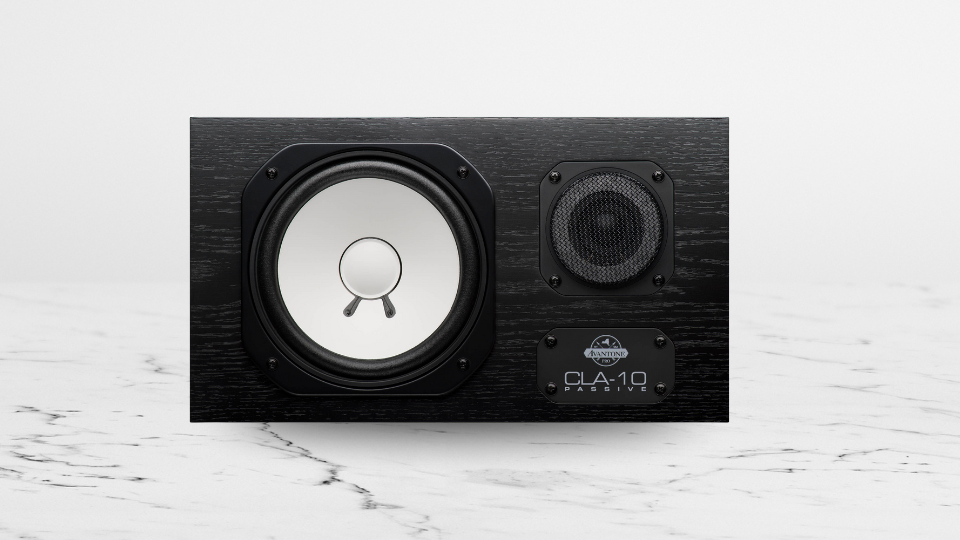
The Studiospares SN10 were a long since discontinued NS-10 lookalike, but good luck getting your hands on a pair of those. The best option for a modern NS-10 clone is the Chris Lord-Alge endorsed Aventone CLA-10 studio monitors, which come in both a passive and active version. They have a sound profile remarkably similar to the NS-10M Studios but with more emphasized highs (you might have to take the tissues back out!). The Yamaha HS series keep the iconic white cone look of the NS-10s; they are rear ported bi-amplified studio monitors that have better bass response and smoother highs than NS-10s but maintain the mid-frequency emphasis.
Theres still an ongoing debate of whether or not the NS-10s are still the gold standard of studio monitoring in the current era, but there’s one thing to be sure of: The legacy of the NS-10s is well established, and you’ll be sure to see them in recording studios for a very long time.
